Maybe it was the city, maybe it was the timing, but Oslo, and Norway in general, is where the trip came alive for me. Ironically, it’s around the time I came down with a sneezy cold – I dubbed it my Stockholm Syndrome – about a week in the middle of a trip wherein I was drinking a lot of fluids and doing my best to keep energy levels up.
Poppin’ around? Look at Scandinavia | Stockholm | Oslo | Bergen | Stavanger | Preikestolen .
From this, I learned that while Ibuprofen is available over the counter, Nyquil and similar medications are not. I had a nasal spray that was not very effective until the end, and Ibuprofen to help with the aches. That, and a lot of water and soups.
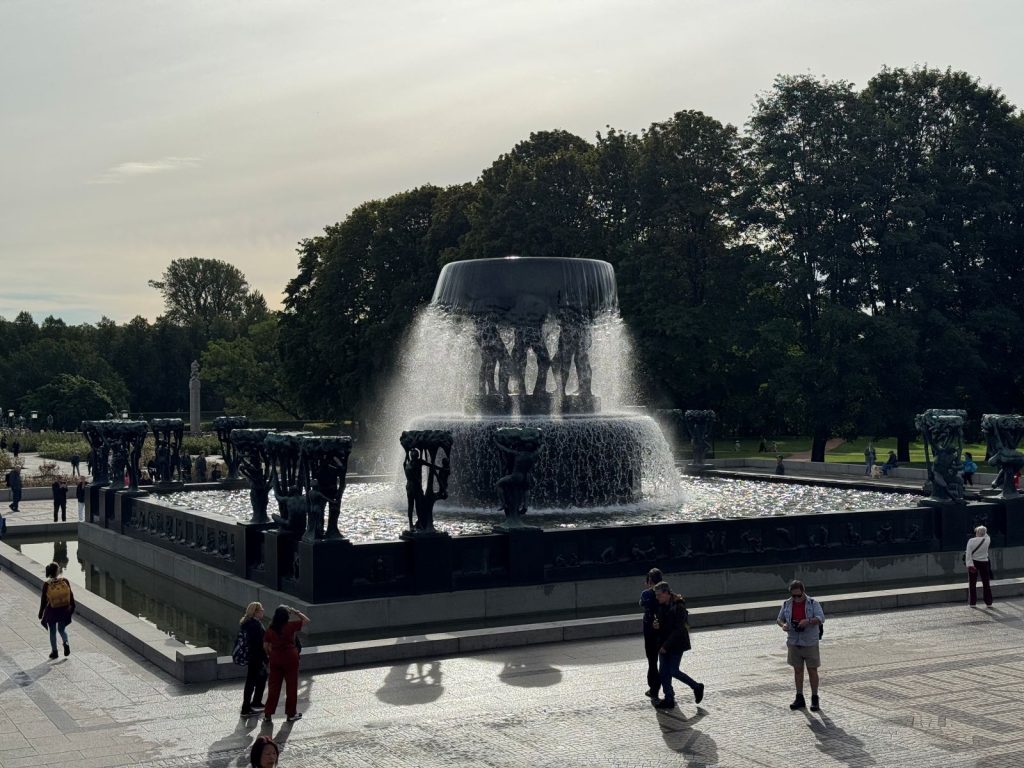
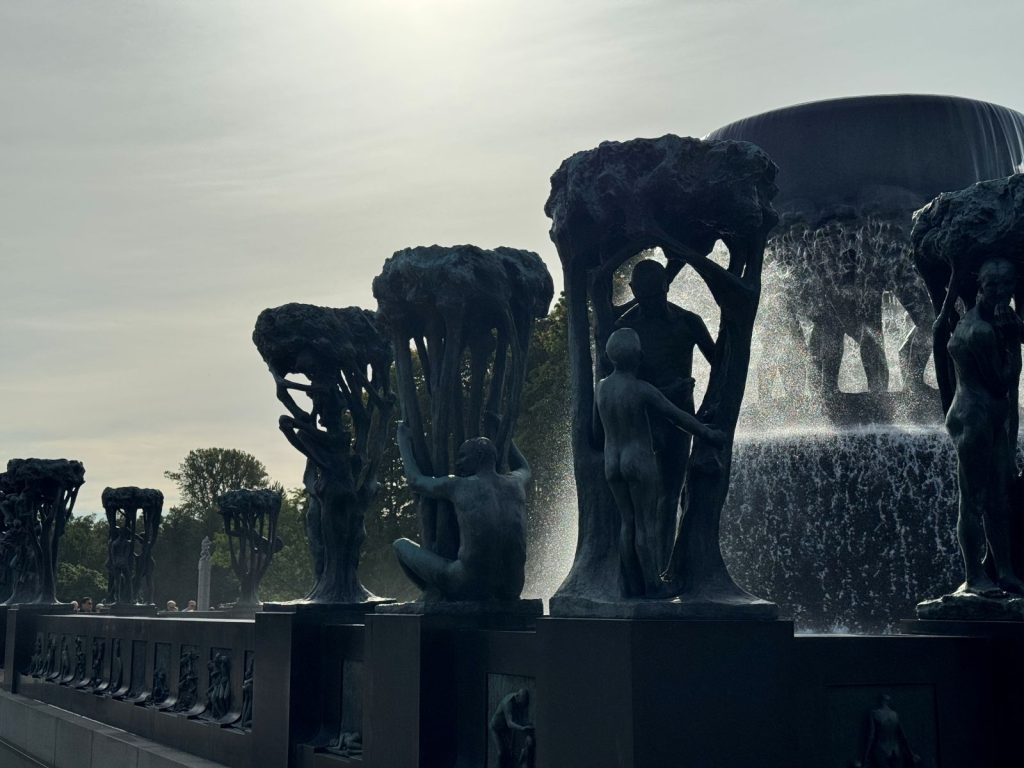
That said, on our first full day in Oslo we hit a bunch of museums – but first we walked through Vigelandsparken, a large outdoor sculpture park named for Gustav Vigeland, who sculpted most of what’s one display.
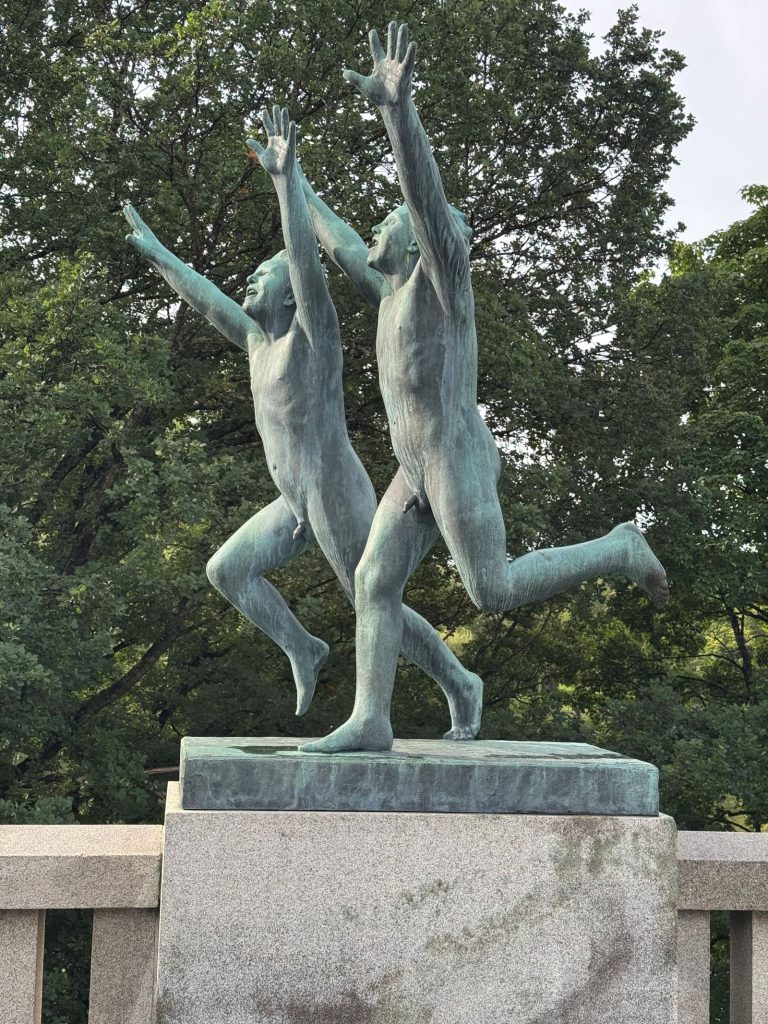
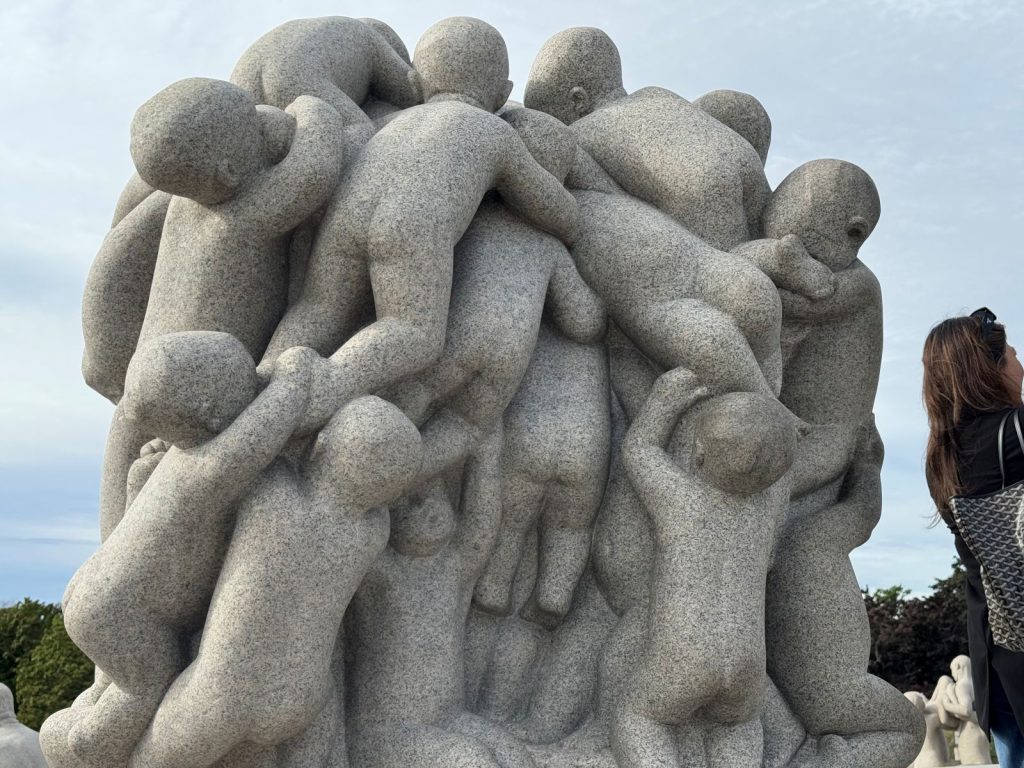
The centerpiece is an elaborate story, essentially life to death and everything in between. I was impressed with most of the other sculptures, all of which exhibited a dynamism that I would not have though possible in stone. Many of them appeared to be in motion, or more importantly, joy. It was quite nice.
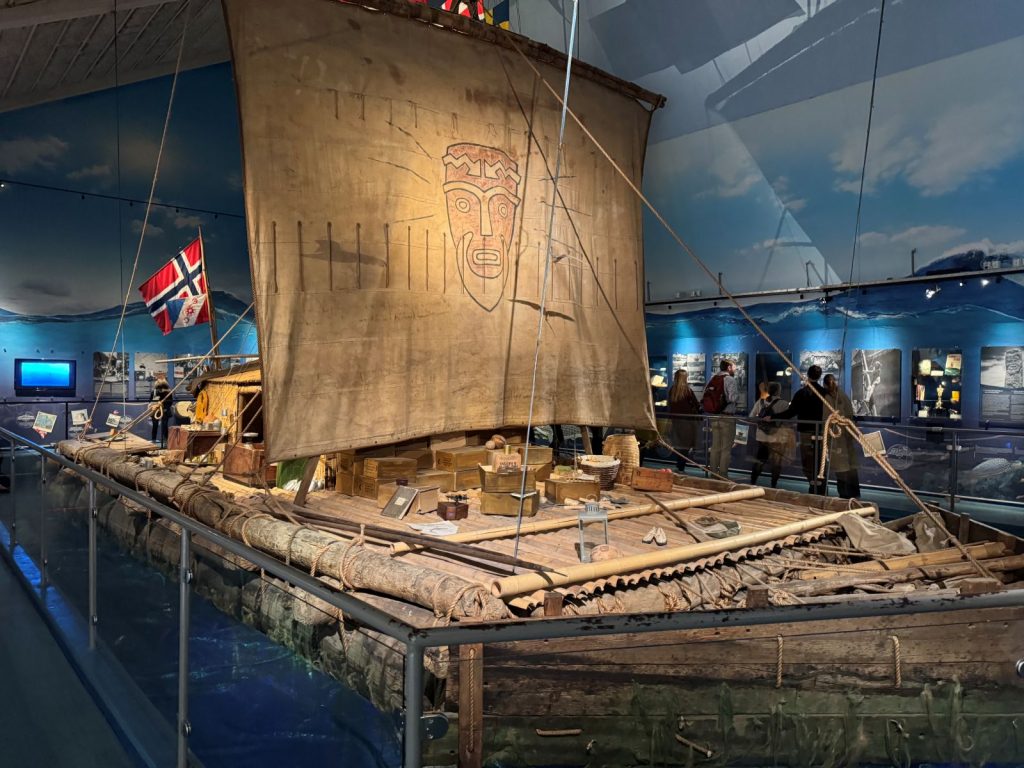
After the park, we moved on to the museums, most of which were situated near each other. There was the Maritime Museum, which covered Oslo and Norway’s maritime history; The Kon-Tiki museum, which housed the actual Kon-Tiki raft that Thor Heyerdahl and his crew sailed from Polynesia to South America; and the Fram museum, which housed the best little arctic exploration boat you’ve probably never heard of.
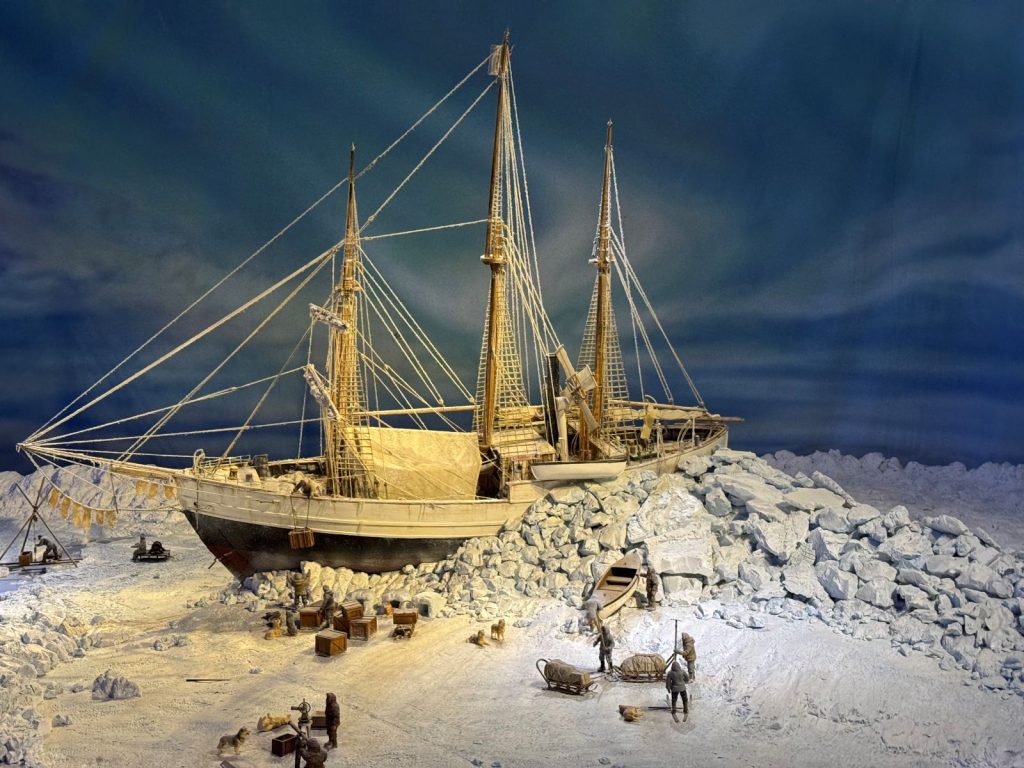
In the early twentieth century, somewhat contemporary with Shackleton’s Endurance, the Fram was built to withstand the pressures of being trapped for months in ice. Her original mission was to test a theory of polar current drift after an American shipwreck was found along the coast of Greenland, many months and miles from where she had been lost.
The Fram sailed to the approximate location of the reported loss of command, with the idea of staying trapped in the ice and flowing with currents; the idea was mostly borne out; and the Fram survived to continue work as an exploration ship in the arctic.
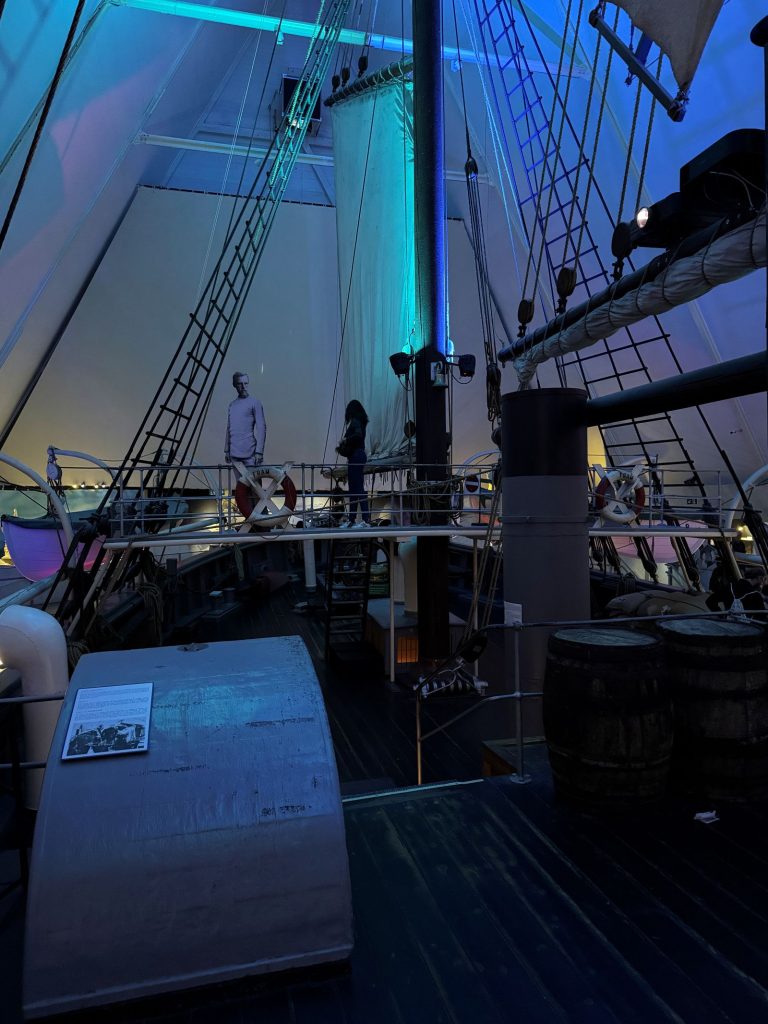
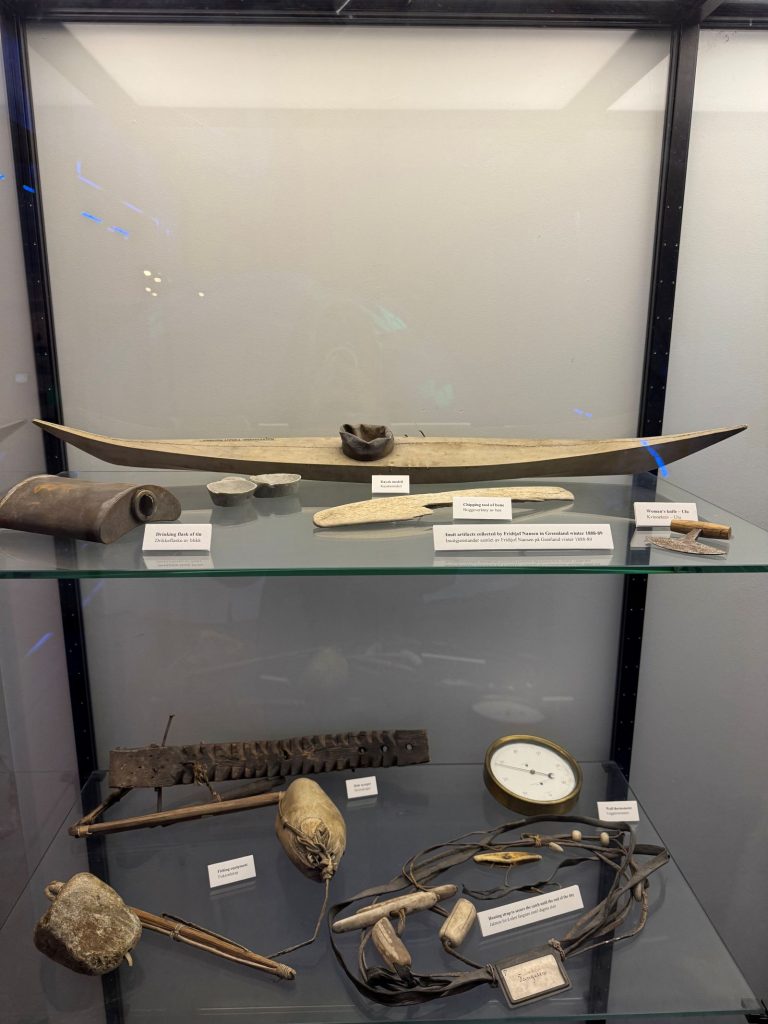
Unlike the Vasa, the Fram can be walked through, and contains many of the shipboard artifacts along with mannequins to represent the crew. Notably, she had a small windmill to charge an electric battery, supplementing her engines for shipboard power.
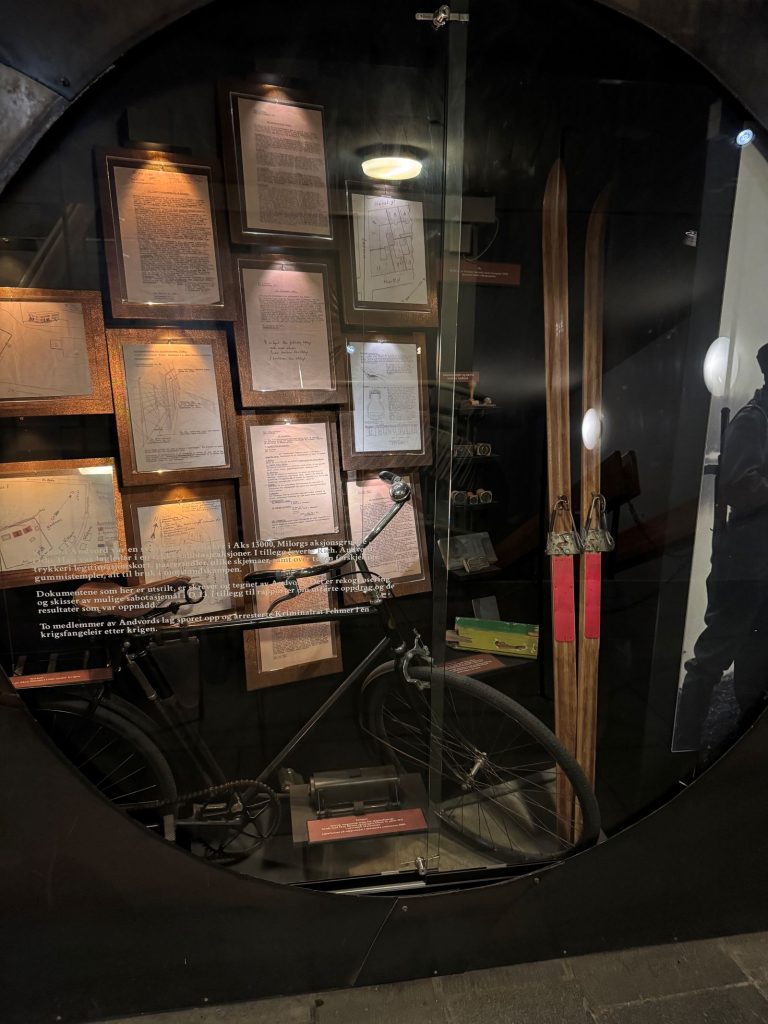
The Resistance Museum, also referred to as the Homefront Museum, archives and tells the story of Norway’s occupation by Nazi Germany during World War II. It began with a sneak attack by the Germans steaming up the fjord to Oslo under cover of fog and broadcasting false messages; the battle for Oslo and subsequent flight of the king and his staff; the ongoing resistance efforts, as well as the efforts of the Nazis and the puppet Quisling government to stifle resistance and Nazi-fy the country. it’s quite frank without being vindictive.
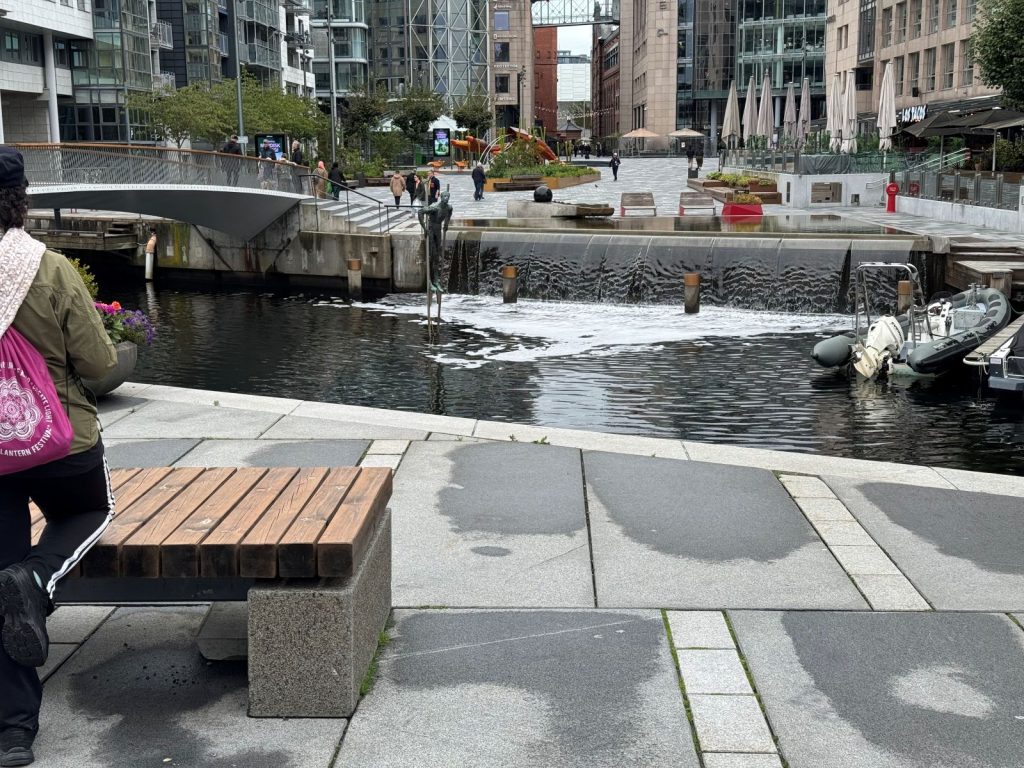
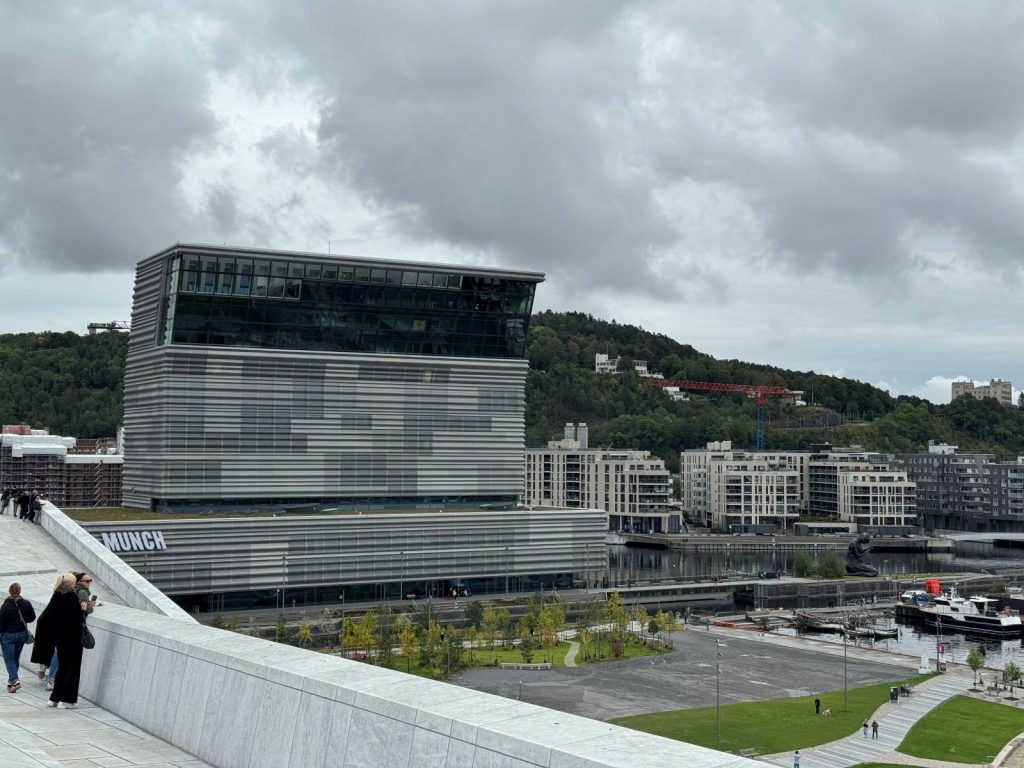
We took some time to walk around Oslo’s waterfront on our way to the Munch museum. If you only know Munch as “the scream guy”, the museum’s size will be a surprise. It houses his work and the exhibits go far beyond the famous painting (paintings – there are four variants).
In rotation was an exhibit of work he did on visiting mental health asylums; he captured expressions of depression and distemper in a way that felt compassionate, not exploitative. Other works were on permanent display, and a clever exhibit with motion capture and audio recordings conveyed the sense of visiting Munch at home and in his studio.
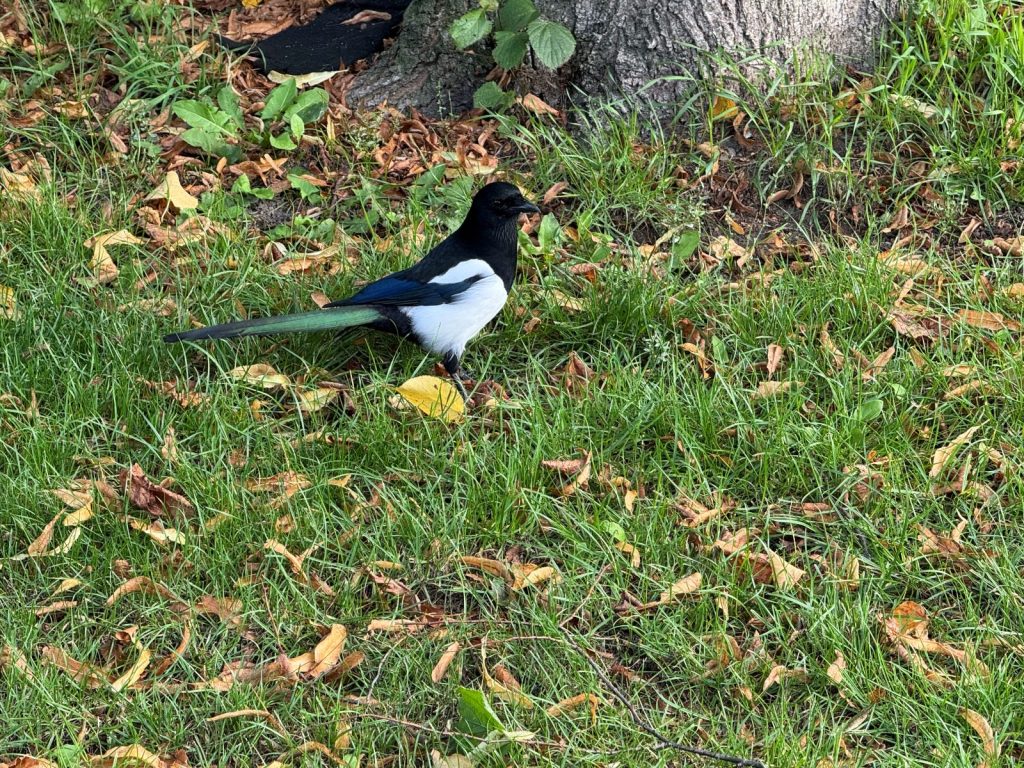
I cannot forget mentioning the magpies we saw throughout Scandinavia. They were everywhere.
After taking our fill of museums and walking around, we set out for Bergen. The late afternoon departure would deposit us on the coast of western Norway seven hours later. We brought our books, took our seats, and settled in for a long ride.