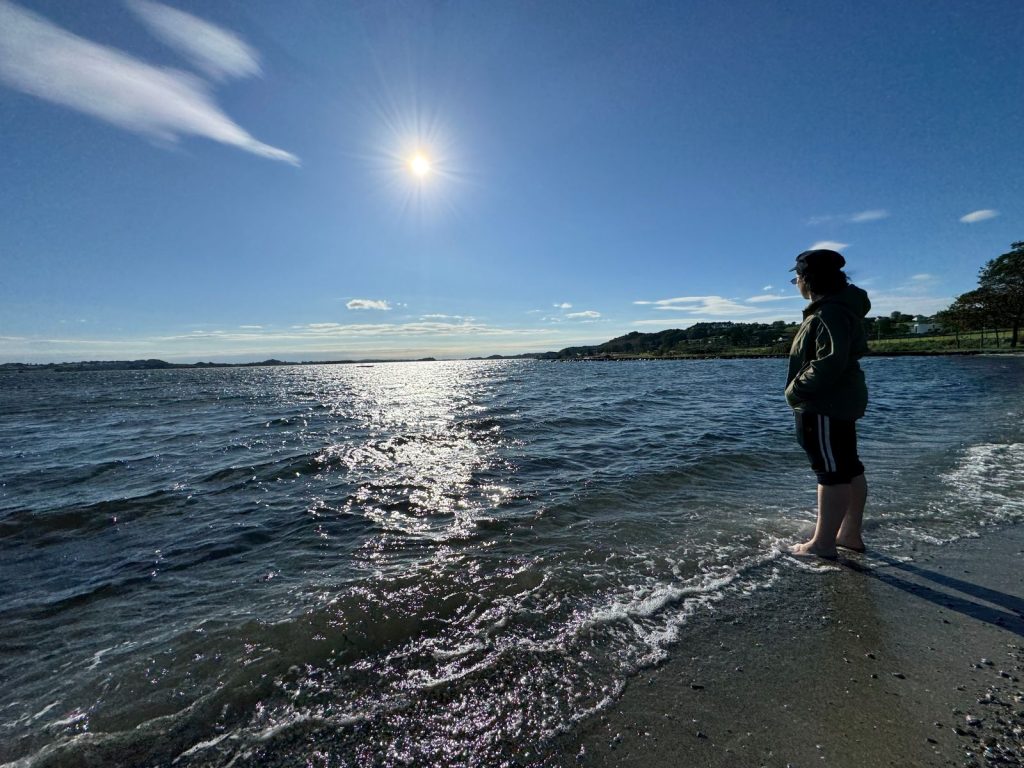
When we were first planning the trip, Bergen and Stavanger were both appealing, especially because they are in the same region of Norway. However, this belies their proximity: they are many hours apart by bus and train, and even driving is a considerable distance. The shortest route turns out to be the ferry, which is a bit over five hours, with the added benefit of on-water views of the fjords.
Poppin’ around? Look at Scandinavia | Stockholm | Oslo | Bergen | Stavanger | Preikestolen .
While Stavanger is in the tourism guides, it felt the least tourist-y of all the cities we visited, as if the other three cities were commonly visited by tourists, but Stavanger often didn’t make the cut. It also highlighted the industrial source of Norway’s economy: once the sardine capital, later the oil capital, Stavanger’s vibe is hardworking. They are not bankers and traders; they go to sea and get the goods.
Stavanger was also the base for our literally highest point on the trip: the Preikestolen, or Pulpit Rock. This is an immense slab jutting out from a cliff half a mile above the fjord below. The views are spectacular, and they are an excellent reward for a robust hike.
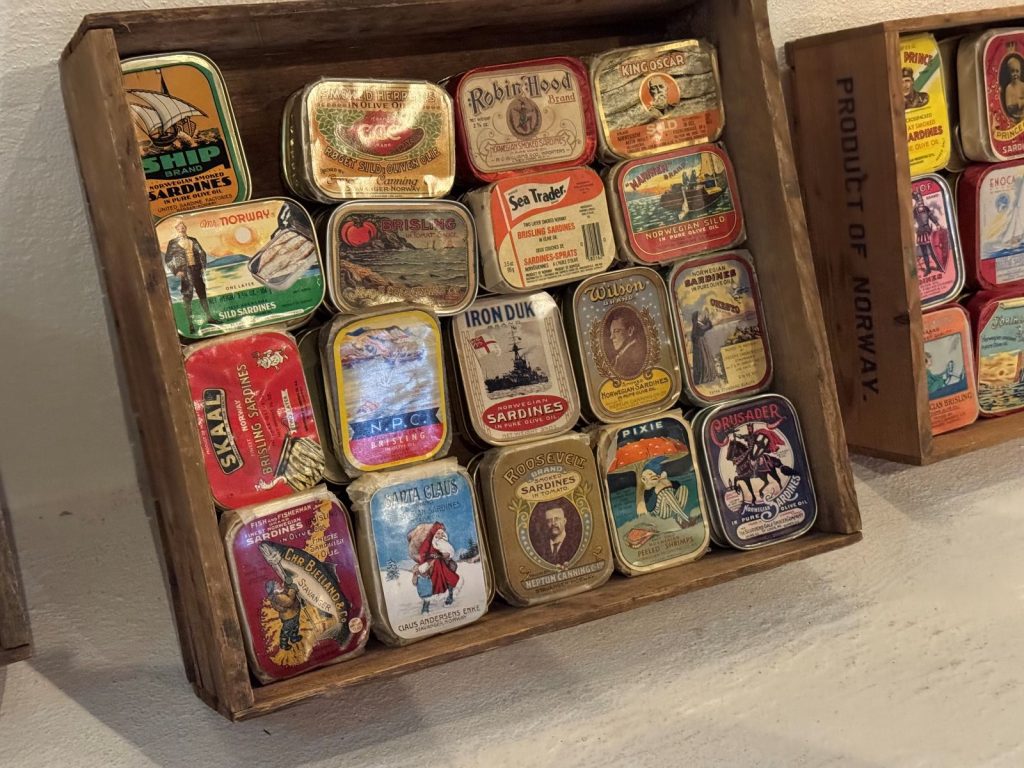
After the hike, we spent time in Stavanger proper, seeing sights in the old town, including the cathedral and the printing and canning museum.
The latter was a merger of two semi-related museums near each other. The sardine museum is essentially a former canning plant with exhibits that include mannequins of the workers, managers, and owners, and it shows the process of how so many sardines were prepared, smoked, and put into cans. There were many, many, many brands of sardines, and that fact was a segue to the print museum. All those brands had their own designs to stand out on store shelves.
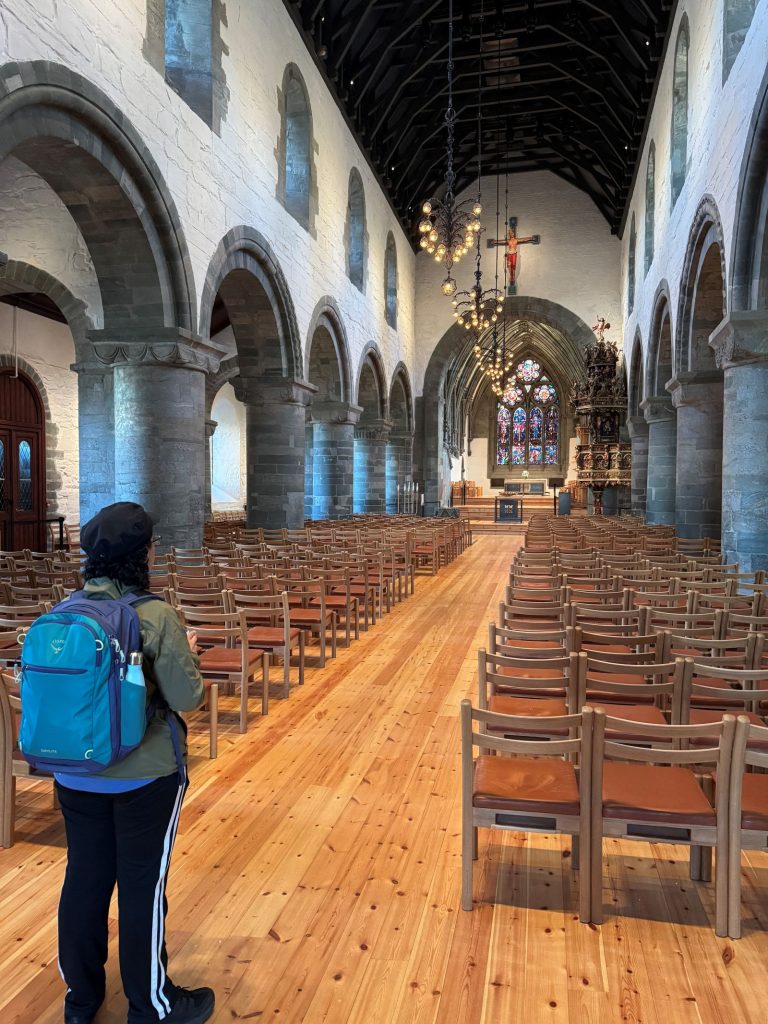
The cathedral was gorgeous; I had a little confusion at first since I wasn’t entirely clear on Norway’s conversion to Protestantism, but at the end learned it was a Church of Norway cathedral, not a Catholic one. In any case it was beautiful inside and featured large funerary epitaphs of 17th and 18th century patrons. The restoration also uncovered ceiling art from early in the cathedral’s history, and an immense pipe organ overlooks the worship space.
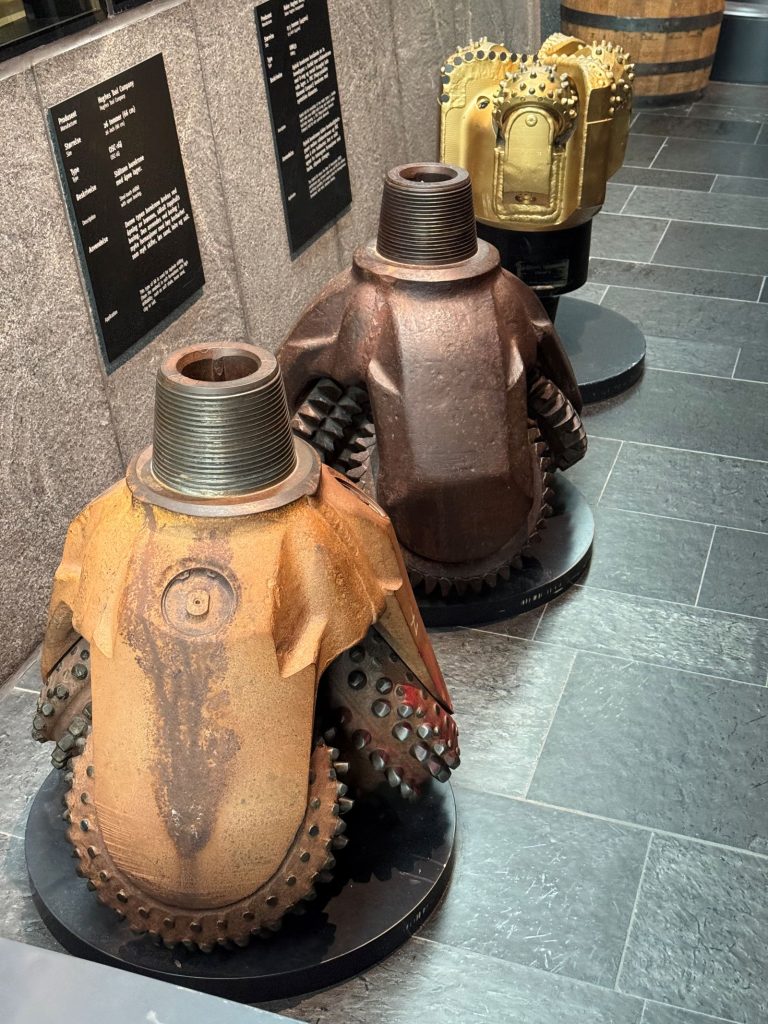
On our next day, we visited the petroleum museum and had a general walkabout. It would be our last full day on the trip, as we had an early departure for our flight the next morning.
The petroleum museum is remarkably frank about both the benefits and the costs of Norway’s oil wealth. Not only do they mention the impact of the oil industry on the environment and climate change, but they highlight a particularly disastrous oil platform disaster (Ekofisk, March 1980). One exhibit simulates an imaginary journey from the harbor to the deep see by projecting video on four walls; another is a short film dramatizing the emotional toll on families that the perils of oil drilling bring.
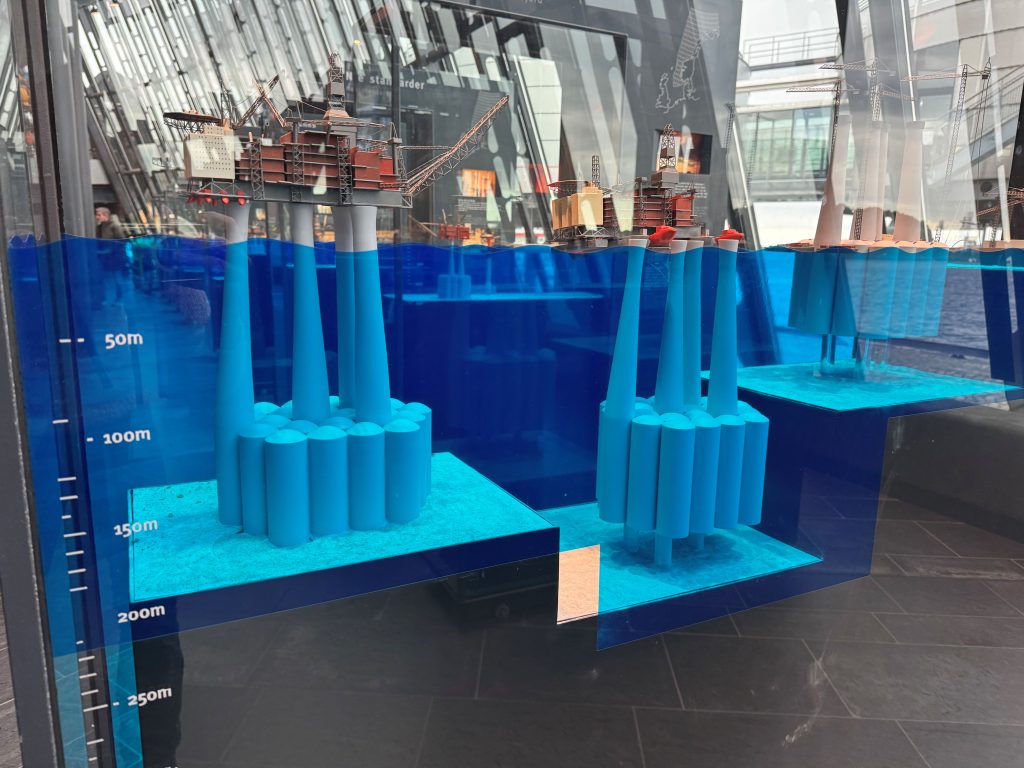
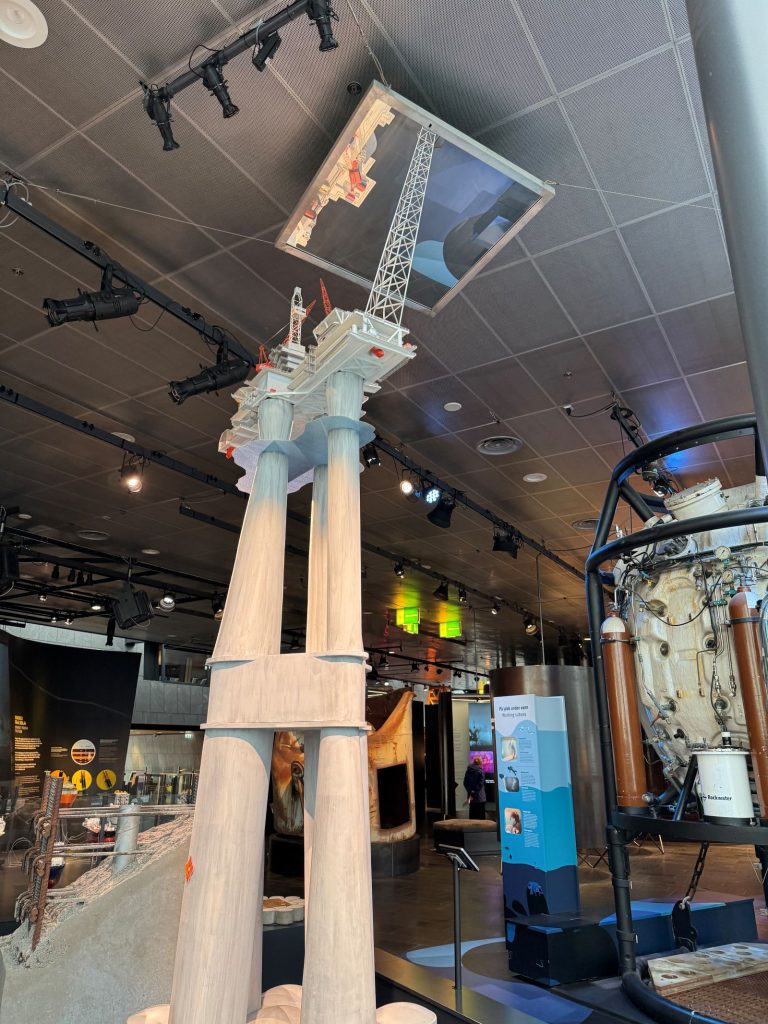
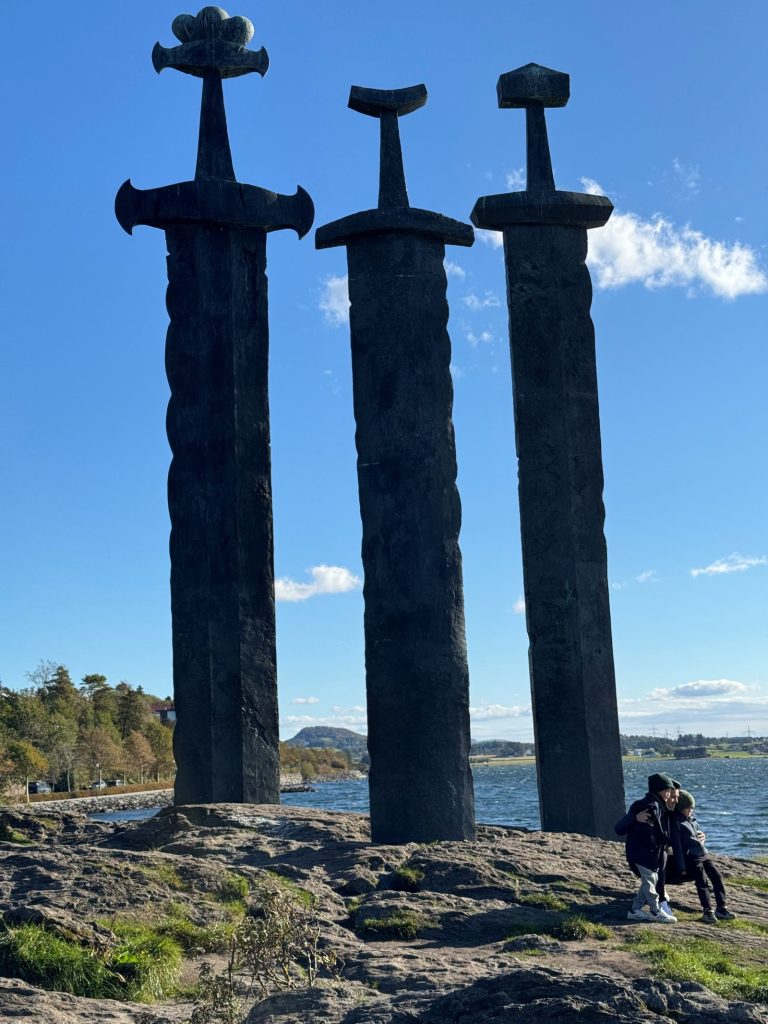
On walkabout, we took a bus out to the three swords, an immense sculpture commemorating the battle in 872 when King Harald Fairhair defeated his rivals and unified Norway under a single crown. We walked through a nearby neighborhood and admired modern Scandinavian architecture.
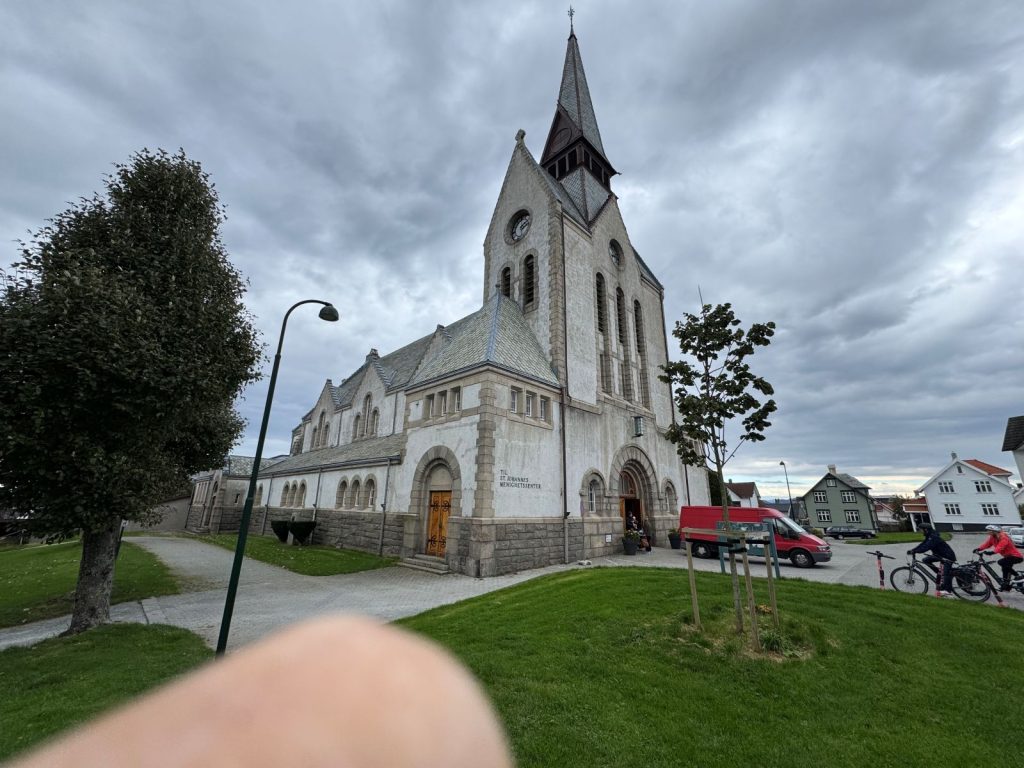
On a different day, we walked east and went past a nice-looking church; we wound up in a park, then took the bus back.
The next day, we got up early to catch our 6 AM flight to Amsterdam; after a short layover, we returned to New York JFK.