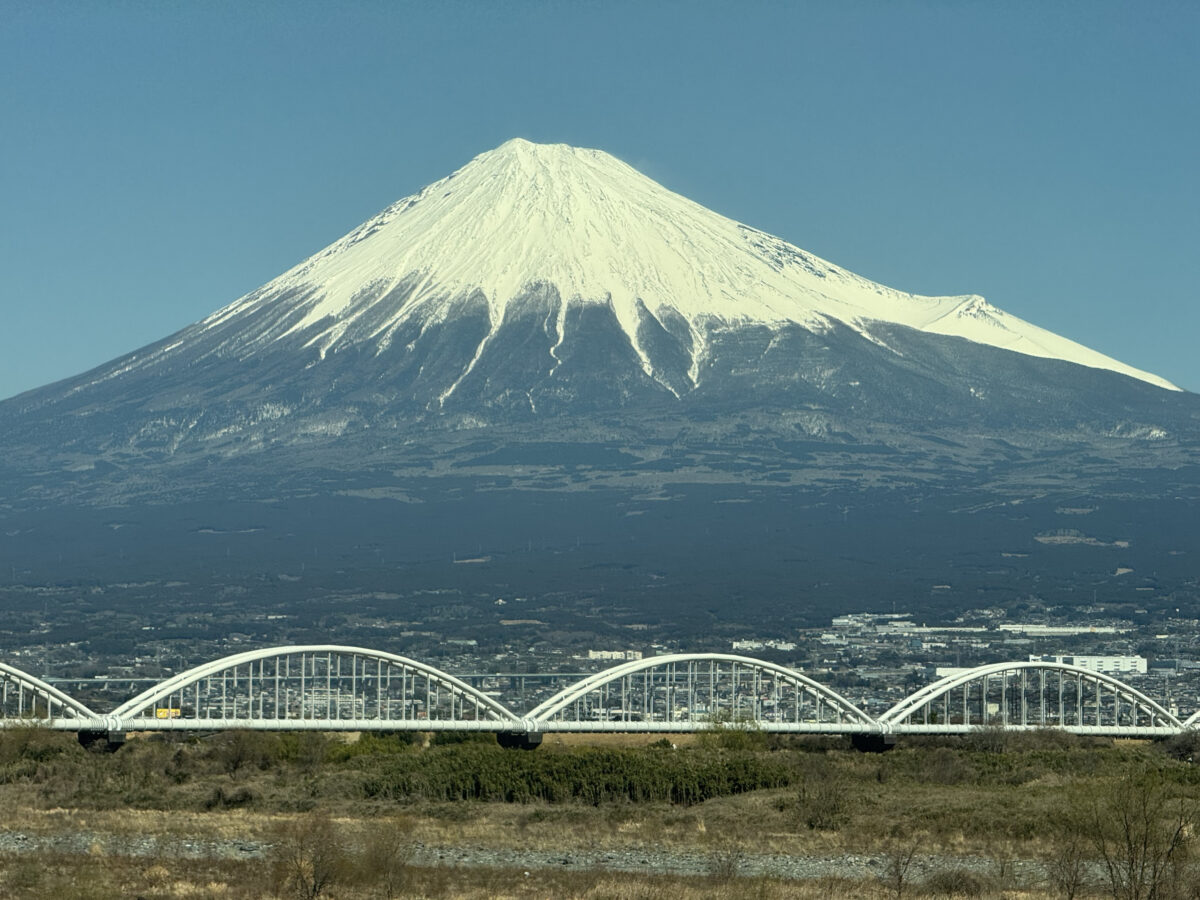
We took the shinkansen from Kyoto to Tokyo; it’s about two and a half hours, and you pass Mount Fuji on the way. As travel goes, it was a nice interlude, relaxing on the train, most of our luggage already waiting for us at our hotel.
Follow our trail, starting in Hokkaido, followed by Miyajima and Hiroshima, Kyoto and Amanohashidate, Kobe and Osaka, finishing in Tokyo.
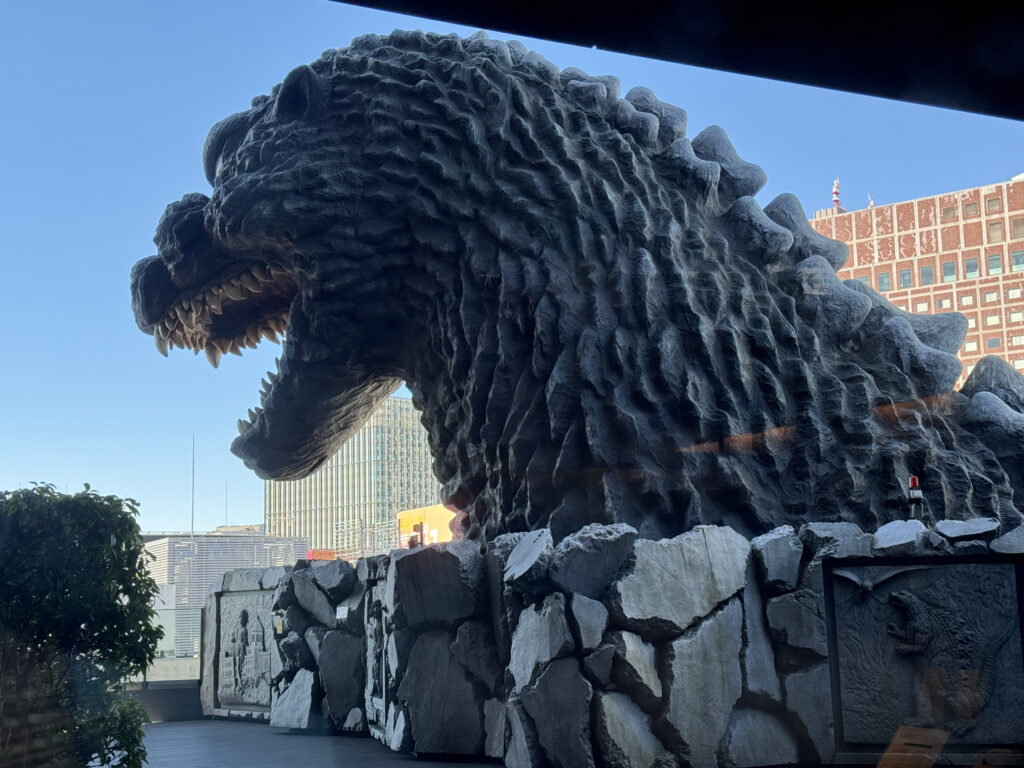
We stayed in Shinjuku, having settled on Hotel Gracery Shinjuku. Gracery is a hotel chain, and Shinjuku is where this particular one is. Since it’s attached to a shopping center, which is attached to a movie theater owned by the studio that makes the Godzilla movies, we were in “the Godzilla hotel”.
Previously, I saw Godzilla from the street when I came here with nieces. Now I could see Godzilla’s head close up, from the hotel lobby.
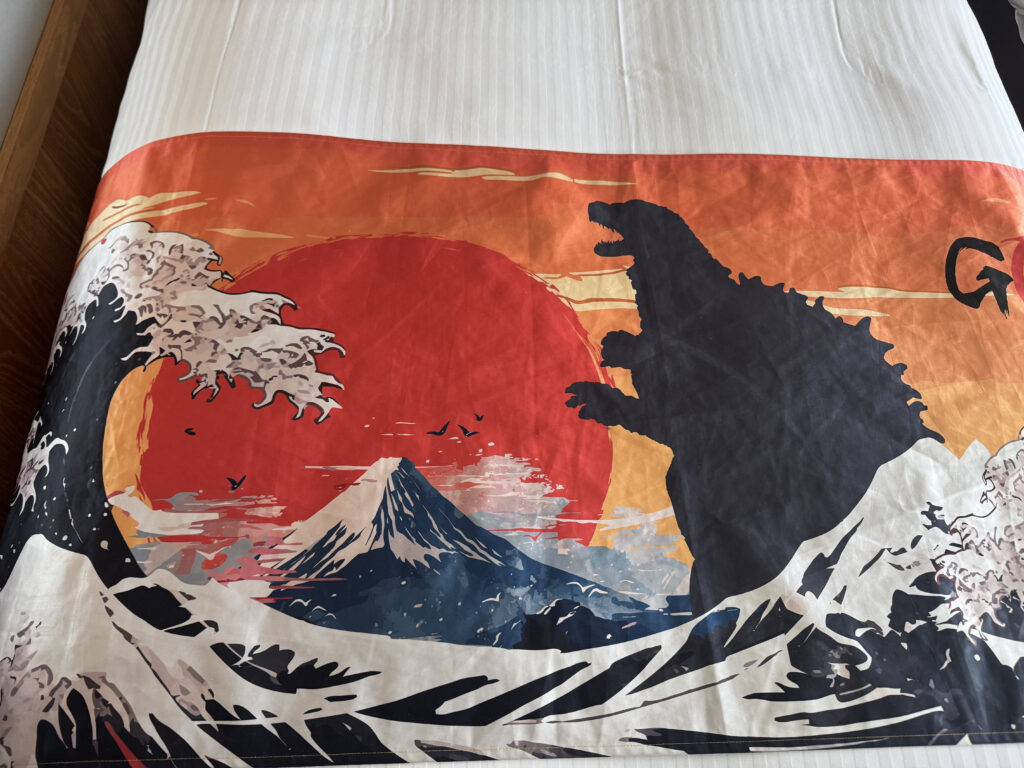
In fact, we stayed on the Godzilla floor (but not the Godzilla room). The floor’s hallway was decorated with photographic plates from the various movies, and the decor was Godzilla-themed: the throw, the coffee packages, the tissue paper dispensor.
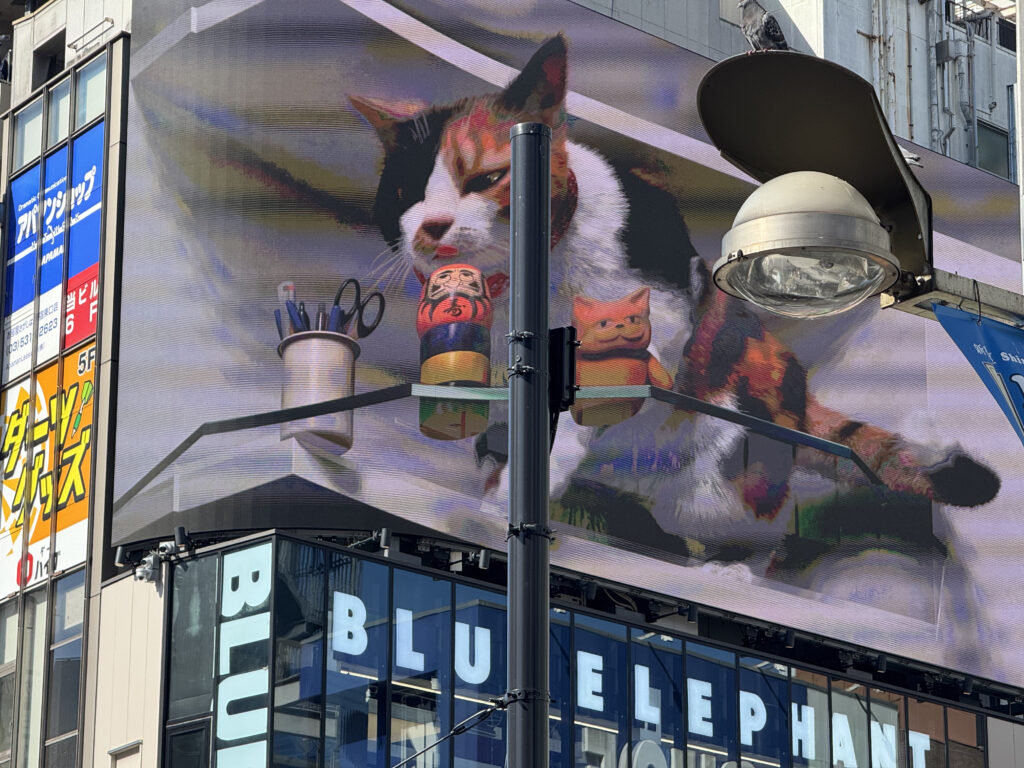
We took a walk around the neighborhood and snacked in the Omoide Yokocho before getting some ramen. We saw the 3D cat and called it a night.
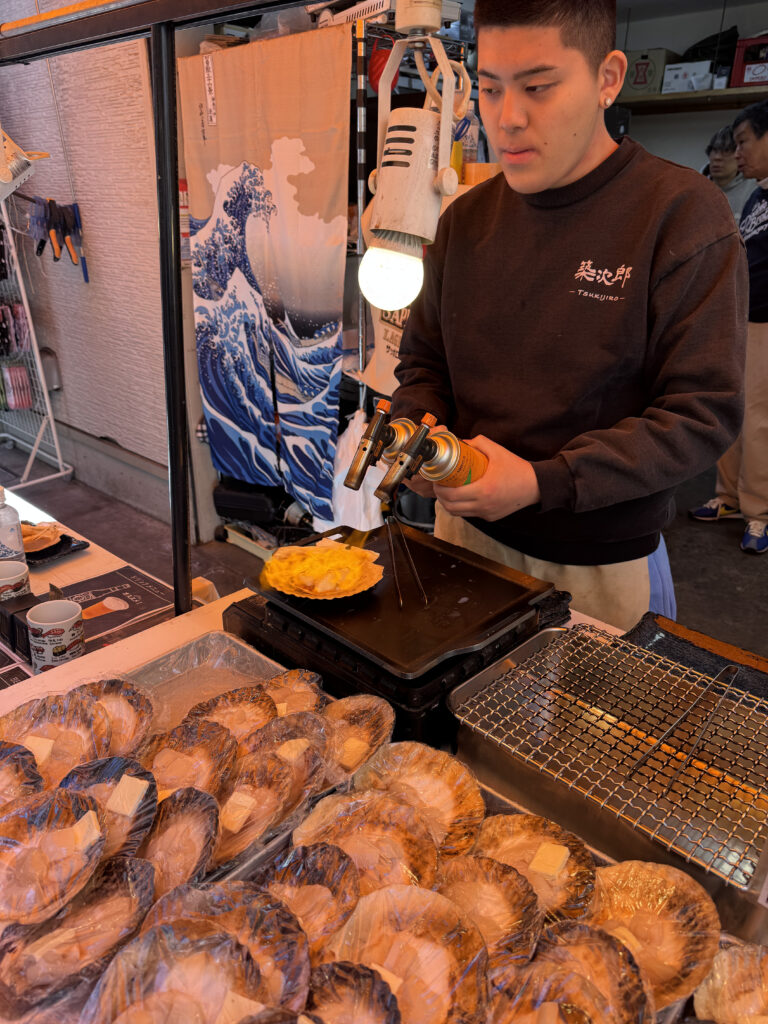
The next day was our one full day in Tokyo. We headed out to Tsukiji fish market and tried a variety of seafood. We had oysters shucked on demand, we had sushi and sashimi, and we had scallops seared with a torch and served on the shell. It was all very, very tasty.
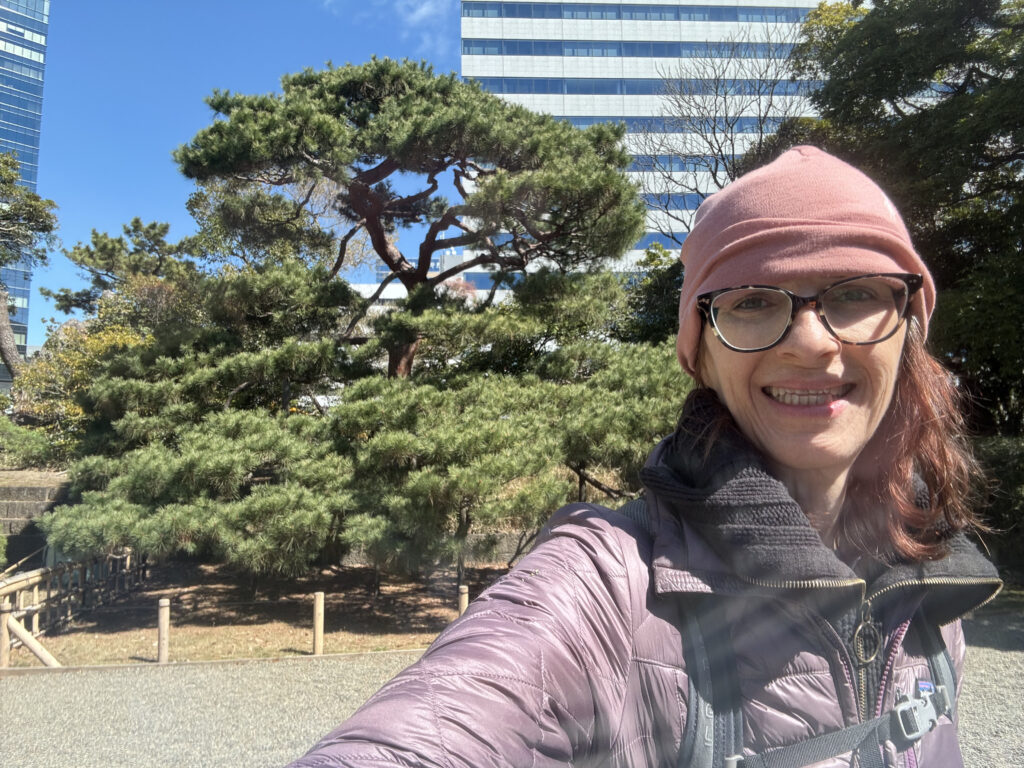
We also went to the Hymarikyu Gardens, where a woman offered us a free tour. Skeptical at first, it turned out to be wonderful (we also felt less like marks after two British women joined us). Near as we could tell it’s just a program for people with free time to volunteer as guides and maybe practice another language.
At some point we went to Team Lab Planets, which I visited with previously; it was lovely to see that again with Anji-san.
The gardens are lovely – the Japanese truly know how to groom the landscape to look natural yet controlled – and the history fascinating. They trained ducks to act as living decoys to bring wild ducks into a blind for hunting.
On our final day, our flight out was in the evening, so we wandered through Ginza, stopping at the Nissan showcase and just vibing our way around. Eventually, we collected our luggage and headed to the airport.
This is where our last hiccup occurred. After clearing security and enjoying the Sakura lounge, we were waiting at the gate and saw the boarding time come and pass with no boarding. tension slowly built as one by one, passengers sought information but it was about twenty minutes before an announcement was made. Essentially, strong winds were predicted in New York for the time we would be arriving, and another half hour went by before the airline canceled the flight and gave everyone Visa gift cards to help offset hotel stays.
We’d all fly the next morning, which meant it wasn’t worthwhile to go far yet working out whether these cards would pay for anything was time-consuming. We just paid out of pocket for the airport hotel and went to bed at midnight only to get up at six to catch our flight.
The flight itself was fine*. We’d spent over two weeks in Japan and it was full.
(*) one result was that instead of having a day to repack for a work trip, I literally got home from Japan one day and flew to Washington state the next day, where I would spend a week and a half on the west coast.
What more can be said about Japan? My second trip in a year, David’s first. I’ve seen a lot and I feel I’ve barely scratched the surface. We will probably go again, perhaps for him to have another crack at skiing, and for both of us to see parts we’ve not been to; the west coast and the south are appealing; perhaps the Japanese Alps, and the Izu Peninsula.
Getting there is the expensive part of the trip; in-country, rates for food and lodging are very reasonable. There’s no tipping, though we did see some coffee shops with a little top while in tourist-heavy areas.
Japan is very systematic, by which I mean it works very smoothly if all your paperwork is in order. Americans and most Western nations do not need visas but there is an online portal to register your trip and generate a QR code for entry. You can do this by hand on arrival, but it slows entry down considerably.
Additionally, Japan strictly regulates certain medications, particularly any stimulants, including those that might be commonly prescribed in the West (certain anti-anxiety or ADHD drugs come to mind). Navigating the online permission system for this can be challenging; you’ll need a doctor’s note, and the amount of drug you bring in must match your stay.
Getting around is pretty easy. Japan Rail Passes are available only outside the country: order them ahead of time and activate them in Japan. There are regional as well as all-country passes. Uber is barely in Japan; for Taxis you’ll need the Go app, which essentially functions like a ride-sharing app. There are also taxi stands at most stations.
If you want to rent a car, you’ll need an International Drivers’ license. In the US, you do this through AAA. You fill out a form, pay a fee, submit a passport-style photo, and receive a physical IDL a couple of weeks later.
You must have your passport with you at all times. To me, this is normal, but not all countries require it, and I suppose some tourists leave their passports at the hotel. Don’t do that.
Japan likes cash, but we have an easier time paying with credit cards and apps on this trip than my previous trip.
Book ahead of time. Book months ahead of time if you can. Most attractions, whether it’s Studio Ghibli or TeamLab, or the Mazda factory tour require you to book not just for a specific date but a specific time window. In some cases there will be a dilemma of not being able to book very far out, but once booking opens, things go very quickly.
That’s our trip to Japan, 2026. I hope you enjoyed it. We will surely go again.