Maine Holiday: The Drive

What to do, what to do? In times of Covid, travel restrictions and our own uneasiness have made David and I less willing to travel. Normally we might go to Europe, or try some other far-away place, but the state of the world being as it is, in late summer we opted to drive to Maine.

Last October, I went to the Mount Desert Island area for the first time, to take a four-day kayak instruction course. The course was great, but also the venue was eye opening. While I’ve been to Maine regularly over the past several years, it’s always to the same coastal area nestled between the Kennebec and Sheepscot rivers.

In particular, the area has some great kayaking, and we organized our trip around two days of “rough water”. I put that in quotes because the ocean was, in fact, quite tame while we were there, but we did get some good experience on a reversing falls known as Sullivan Falls.

I’ll write about that separately. Here is what to know about our travel on the way up.


We got off to a later start than we would have liked; partly this was because I had to run into Manhattan early to meet a contractor, to get the final stages of my apartment done. Then I raced back to the house to find that things still needed to be packed and boats placed on the car (the Prius, or as I call it the Prubaru, the Prius we treat like a Subaru).

We were on the road by . . .11 AM? We had already changed plans to meet a friend of David’s near Boston and possibly overnight, but that friend was busy with packing and preparing for his own vacation, so we wouldn’t come in until the evening. Boston is only a four hour drive, typically, so what might we find to kill some time along the way?

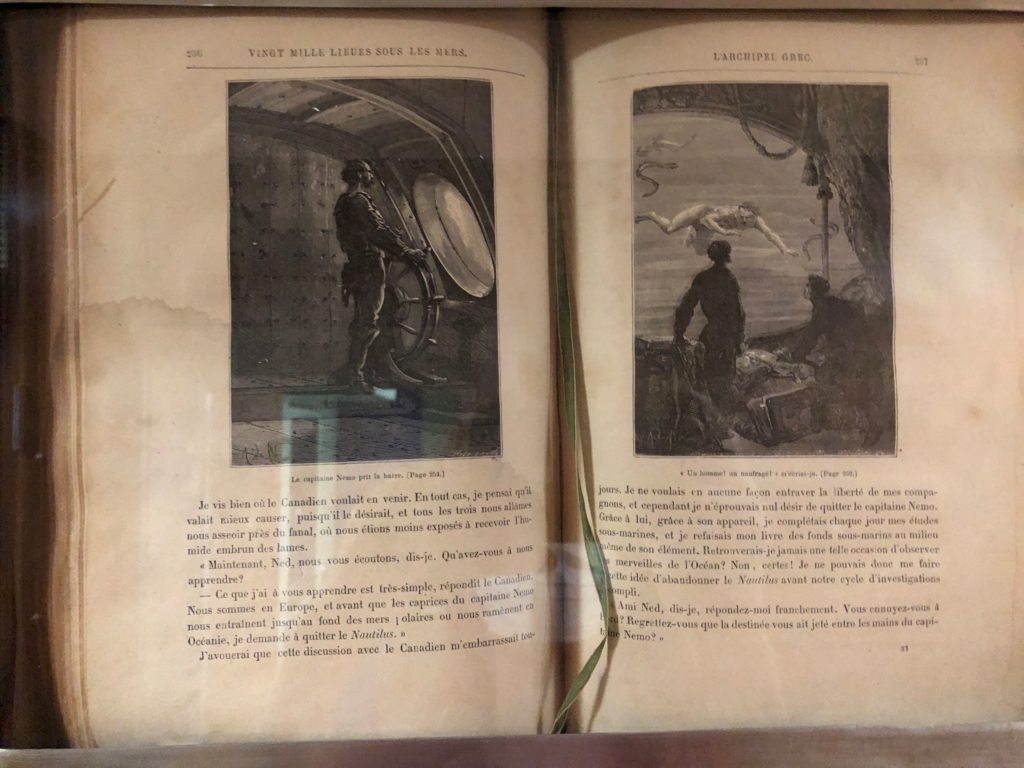
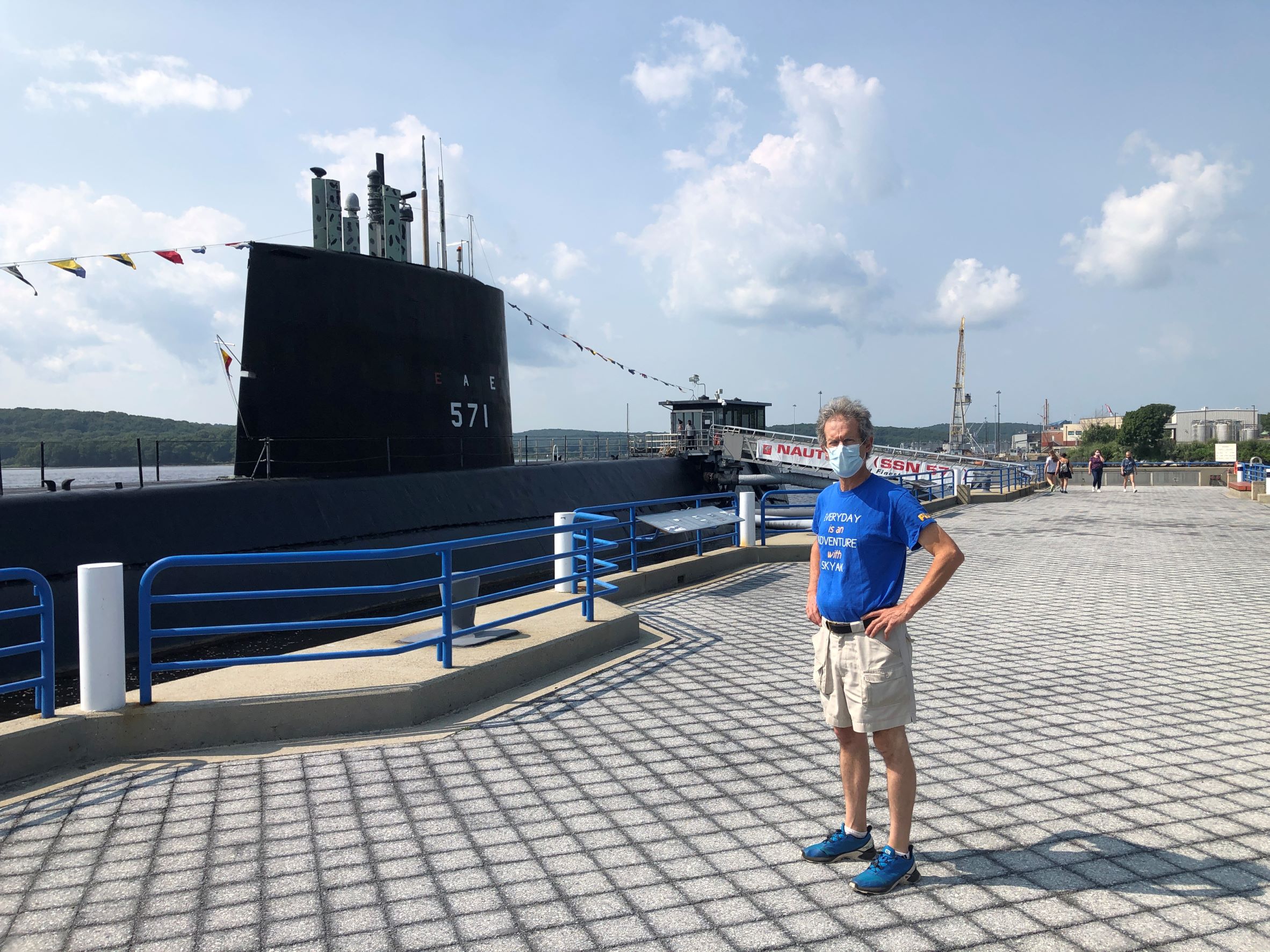
That’s right, the submarine museum in Groton, Connecticut. I’ve driven past signs for it so many times, and David and I are both technically-minded people familiar with various submarine lore. The Nautilus is parked there for touring; the world’s first nuclear submarine, named for Jules Verne’s famous vessel captained by Nemo.

We’d get there just in time to catch the last hours of the museum.
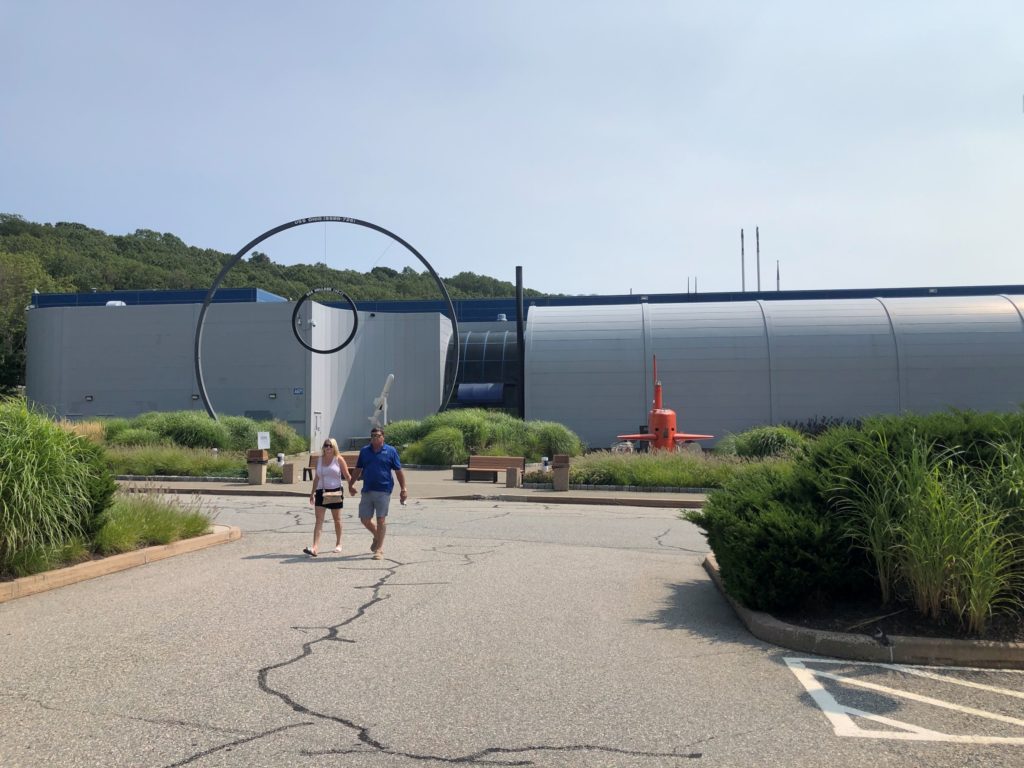
Museum Entrance
Entrance.
Sub Museum. August 2021
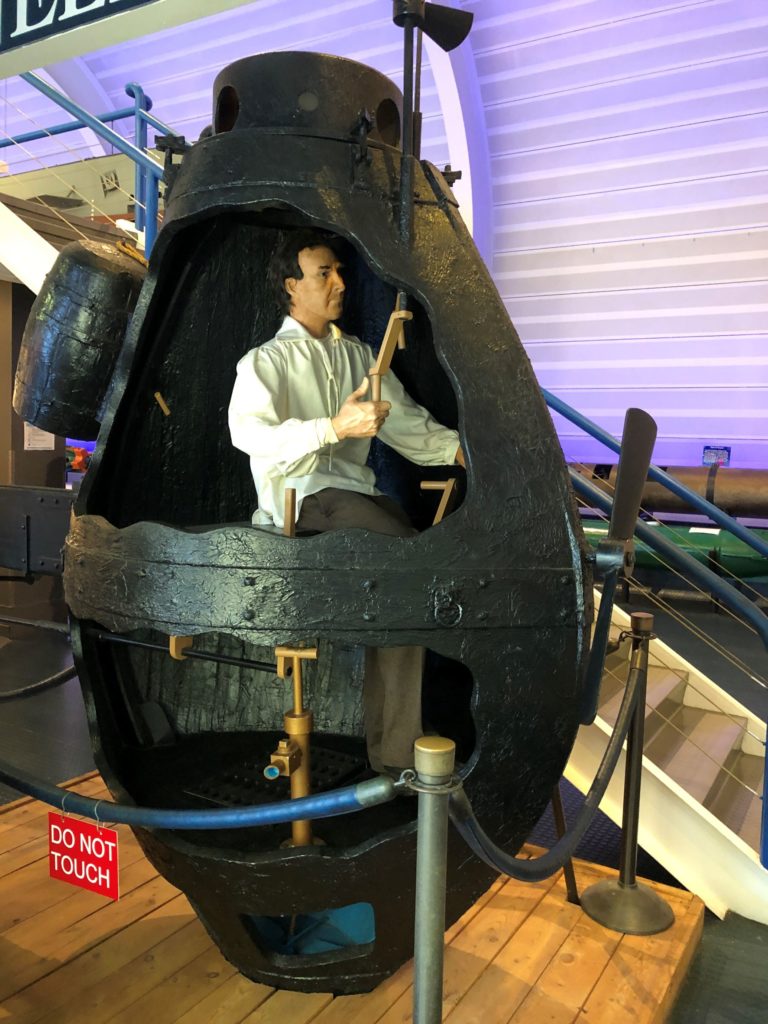
The Turtle.
On the Nautilus
On the Nautilus.
Sub Museum. August 2021
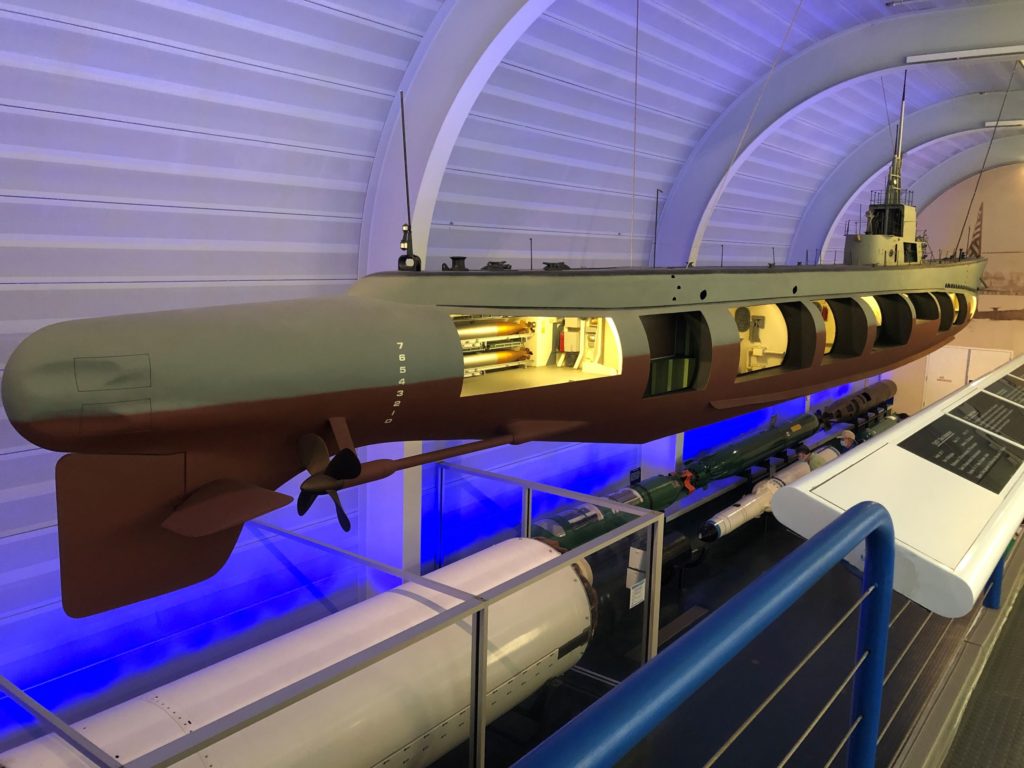
Model Sub.

One thing to keep in mind is that this is a military museum. On the one hand, the military has funded a lot of submarine research; the dive tables most scuba divers use today were worked out by Navy researchers. Many of the most dramatic, and also tragic, stories of submariners are of military vessels. Even the ship commonly credited as the first American submarine, the Turtle, was essentially a foot-pedaled barrel intended to attach an explosive to British warships during the American Revolution.
Sub Museum. August 2021
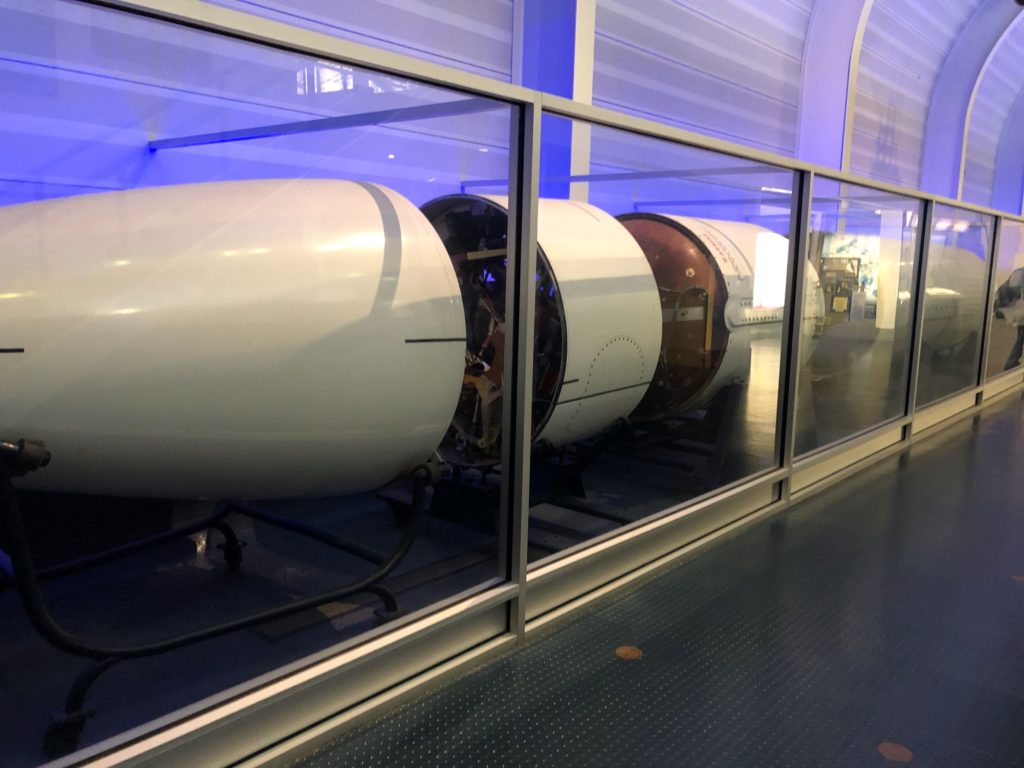
Polaris, Disassmbled.

On the other hand, after a while, it was clear that a significant portion of the museum was devoted to the Silent Service, submarines deployed during World War Two. In the back of one wing are the stages of a Polaris missile, the first submarine-launched ballistic missile developed by the United States. A small hall of heroes details stories of bravery by submariners in the service, and the final wing glides through various develops during the Cold War.

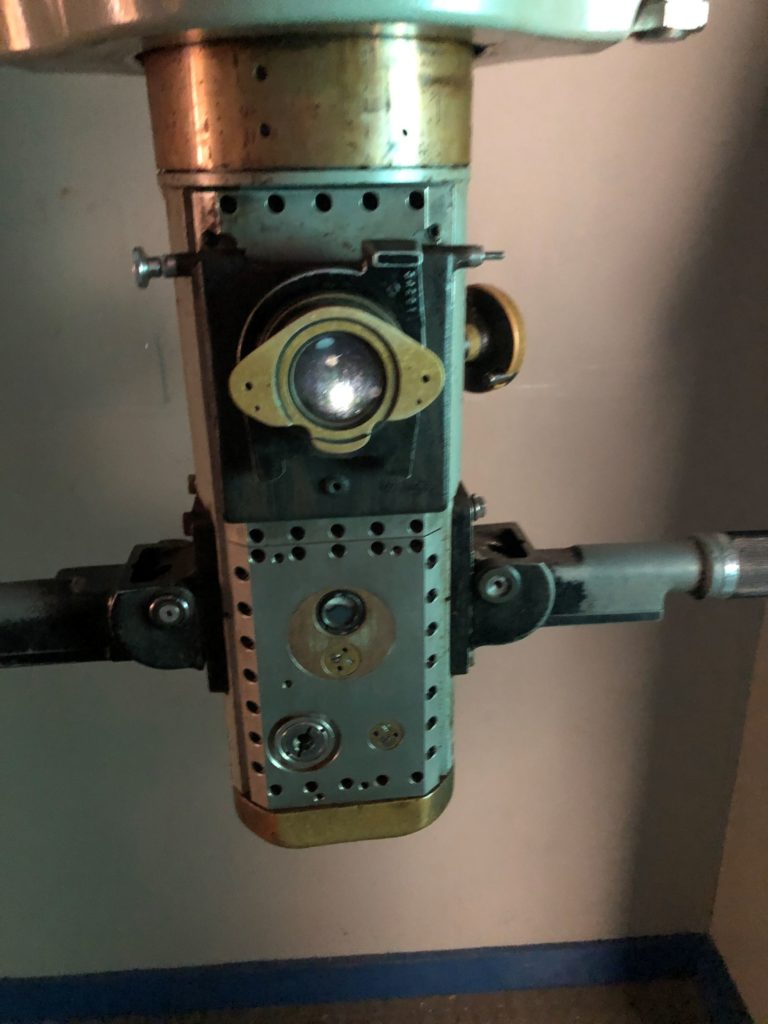
The one cool thing we found was that in a hands-on area apparently intended for children, the periscopes were real, and we could look out on the parking lot – to check on our kayaks, of course! We could even point the periscopes at each other, and wiggle for a friendly little wave.
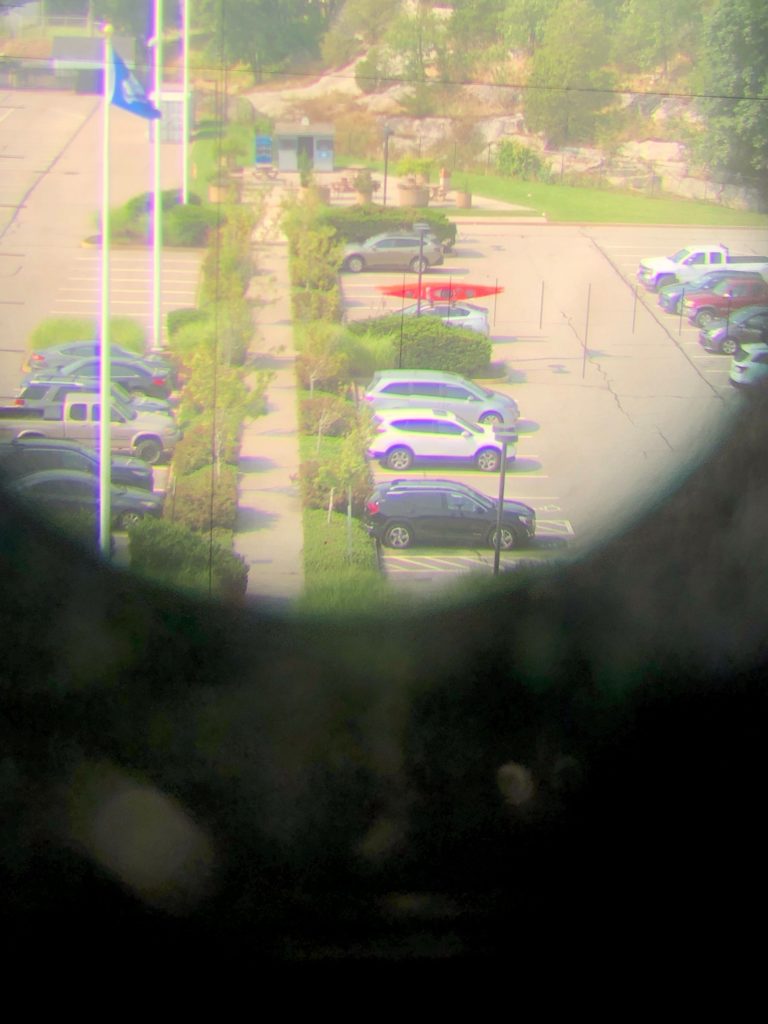
Sub Museum
Periscope.
Sub Museum. August 2021
I Spy.

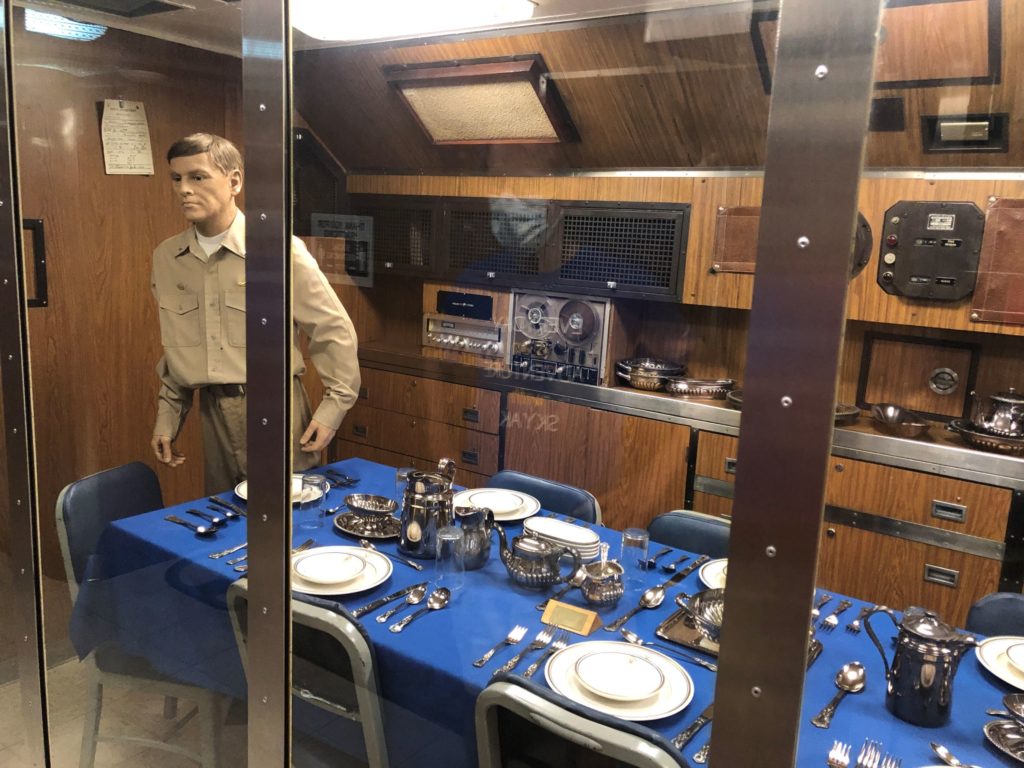
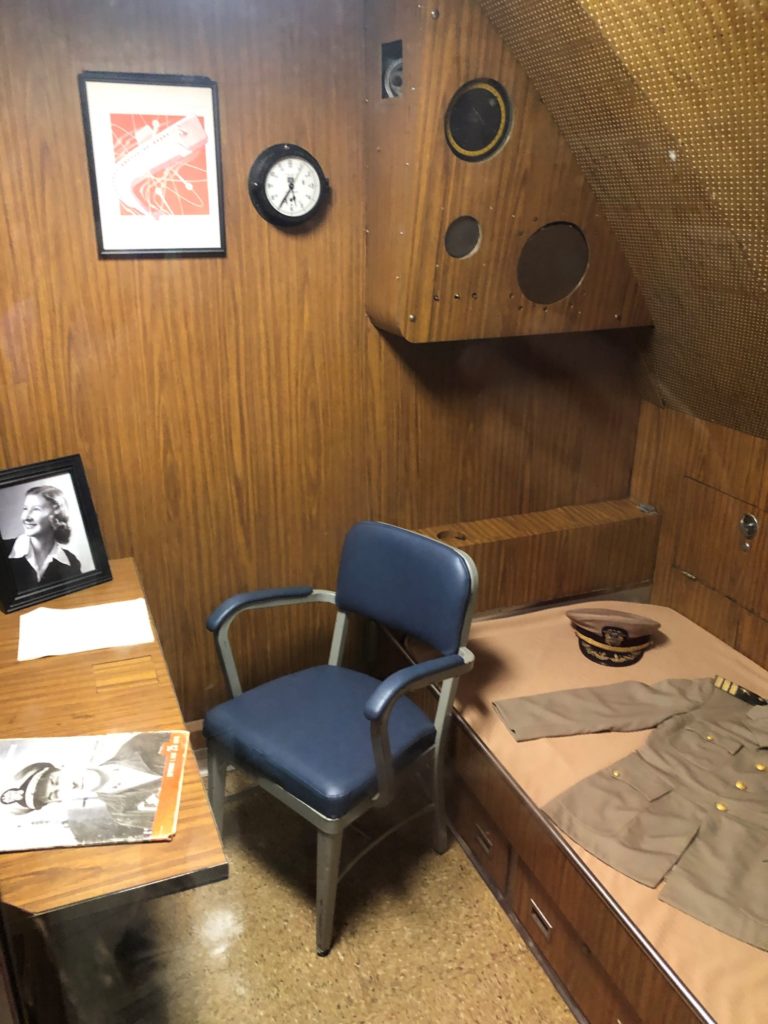
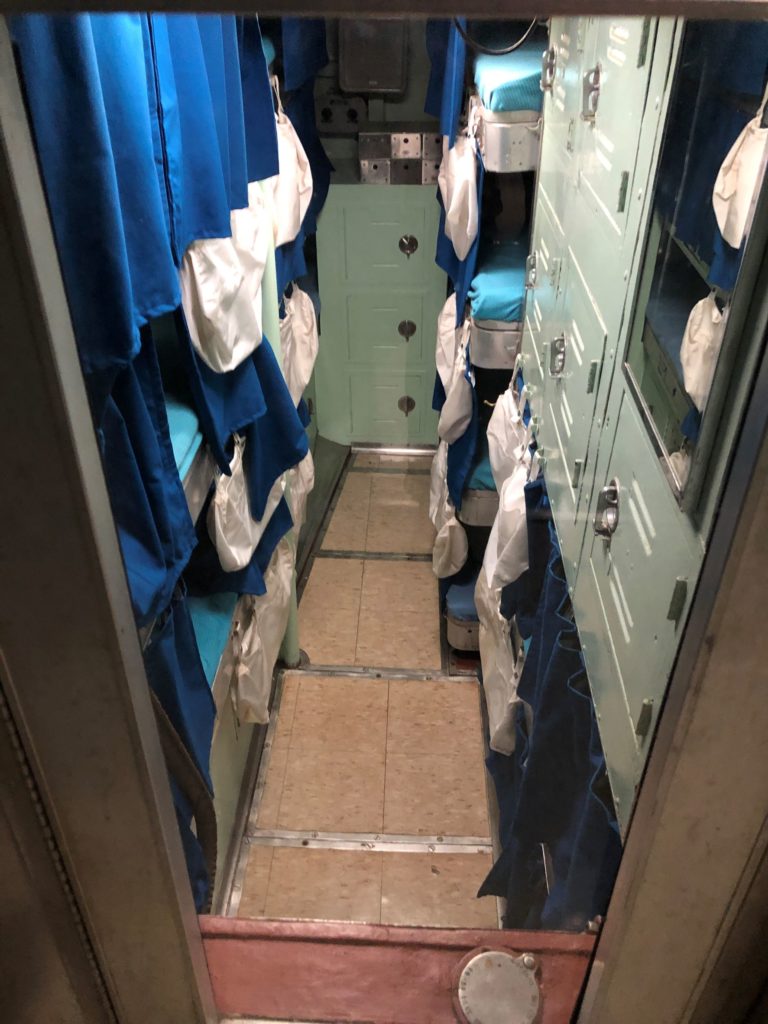
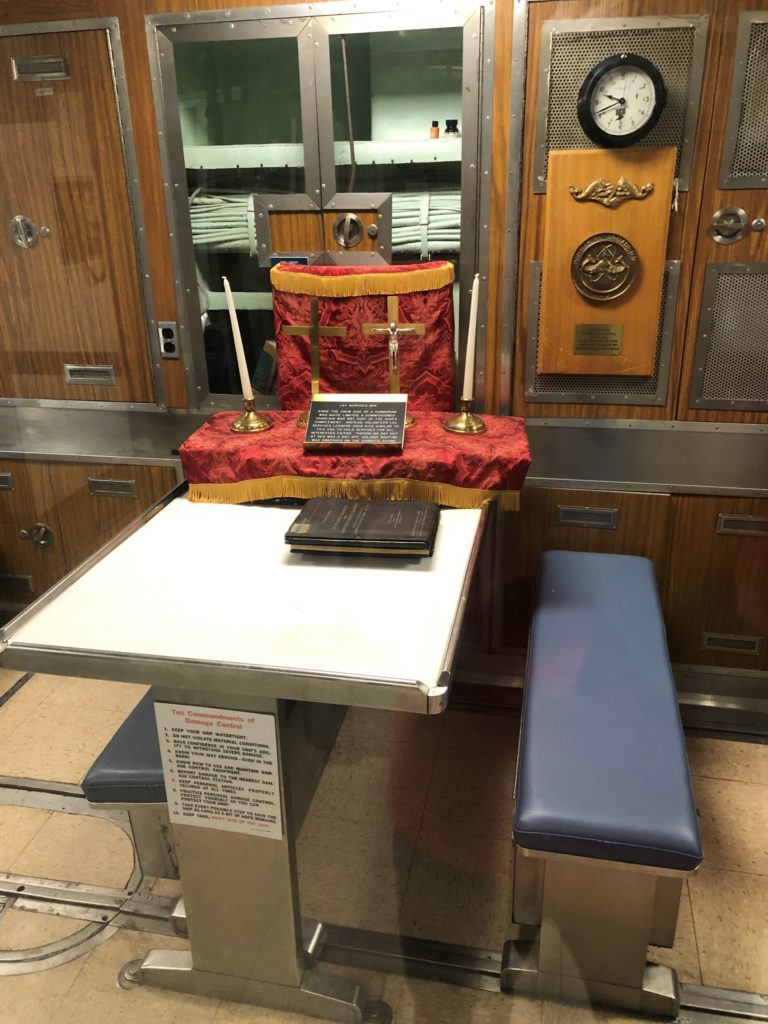
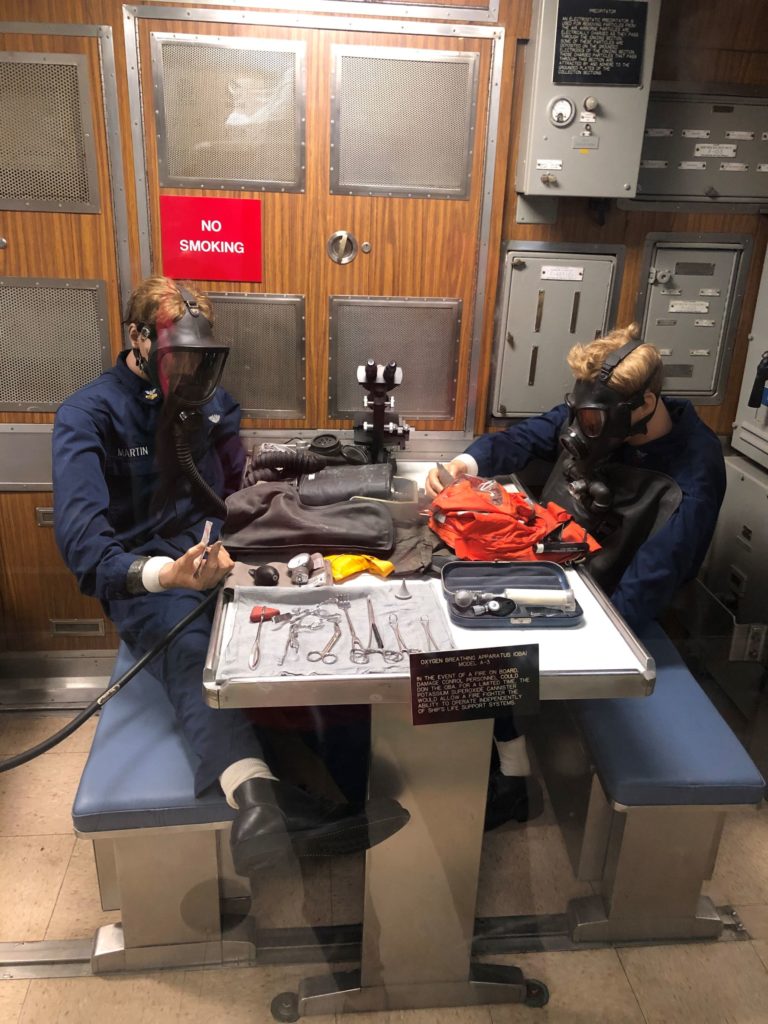
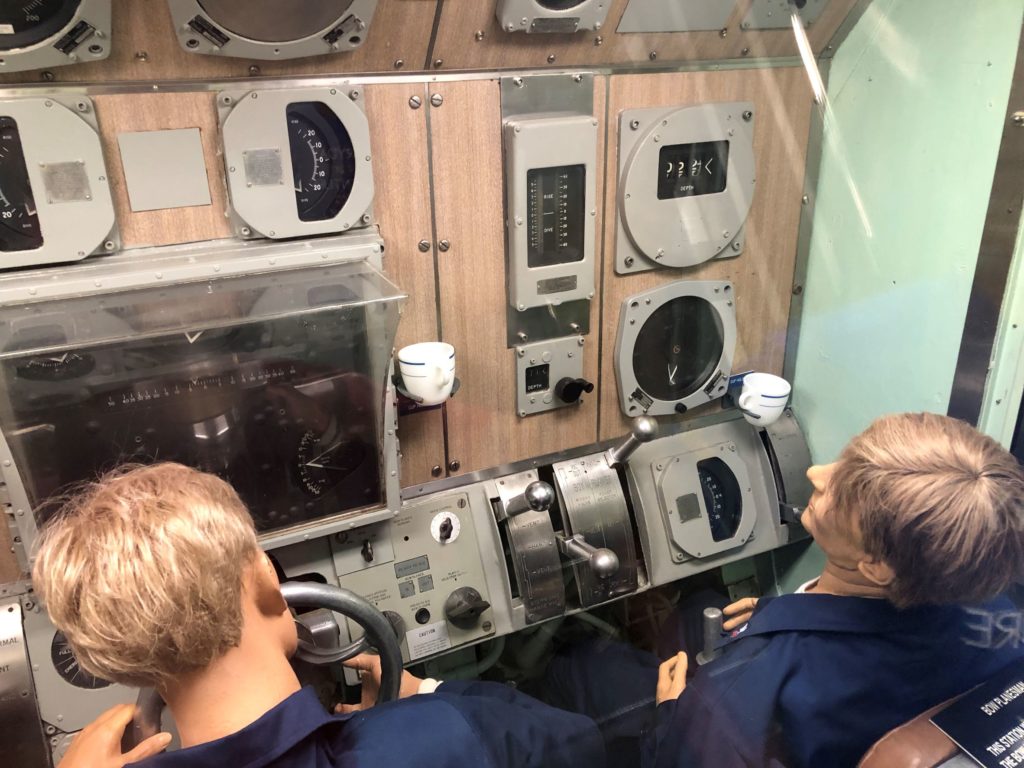
The Nautilus, of course, was the centerpiece, and the first thing we visited. If you’ve toured other decommissioned ships, the experience is much the same: the halls have been widened for better touring, dioramas with near-lifesize mannequins have been set in a scene, and much of the old machinery and electronics are still in place, with placards describing their history and purpose.
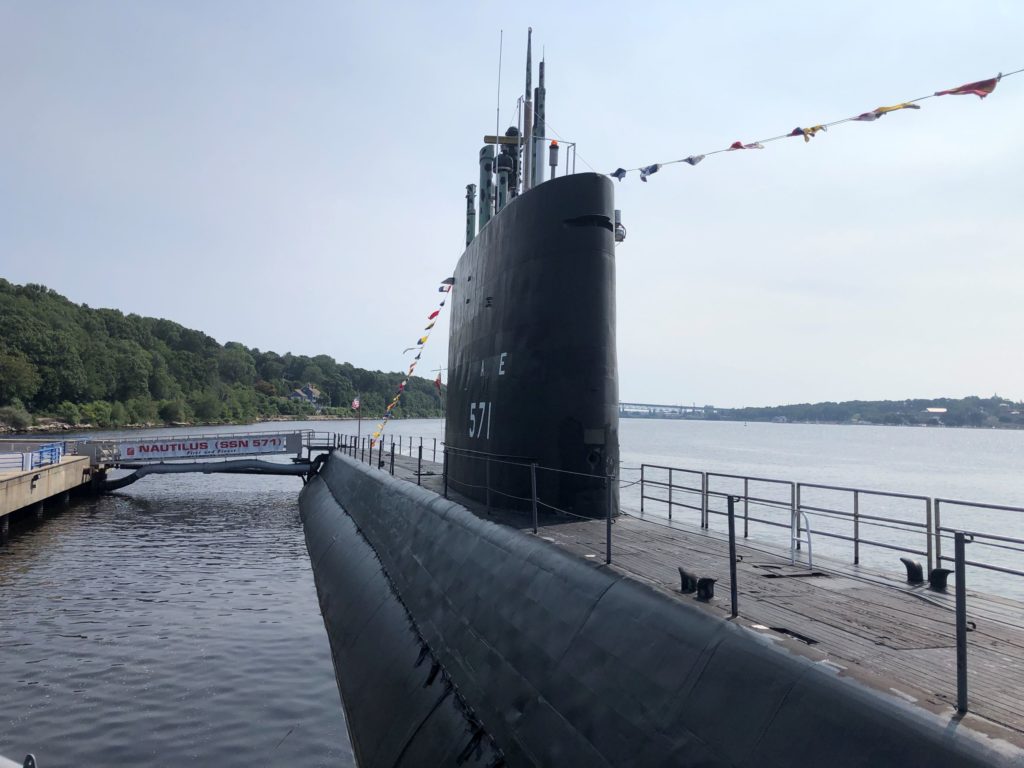
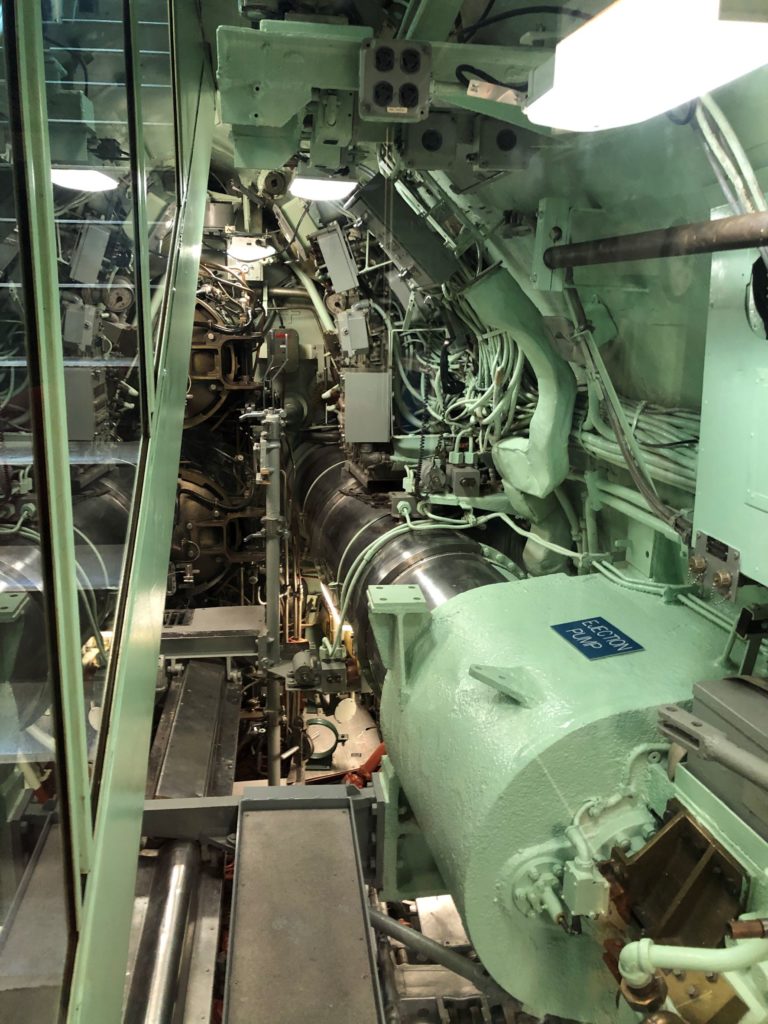
The SSN Nautilus
The SSN Nautilus.
Sub Museum. August 2021
Mechanicals.
Officer Mess
Officers’ Mess.
Officer Quarters
Officer Quarters.
Sub Museum. August 2021
Enlisted Bunks.
Sub Museum. August 2021
Makeshift Chapel.
Sub Museum. August 2021
Repairing Gear.
Sub Museum. August 2021
Helm.

The ship is quite a throwback for our era of location services in our phones and easy communications of all means. How would a submarine know it was at the North Pole? How would a message be sent from the depths of the sea? Just how tight was the bunking? Pretty, tight, it turns out.

We stopped in Mystic afterwards, studiously avoiding the famous Mystic Pizza in favor of a themed pub. Thence, we continued our drive to Woburn, MA, to meet the friend, have a chat, and sleep.

The next morning we lingered over coffee and admired the backyard from a raised porch; the yard slopes steeply away, and an impressive bird feeder dangles high from a tree, at a far enough distance that the birds could eat peacefully while we watched them.


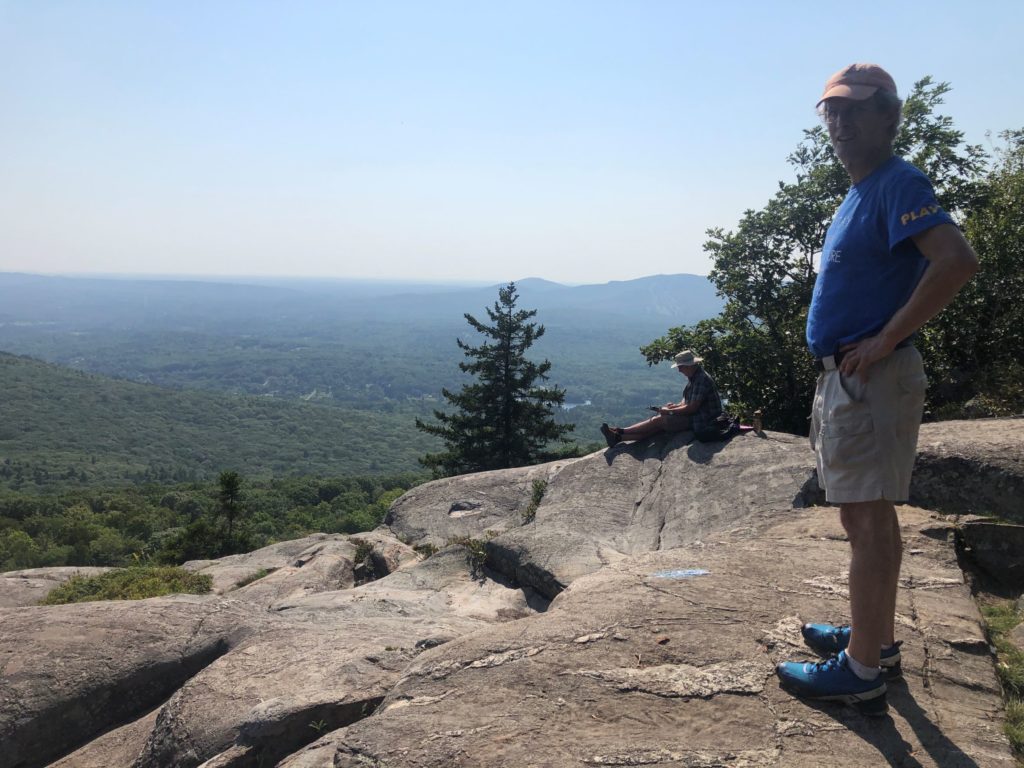
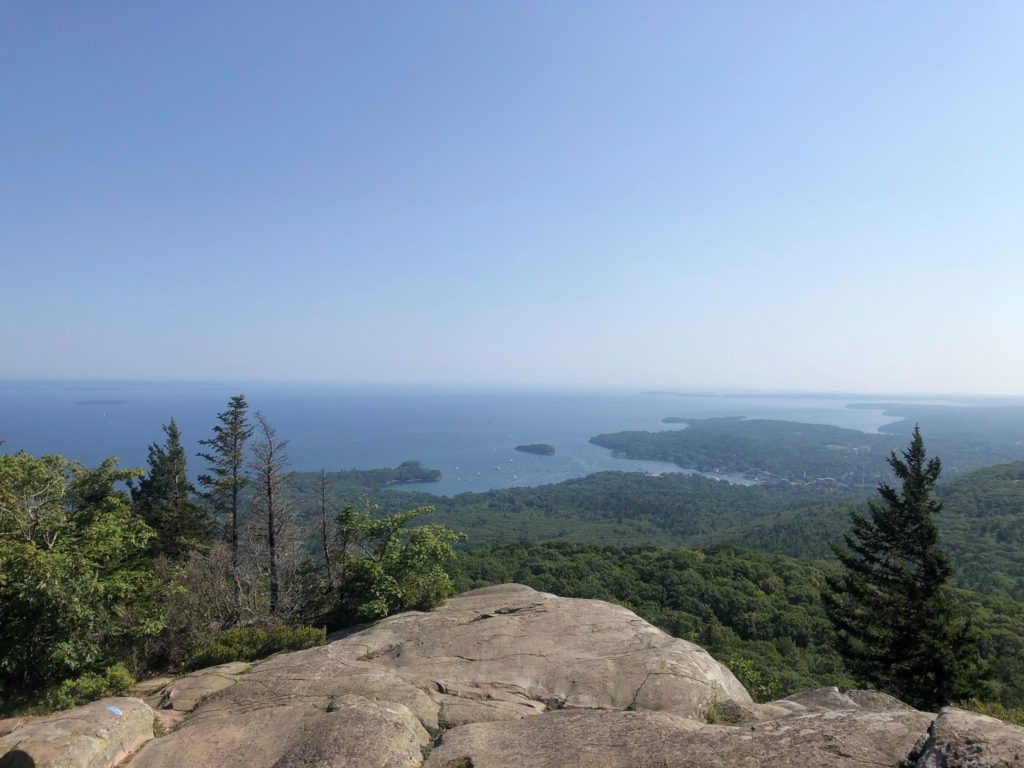
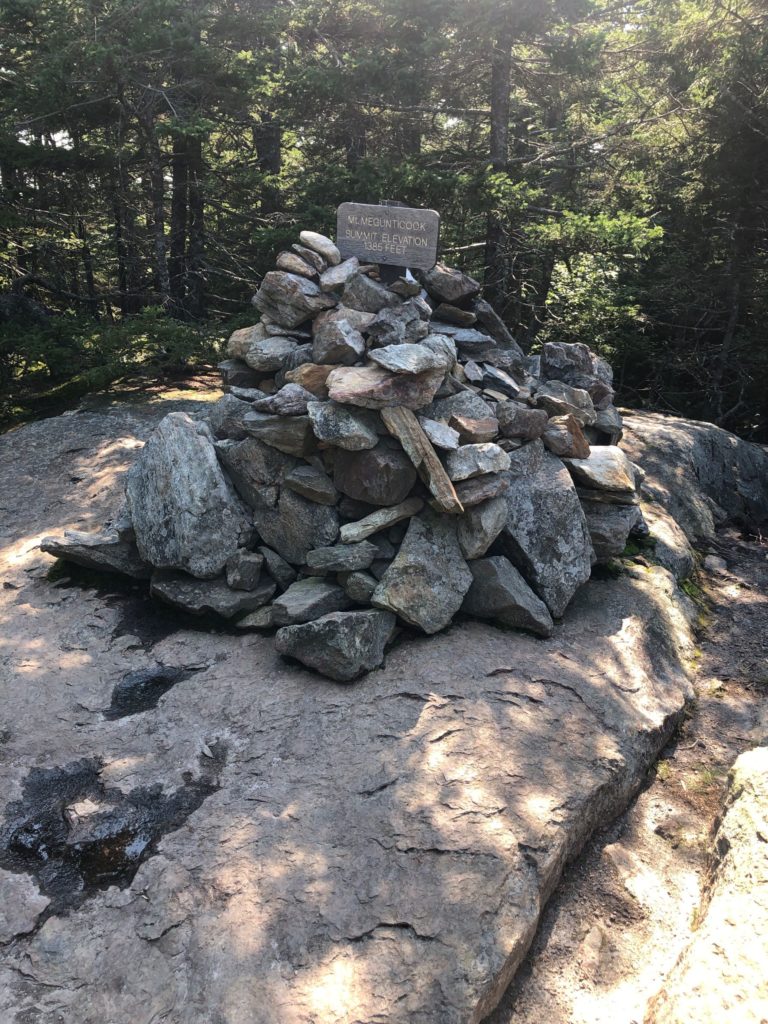
We set out to complete our journey to Maine the next day. After following the interstate up to Bath, we took the scenic route, the old Route 1, more or less as we normally might for our usual destination, but continuing past that through a string of coastal towns. We stopped for a recommended hike along the way, at Mount Magunticook.
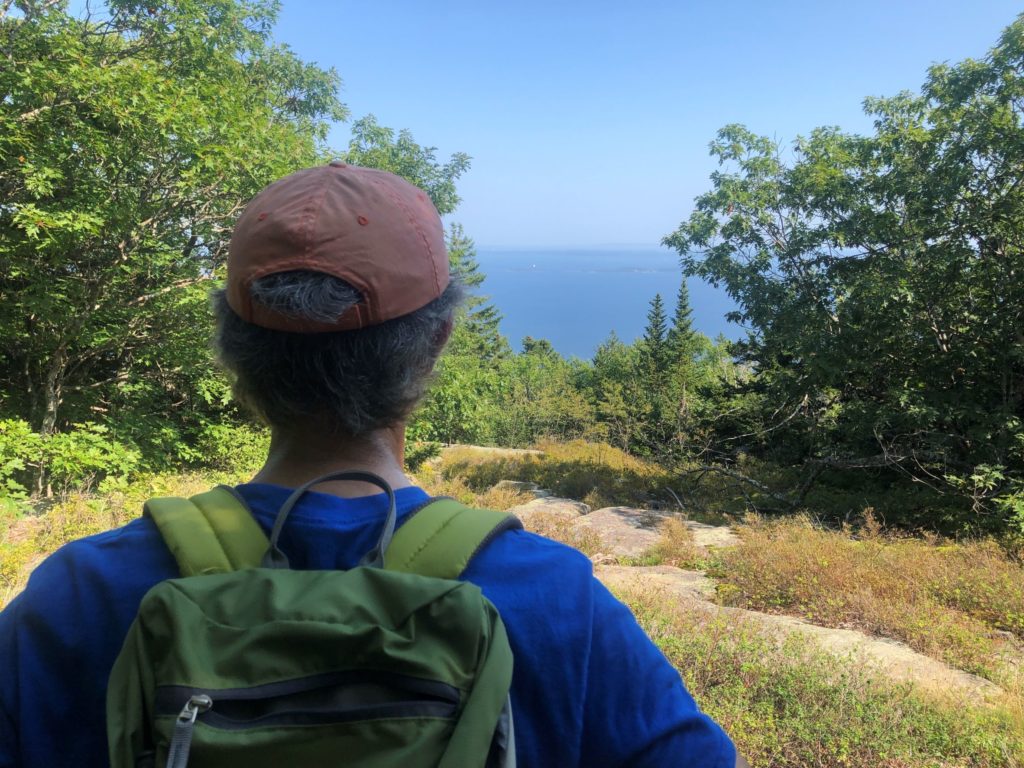
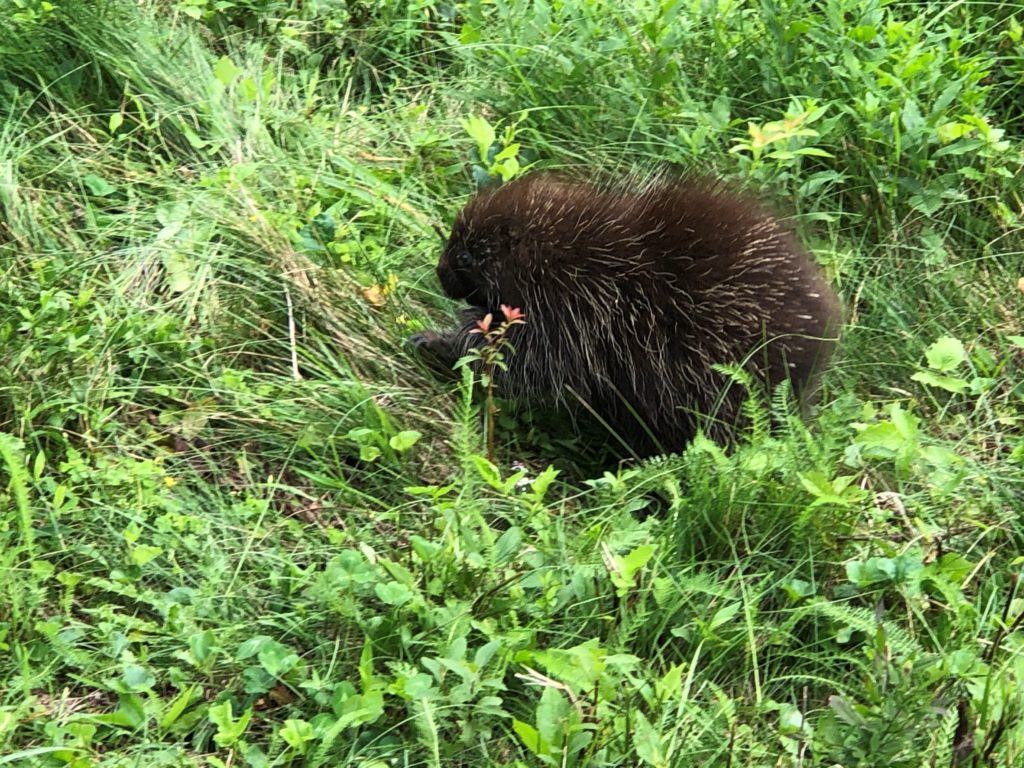
Peeping
Peeping.
Hedgehog
Hedgehog.
The View
View of the Valley.
Bay View
View of the Sea.
The Summit
The Summit.
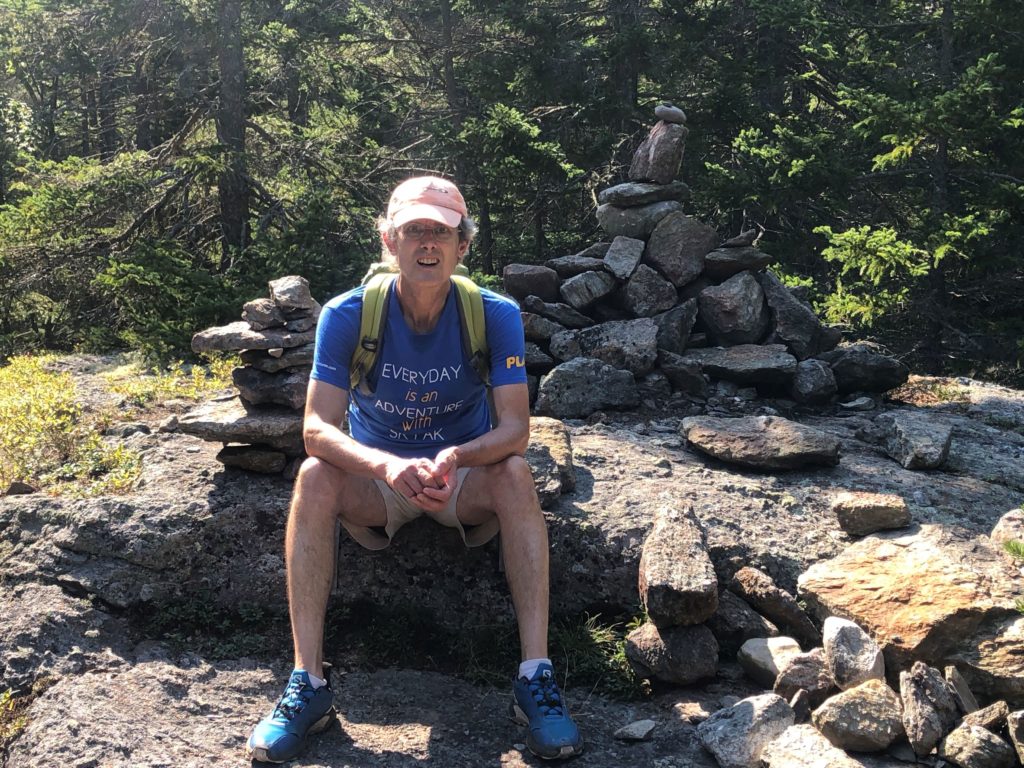
David at the Summit
David at the Summit.
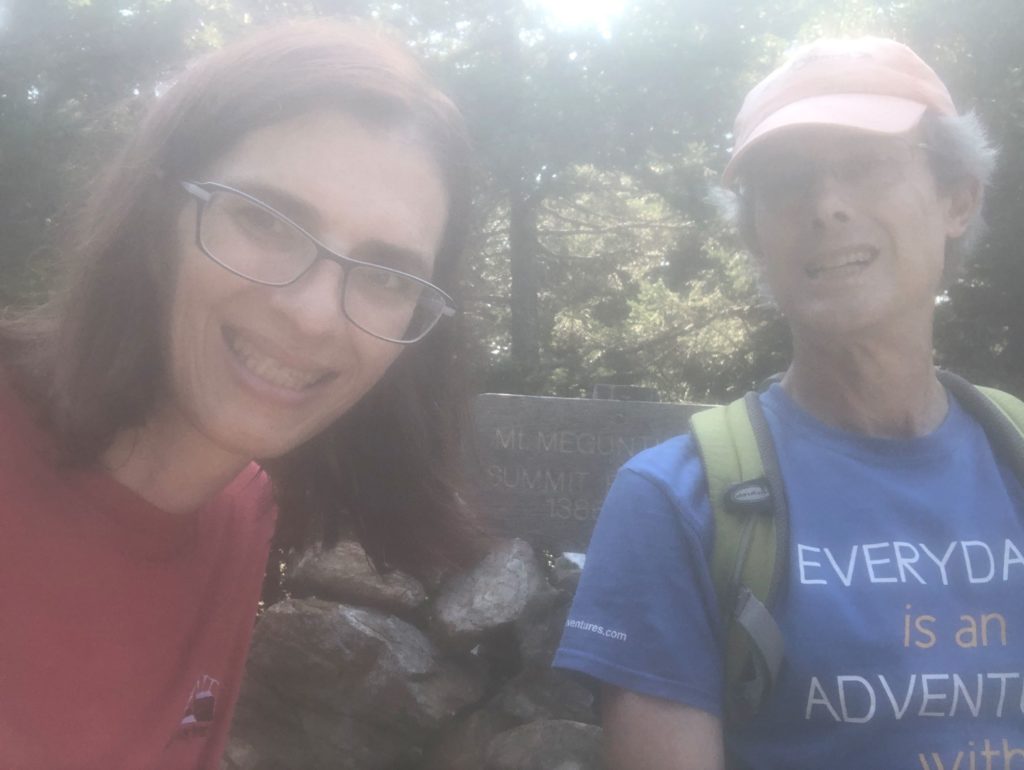
Julie and David
The Summit of Magunticook.

It was a very pleasant hike. After that, we drove on in to Ellesworth, checking into our hotel with no direct interaction with a human being: the guest policy and lock code for our room was texted to us, we parked and unloaded, and then had dinner. The room would be our home for the next few days.
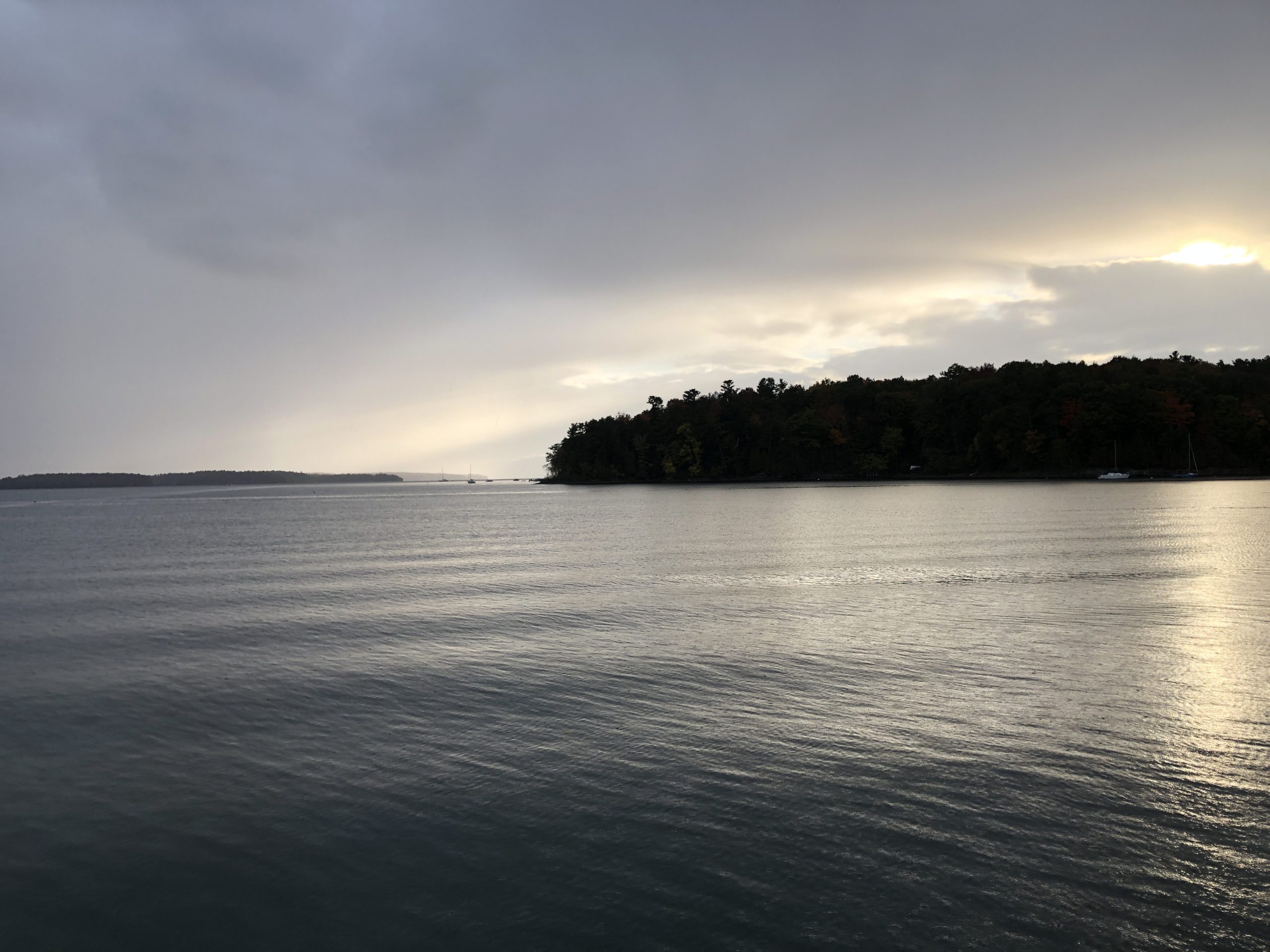
The Ida Drive

We were on our way back from holiday in Maine; David and I had two sea kayaks strapped to the roof of the Prius, and we’d left Ellesworth with four fresh lobsters sealed in a box, a semi-surprise dinner for relatives we’d see near Boston. We knew the weather forecast, prominently featuring rain, and our goal was to leave Boston early in the evening and “beat the rain” on the way home.

As things turned out, we didn’t leave the Boston area until eight that night. Even in the best conditions, we’d be rolling into home by midnight, and these were far from the best conditions.


For the most part, we were just driving through a lot of rain. It was a lot of rain. I can’t emphasize this enough. The rain was constant, and high in volume, relentless. That said, we’ve driven through heavy rain before, so this was in a sense simply a long-term application of existing skills.

Our first real choice was whether to take I-95 or the Merritt Parkway. The Merritt has no trucks, but more ups and downs, and thus potentially low areas of flooding. We were perplexed because most of the time we checked for routes using Google Maps, I-95 was not offered at all, not even as an alternate or slower route; when it was, it was ten minutes longer. We decided to take our chances on the Merritt.

Most of the way, it was not terrible. We drove under the speed limit, and watched other cars pass us; we also passed cars that had given up earlier. The following was about two hours after leaving Boston, not long after we were on the Merritt, a bit north of Bridgeport, CT.

As we continued, signs of trouble increased. I looked at a weather radar map and saw we had driven squarely into the darkest swatch of the rain. We were getting hammered, and we slowed down, watching diligently for pooling water and vehicles in distress.

We started seeing problems regularly near New Canaan.

As we proceeded, we emerged from the heavy rain, but began seeing more signs of wind damage. These were all from a bit past Greenwich, CT.

By this point, our goal was to get on I-287, which would take us over the Tappan Zee Bridge. However, we weren’t sure what the best exit would be, and it was apparent that the situation would be constantly changing. We’d come across a scene like the following, and watch workers clear drainage. What was once a flooded road would quickly drain.

Alternately, we would come across a scene like the following, where official-looking vehicles were kinda blocking a road, but no one was present. To be fair, I expect the authorities had a lot to respond to that night, and at this point it was approaching midnight.

We did eventually get on the highway after cutting around the Westchester airport. The following is pretty long, the entire crossing of the bridge. The lighting and the architecture made me feel like we were in some surreal tunnel through time and space.

Once over the Hudson River, we turned to get onto 9W, and were immediately confronted with this challenge, whereupon David put the Prius into a sort of Jeep move.

That road runs along a ridge back to our township. There were a lot of trees, including a set I got out of the car for to ensure we had clearance to pass under. A car behind us honked at our diligence, and it and one other barreled past us once we were through.

We spotted this bit of water rushing out of a driveway.

That was pretty much all there was. The roads had gotten progressively worse, but the rain better, and in short order we were parking in the driveway and collecting the bare minimum of items from the car: perishable goods and clothes we would need.

We were very fortunate to have no flooding or problems with power. We both went to bed nearly immediately, viscerally aware of the strength of the storm and a bit, through reading, of the toll it was beginning to take.

In the days since, the full toll of Ida across the region and its long march have become clear. In particular for New York, City, several people died after finding themselves trapped in flooded basement apartments; others barely escaped with their lives. There will be plenty of furrowed-brow discussions and political blame-making, and announcements of new measures to mitigate such damage in the future, but only time will tell if anything good is to come.

May Flowers . . .or Vegetables

“Madame, I have seen you in the garden, every morning. What grows?”

The musician was soothing in his query, a man long able to put at ease the subjects of his interrogations.

“Ah, the garden, I have put in a row of carrots, another of beets, another of radishes, and yet another of….rocket?”

“Arugula, we say.”

“Arugula,” said Madame. And behind those posts, some onions, and to the side, seed potatoes.”

“I see,” said the musician. “There is some green blooming.”

“Yes!” Madame’s excitement knew no bounds. “The radishes have come up the most, the arugula next, and now we are starting to see the blooms of the beets. The root vegetables, they are taking longer.”

“I am looking forward to them. How long, do you suppose?”

“To eat? A month. Perhaps a little sooner for the radishes and carrots. The will need to be moved further apart, but not yet.”

“Just in time for summer,” said the musician.

When You Know Someone

There’s a young woman at the Korean bodega in my nabe, who is very friendly and helpful. The bodega is owned by Koreans, first one family who appears to have sold out and retired, and for the past two years or so, a new family of husband and wife, teenage daughter, and grandmother. The young woman was clearly not family, so it wasn’t clear how she fit in.

In November, I learned she is Burmese, aka from Myanmar, as that country held elections. She was happy for democracy, in a way that most Americans could take for granted while at the same time being concerned, with our own Presidential election just weeks away at that point in time. Myanmar is a troubling country, having been a military dictatorship for about half a century until 2011.

At that point, a new constitutional government was created, but one that retained power for the military and limited political opposition. It was not until 2015 that open elections were held, and in the November 2020 election the main opposition party took the majority.

The tanks rolled in the beginning of February.

Very often, when viewing news of political uprisings far from America, the distance is emotional as well as geographic. This is especially true when the country is not one the United States has strong ties to, or that an individual might not have ties to.

As an adolescent living in the American military community when the Berlin Wall fell, I felt close to the demands for freedom in former Soviet-dominated countries. Even before then, the Chinese crackdown at Tianimen Square held my interest. The struggle is real, as they say. I am not one to look at uprisings and shrug them off as just another poor country that can’t govern itself.

Yet, here is this young woman who, if you ask, will share her concerns. Does she have family there? Yes. Are they safe? There’s really no sense of “safe” there at the moment.

It’s easy to criticize a military coup superseding a lawful election in another country, yet events in America paint a picture not entirely dissimilar. The differences are, we don’t have a history of long-term military rule, and the military did not partake in the insurrection. However, the claims of a rigged election, and a losing side that contemplated every option to stay in power, are exactly on point.

I can’t go to the store now without thinking of this woman in my neighborhood, and whether I will see her, and if so, inquire about her family’s safety. To see news of Myanmar makes me think of people hiding in their homes, unable or afraid to use the internet, to communicate, to share what is happening.

We are after all only six degrees apart from anyone else in the world. Sometimes, not even that many.

Cruising Lake Champlain, Part 3

The bad weather done, we set out for one more proper journey before ending our adventure.

We would leave our strange marina and head south, where the lake narrows to a near canal; not quite to Ticonderoga, but halfway there and then back again. We would shelter again from the wind, enjoy another brief hike, and end with a final tour before tucking in one final night.


Day 7

Cruising Lake Champlain, October 2020

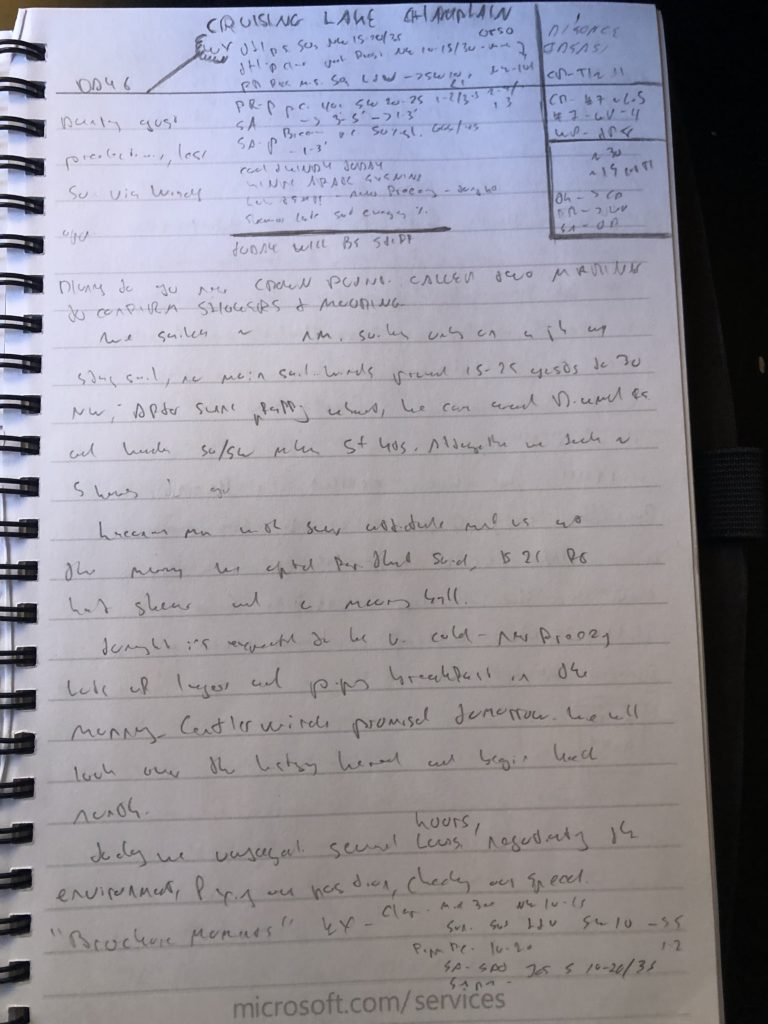
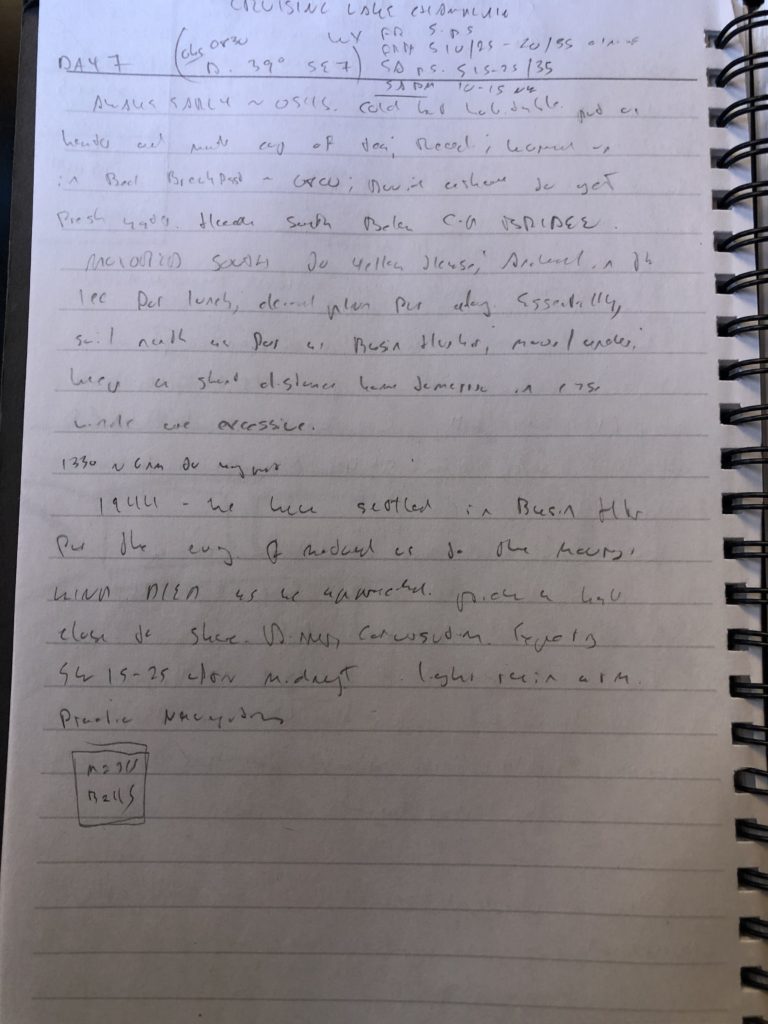
Awake Early ~0545. Cold but habitable. Put on heater and made cup of tea; read; warmed up in bed. Breakfast – 0800; David ashore to get fresh water. Heading south below C.P. Bridge

Motored south to “yellow house” [on chart]. Anchored in lee for lunch, decided plan for day. Essentially, sail north as far as Basin Harbor […] and keep a short distance home tomorrow in case winds are excessive.

1330 ~ 6nm to waypoint

1944 – We have settled in Basin Harbor for evening. I motored us to the mooring ball. Wind died as we approached. Picked[ed] a ball close to shore. Dinner & conversation. Expecting SW 15-25 mph after midnight. Light rain AM. Practiced Navigation.

It seemed more eventful at the time. As the lake narrows, so does the navigable channel, and we found ourselves taking more care to range our distance from shore and use buoys to gauge our position. In most outdoor activities, the mind can wander alongside the mind across the horizon; in nautical adventures, that which isn’t seen can be more consequential than that which is.

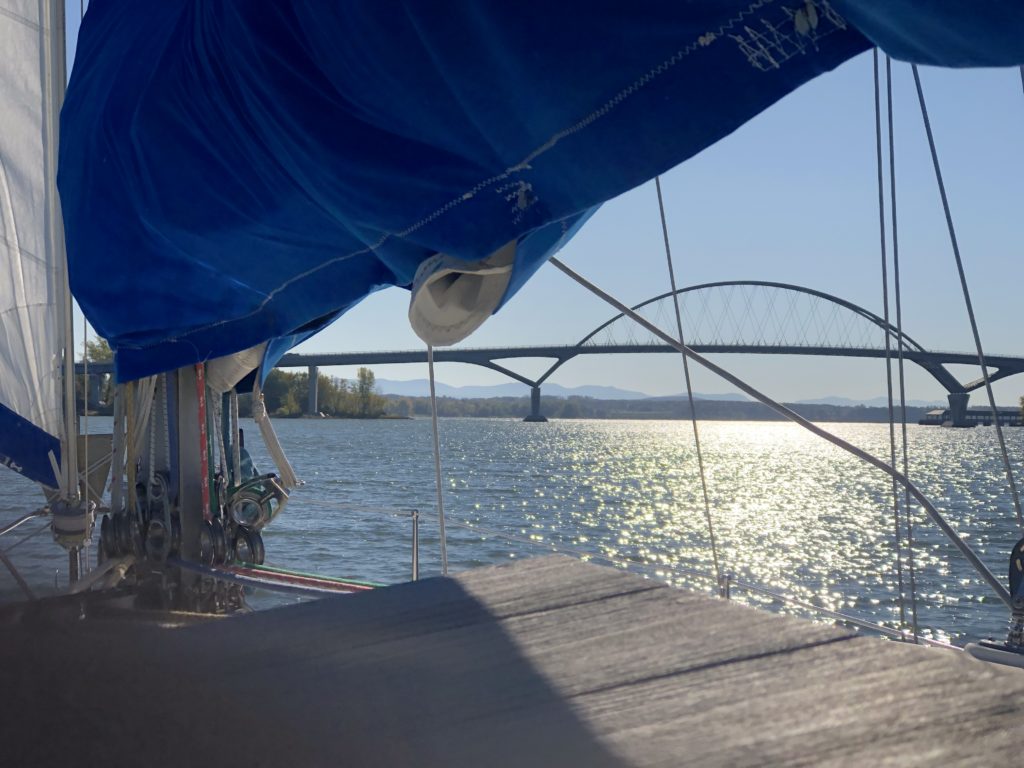
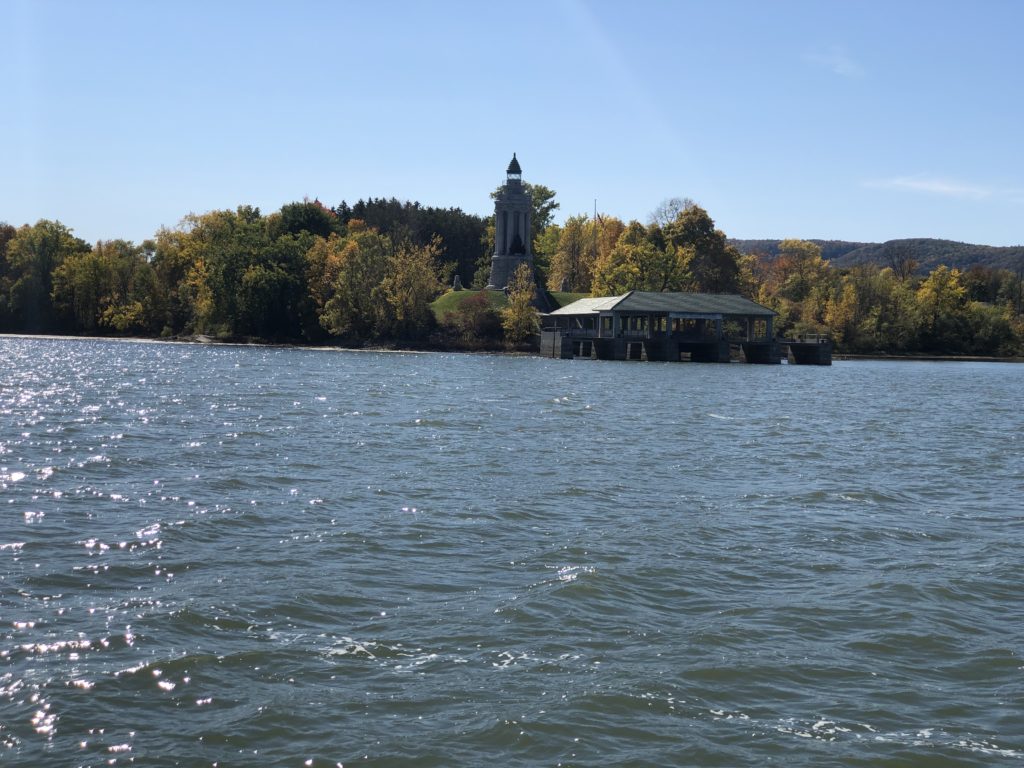
So we went, under the Lake Champlain Bridge, and past the monument to Samuel de Champlain.

Cruising Lake Champlain, October 2020
Lake Champlain Bridge.
Cruising Lake Champlain, October 2020
Samuel de Champlain Monument.
Cruising Lake Champlain, October 2020
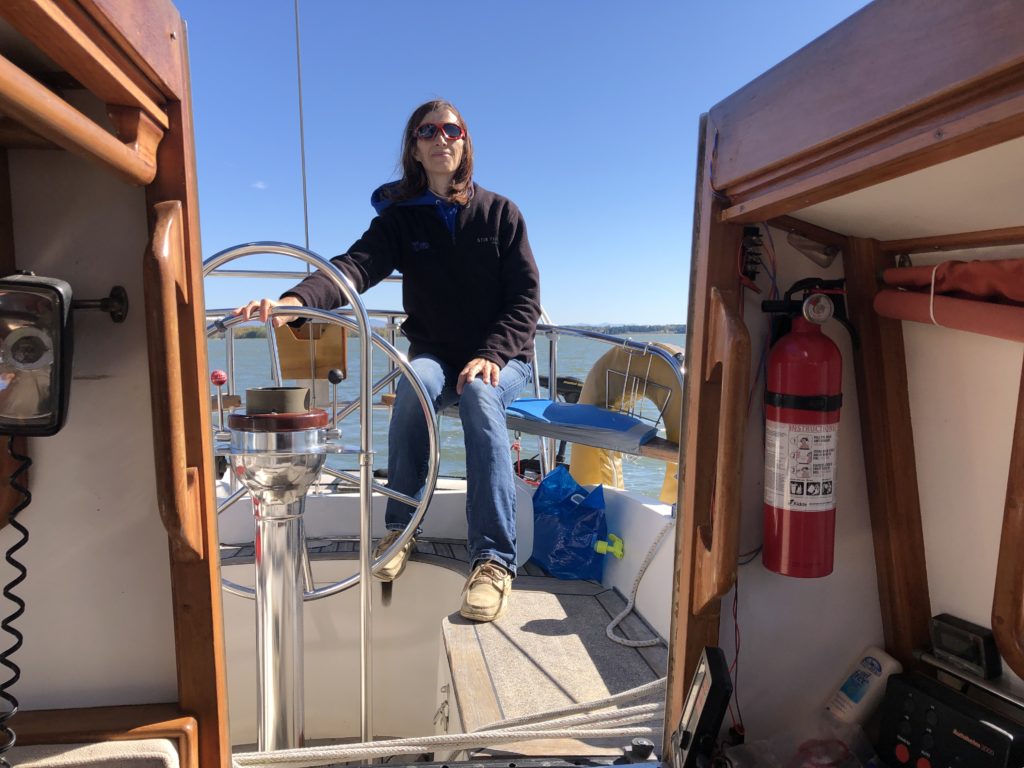
At the Helm.

Day 8

Cruising Lake Champlain, October 2020

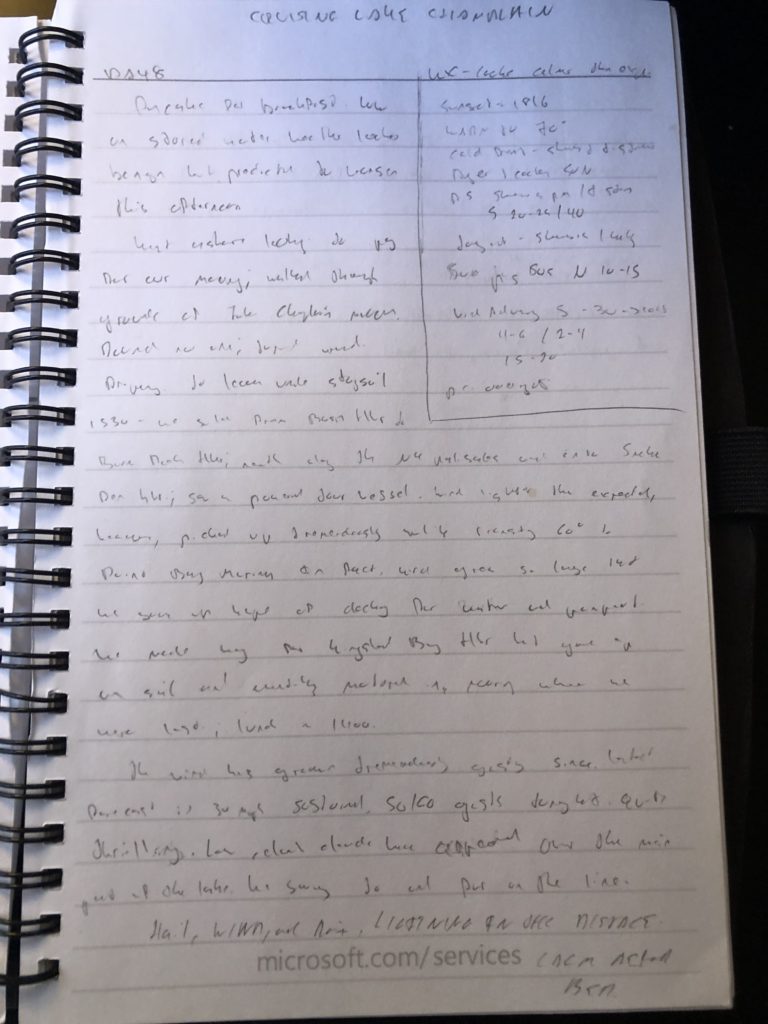
Pancakes for breakfast. Low on stored water. Weather looks benign but predicted to worsen this afternoon.

Went ashore looking to pay for our mooring; walked through grounds of Lake Champlain museum. Found no one; turned around.

Trying to learn under stay sail.

1530 – we sailed from Basin Harbor to Barn Rock Harbor; north to New York Palisades and into Snake Den Harbor; saw a powered touring vessel. Winds lighter than expected […] picked up tremendously while crossing 60 degrees to Point Bay Marina. In fact, wind grew so great that we gave up and [wound up] motoring in, near where we were last, lunch at 1400.

The wind has grown tremendously gusty since. Lake forecast is 30 mph sustained, 50/60 gusts tonight. Quite thrilling. Low, dark clouds have appeared over the main part of the lake. We swung to and fro on the line.

Hail, wind, and raining; lightning in the distance. Calm before bed.

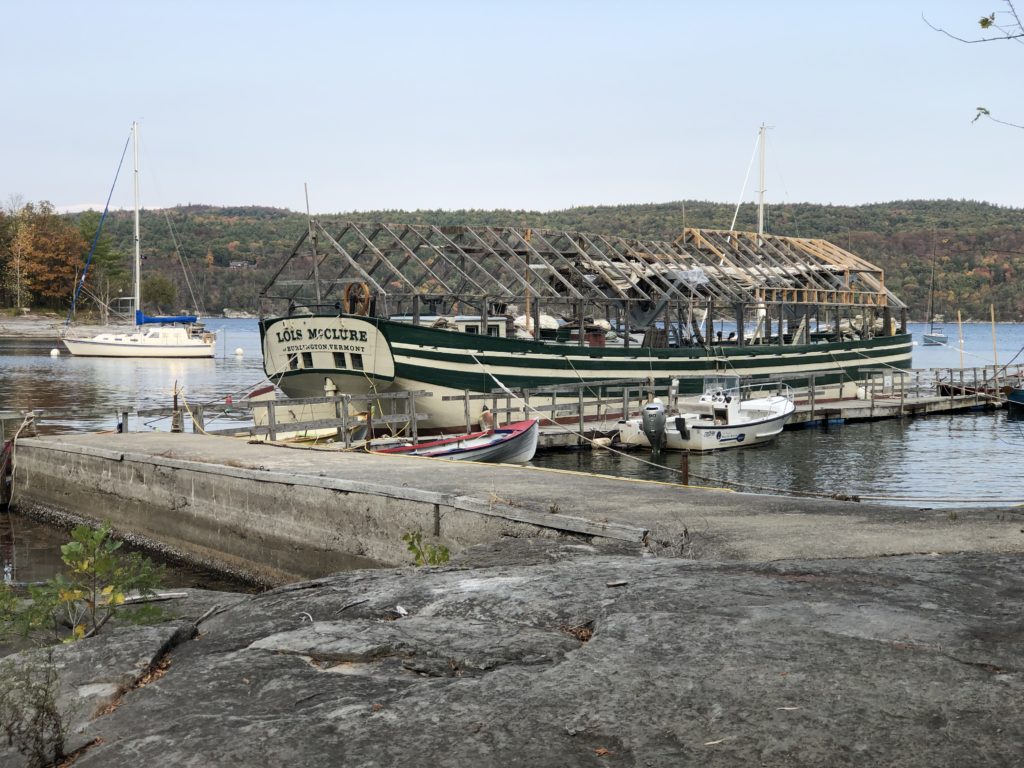
We had stayed in Basin Harbor, rather the north cove of it. It’s a cove used by the Lake Champlain museum, and we took the dinghy to a long slip where a replica sailing barge was tied up. We also recognized some of the boats we’d seen the young people rowing a few days earlier.

Cruising Lake Champlain, October 2020
Basin Harbor.

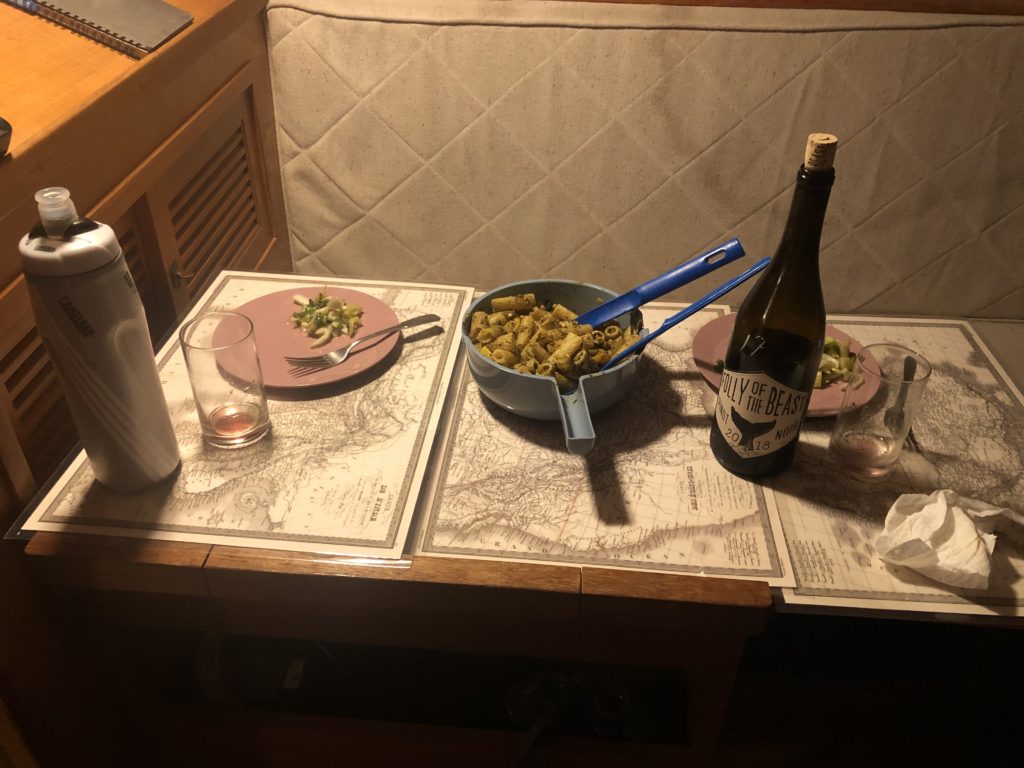
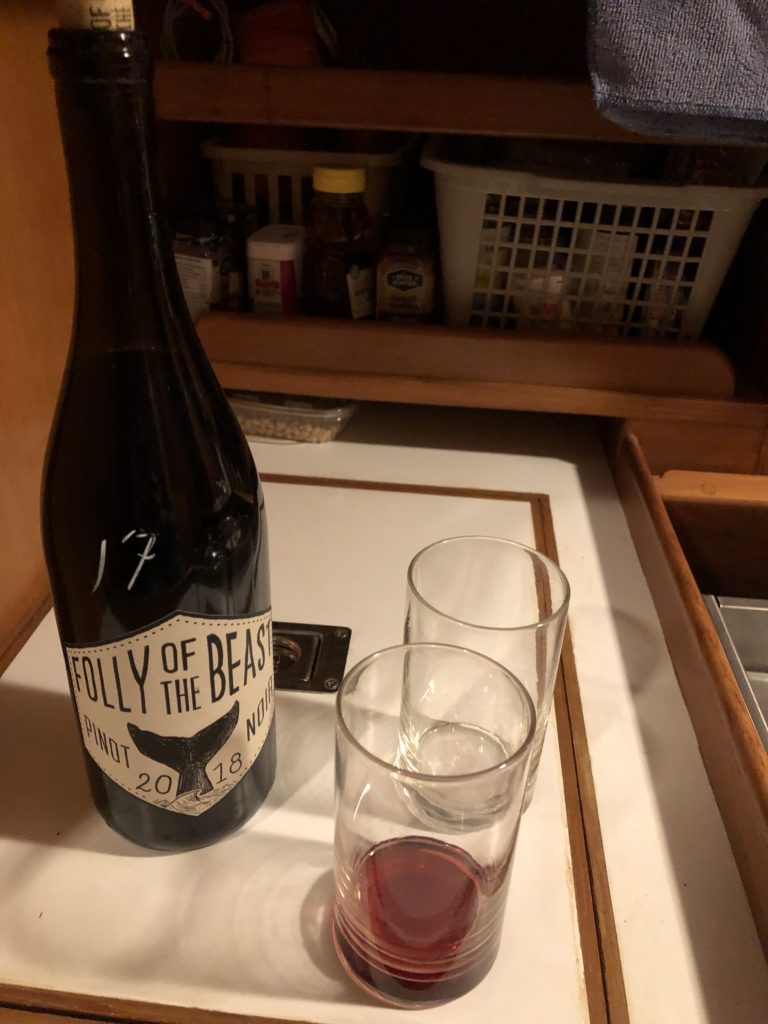
We spent the night on the boat, finishing off our thematically-appropriate wine.

Cruising Lake Champlain, October 2020
Pasta with sauteed squash.
Cruising Lake Champlain, October 2020
In Basin Harbor.

The next day we thought we ought to see about paying for our stay. There were no responses by radio or phone, so we took that as an excuse to head ashore, and wandered a bit through the museum grounds.

Cruising Lake Champlain, October 2020
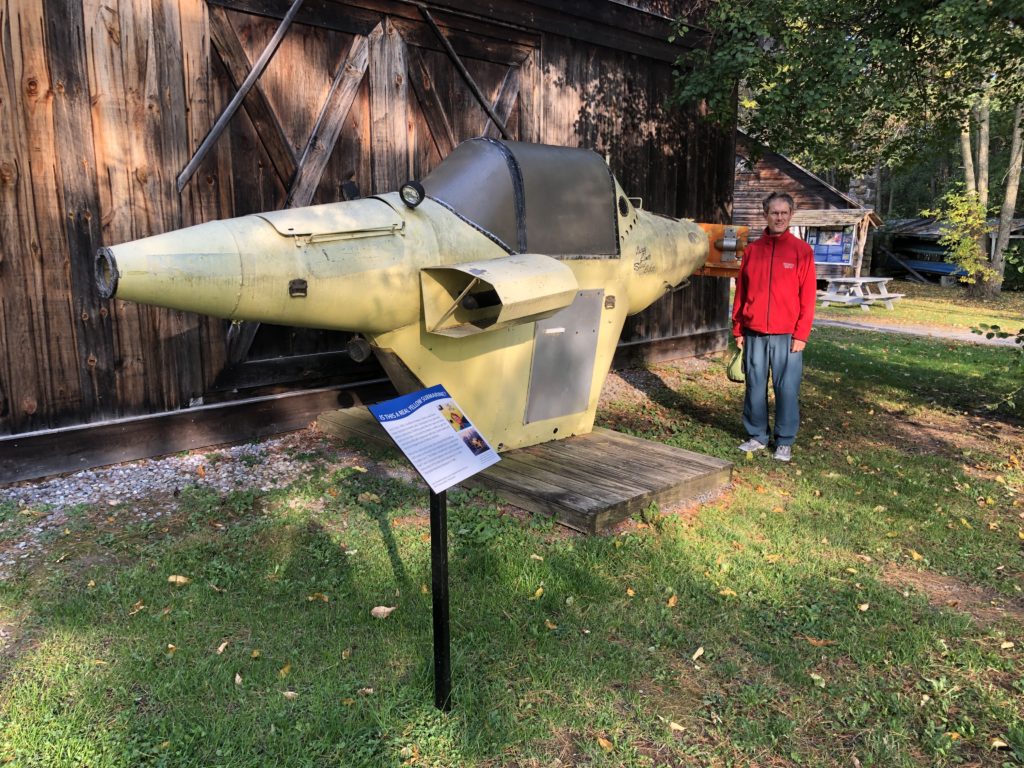
At the Lake Champlain Maritime Museum.

The above was essentially an underwater motorcycle, and not a true submarine; the pilot would wear scuba gear and ride along inside. Notably, it had to be licensed both by the Coast Guard and the Vermont Department of Motor Vehicles.

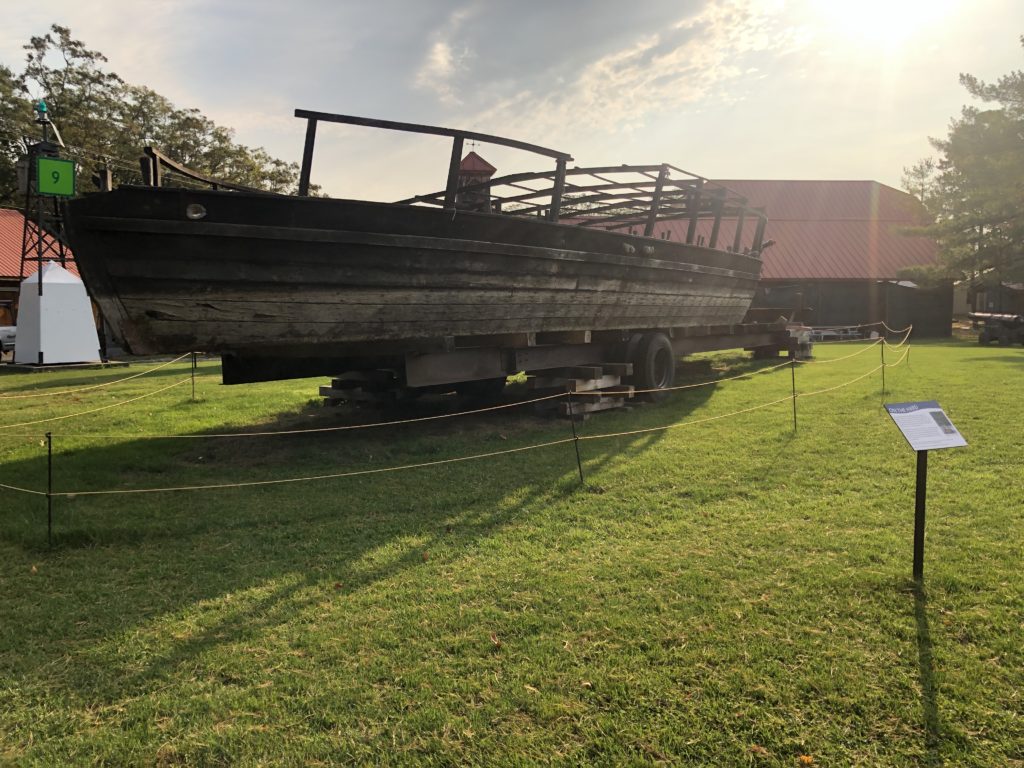
What’s pictured below, in addition to the replica sailing barge, harks back to Lake Champlain’s nautical history. For a long time, sailing barges were how goods were transported from the north to the south, and once the canal was built, the same vessels could trade down the Hudson all the way to New York. However, Lake Champlain’s nautical history also extends to the Revolutionary War period.

Benedict Arnold is remembered in American history as a traitor; an officer in the military who dared betray the United States and join the British. Before that, however, he was a pretty good commander, at one point giving the British the slip following a naval battle on the lake before sailing to Button Bay, where he escaped thereon by foot. The museum has a replica of that ship, and presently it’s being worked on.

Cruising Lake Champlain, October 2020
Arnold’s Replica.

In any case, after our stay in Basin Harbor, we sailed some familiar territory again, to Barn Rock Harbor, then north along the western edge of the lake. We planned to take a bit of a detour into Converse Bay, but the winds grew strong and we decided to head to Kingsland Bay for one last sleep. We ended up spending up a ridiculous amount of tacking and, after we had enough data to work out our average speed, decided to motor in rather than spend another two or three hours negotiating with the environment.

Cruising Lake Champlain, October 2020
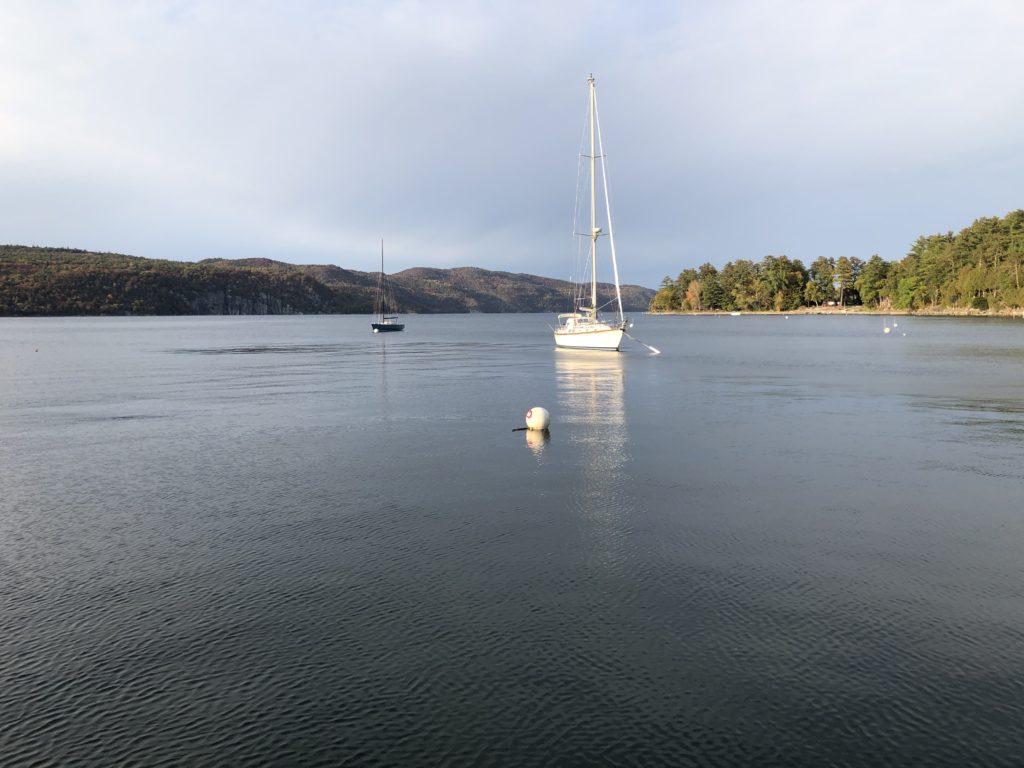
A Clear Morning.
Cruising Lake Champlain, October 2020
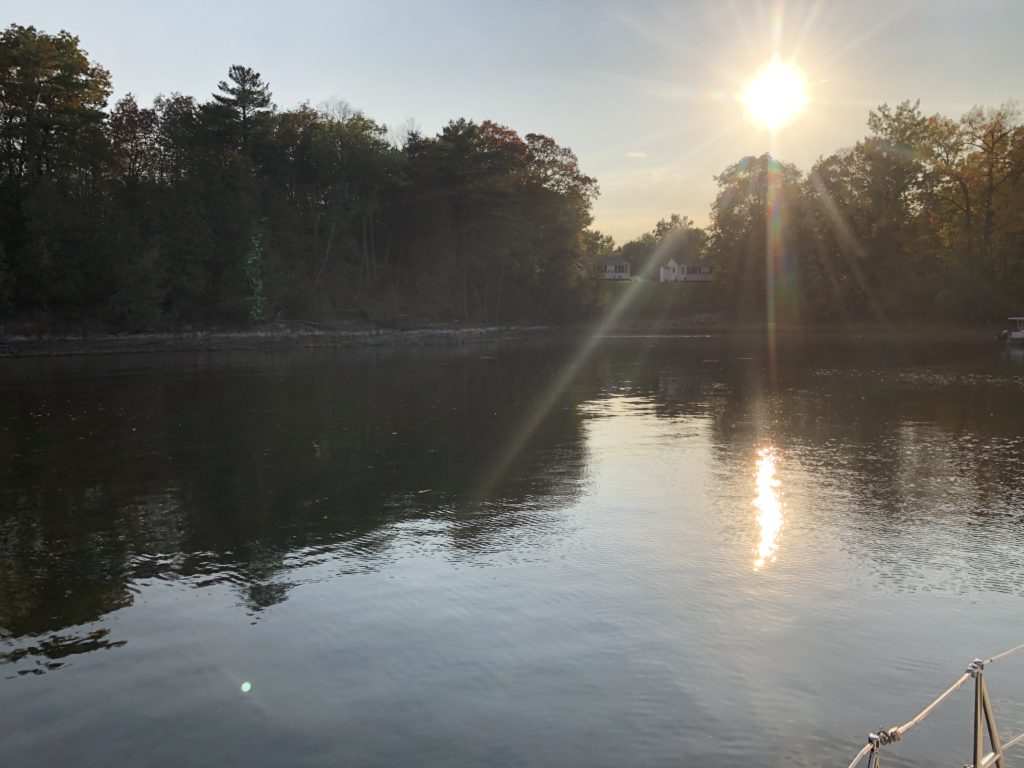
In Kingsland Bay.

Day 9

Cruising Lake Champlain, October 2020
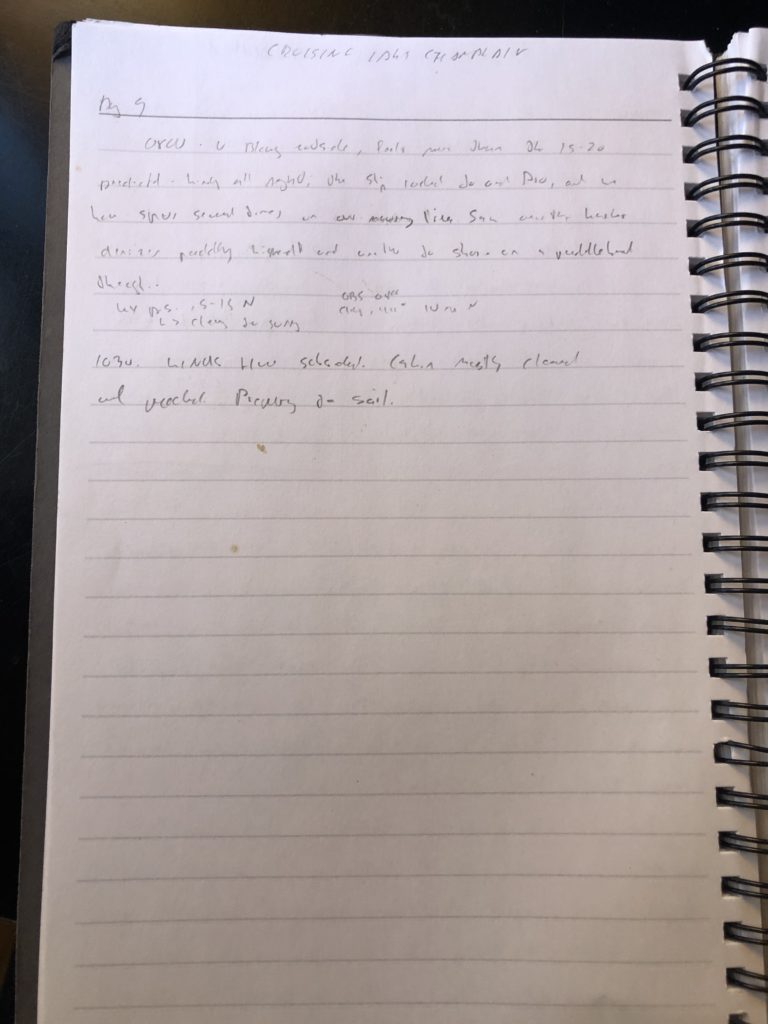
Day 9.

0800. V blowy outside, feels more than just the 15-20 predicted. Windy all night, the ship rolled to and fro, and we have spun several times on our mooring line. Saw another harbor denizen paddle himself and another to shore on a paddleboard though.

1030. Winds have subsided. Cabin mats cleaned and […]. Preparing to sail.

Our last day was a short one. Unfortunately, it was some of the best weather we had, so we succumbed to temptation for one more sail, and arrived back at home port an hour later than we’d planned. We’d been in touch with the ship’s owners and they were there to meet up; we unloaded at a slip, and then hurriedly finished closing up the ship before saying our final goodbyes and heading back home.

Lake Champlain is a beautiful place. Having camped there via kayak, and now lived and sailed there, I can say it is at once welcoming yet capable of great wrath and surprise. It is not a place to take lightly, but it is greatly rewarding for those who dare to trespass on its ripples.

Cruising Lake Champlain, Part 2

Having settled into the boat and properly cruised a bit, we meant to sail more, but were confronted with an ugly forecast directly in the middle of our journey. We added some ice to the cooler and set out north, initially with the idea of sheltering in our home port, but opted instead to harbor in Kingsland Bay to shelter from the southerly wind.

Over the next day we would spent some time ashore, hiking some pretty trails; we also witnessed some very inhospitable weather, and imagined, and in some cases could glimpse, how rough the sea proper would have been. We had planned for the possibility of weather days with gear for inclement hikes, warm tea, and plenty of reading material: various material on iPad and Kindle, Jennifer Egan’s Manhattan Beach, and a rather thick biography of James Madison, America’s fourth President.

After the weather, we sailed south, to Crown Point; along the way we stayed at a marina; we braved a cold night and ventured towards the canals, but only so far before turning back north.


Day 4

Cruising Lake Champlain, October 2020

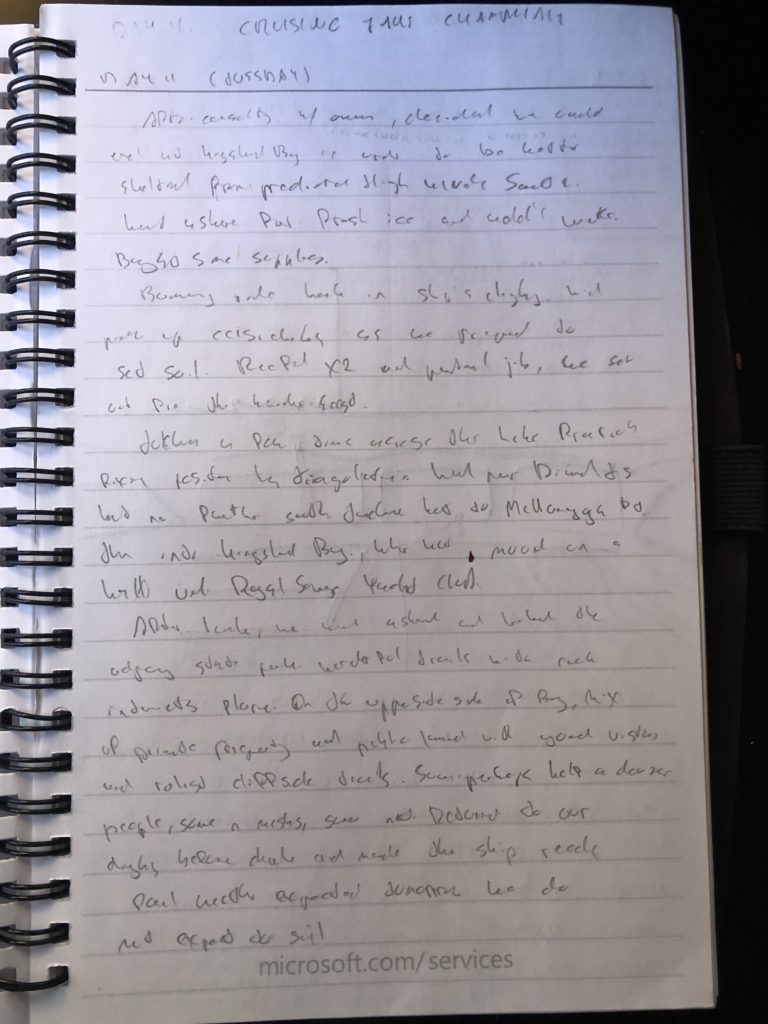
After consulting with owner, decided we would […] at Kingsland Bay in order to be better sheltered from predicted high winds from south. Head ashore for fresh ice and add’l water. Bought some supplies. Bouncy ride back in ship’s dinghy. Wind picked up considerably as we prepared to set sail. Double-reefed and partial jib, we set out heading east.

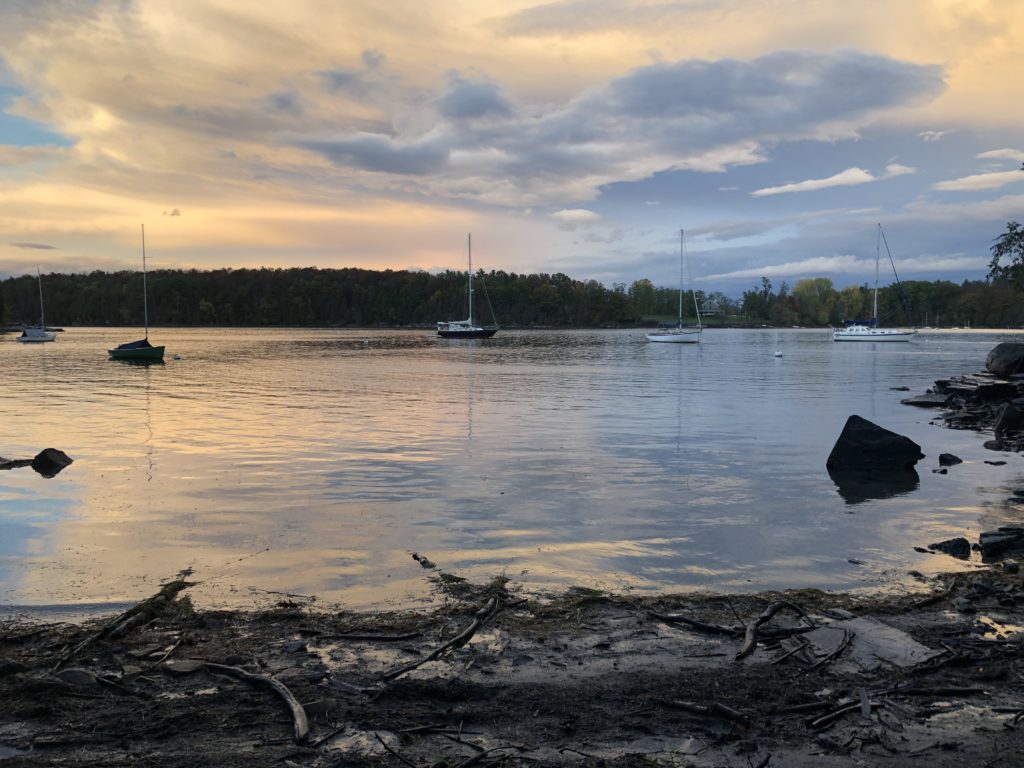
Taken a few ranges across the harbor. Practiced fixing position and triangulation. Headed near Diamond but no farther south, then to Mcullough Point, then into Kingsland Bay, where we moored on a ball under Royal Savage Yacht Club [banner].

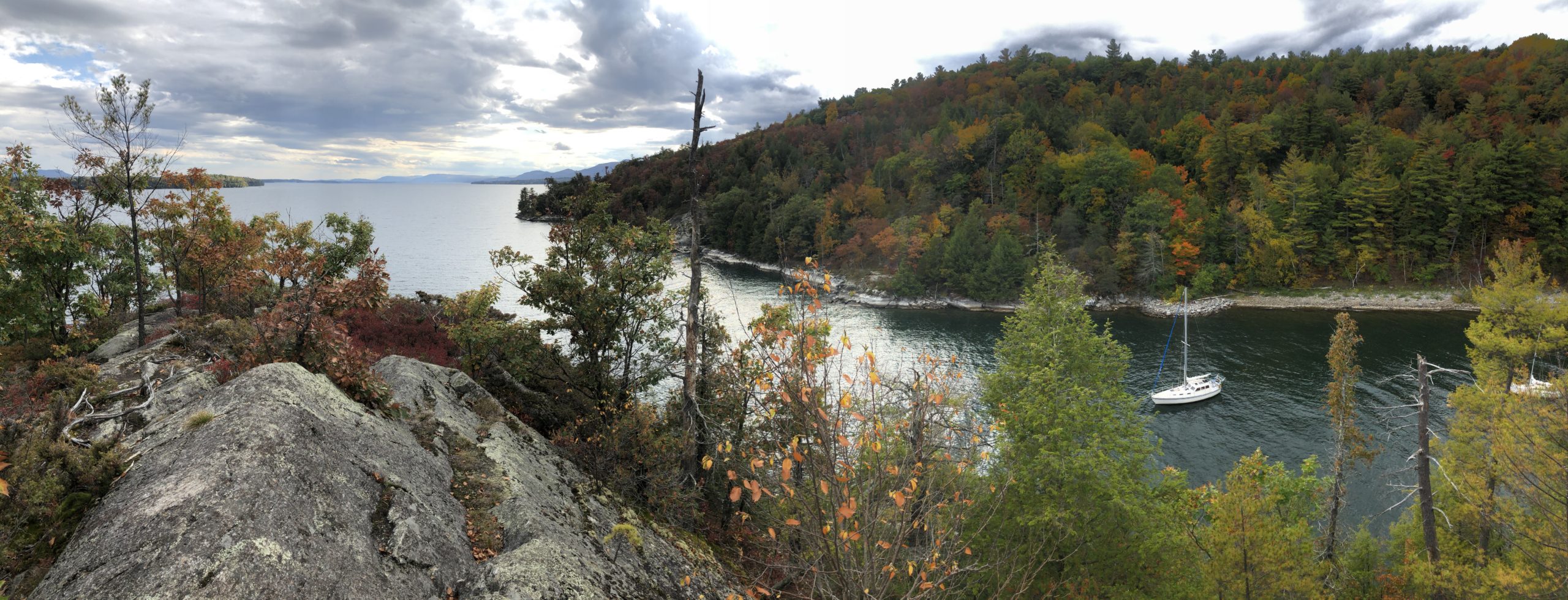
After lunch, we went ashore and hiked the adjoining state park. Wonderful trails with rich and interesting flora. On the opposite side of the bay, mix of private property and public land with good vistas and robust cliffside trails. Saw perhaps a dozen people, some in masks, some not. Returned to our dinghy before dark and made ship ready. Foul weather expected tomorrow. We do not expect to sail.

Cruising Lake Champlain, October 2020
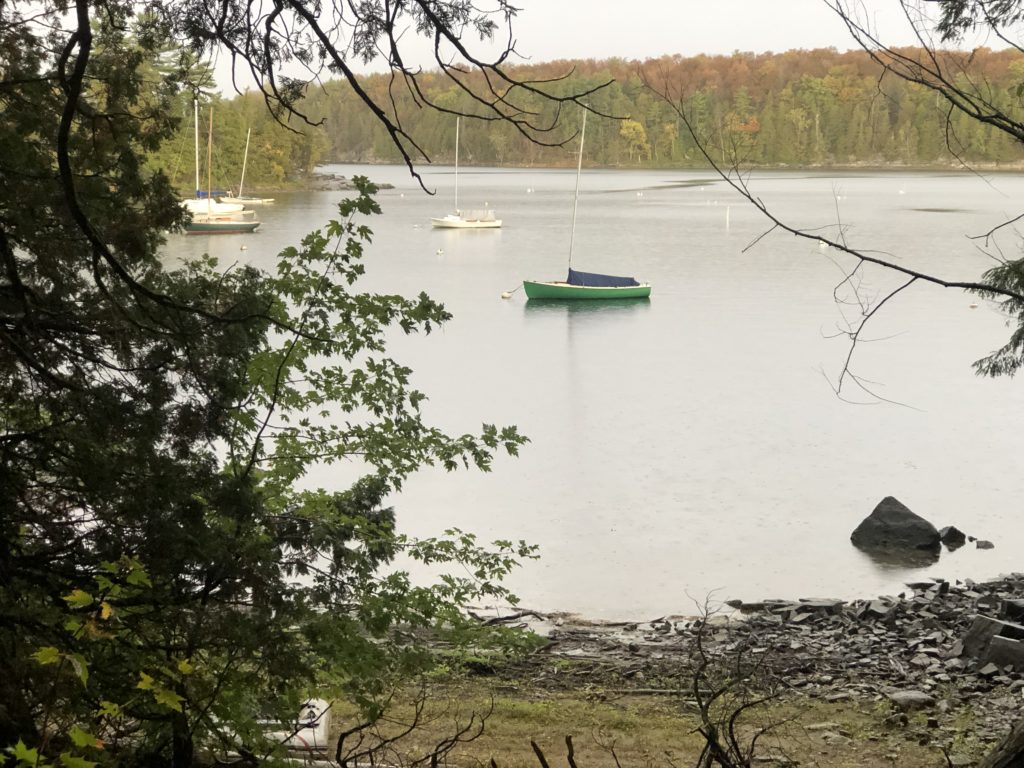
Our Green Friend.
Cruising Lake Champlain, October 2020
Under Way.
Cruising Lake Champlain, October 2020
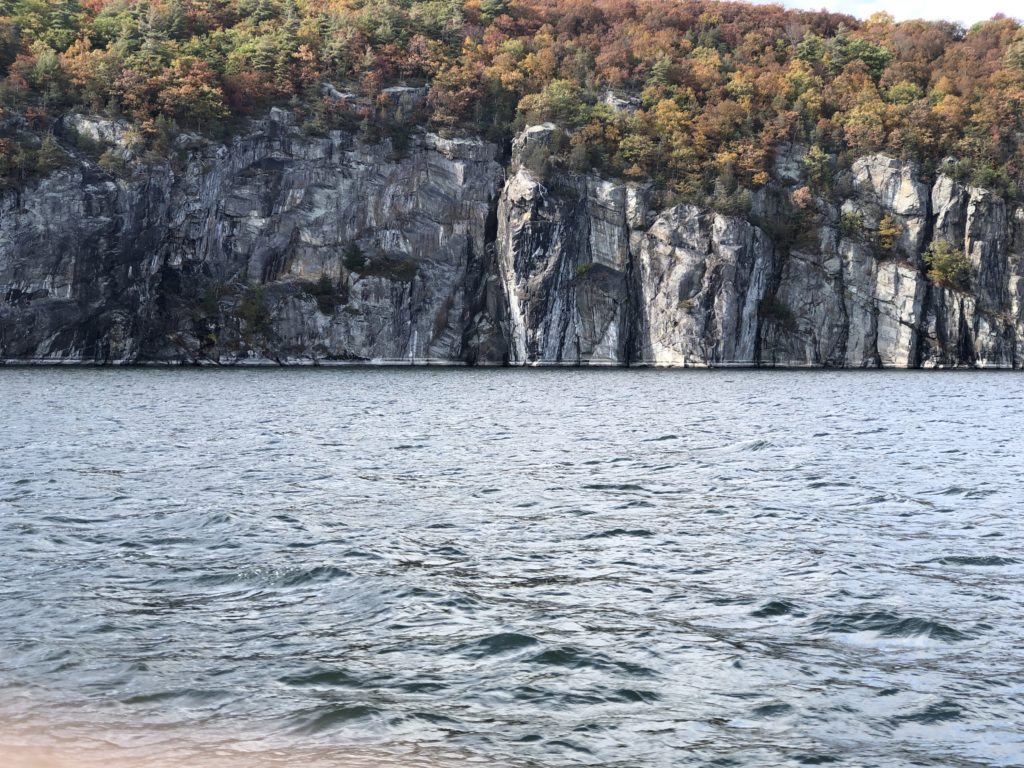
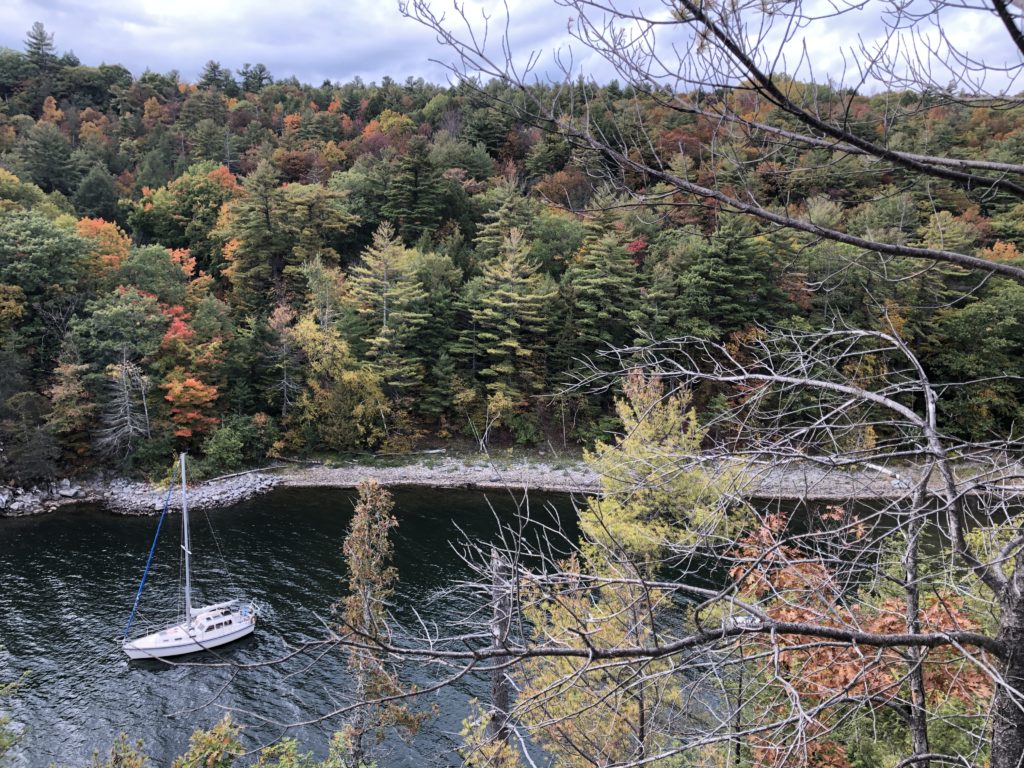
The Palisades.

Day 5

This was our weather day. We stayed in Kingsland Bay and, for the most part, stayed on the boat. It was rainy and windy outside. We talked; listened to the radio, read, napped, and otherwise kept ourselves entertained.

Cruising Lake Champlain, October 2020

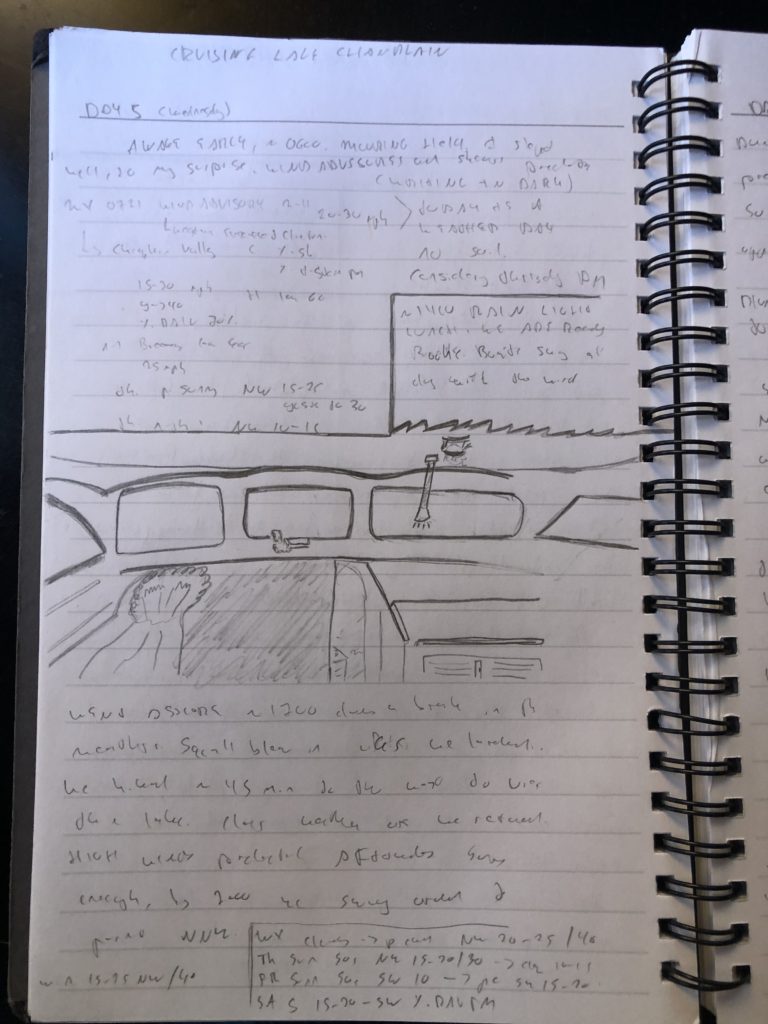
Awake early, ~0600. Mooring held, I slept well, to my surprise. Wind advisories [gibberish; I was writing in the dark].

Went ashore ~1700 during a break in the weather. Squall blew in as we landed. We hiked ~45 minutes to the west to view the lake. Clear weather as we returned. High wind predicted afterwards. Sure enough, by 2000 we swung around and pointed NNW.

Cruising Lake Champlain, October 2020
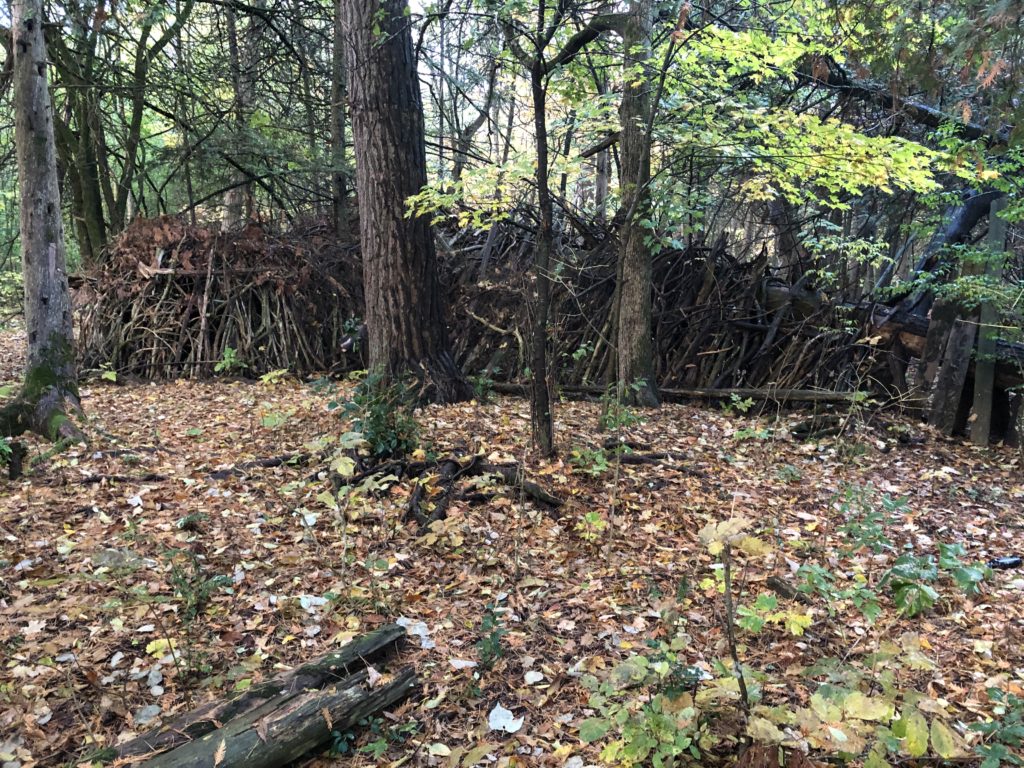
A Structure.
Cruising Lake Champlain, October 2020
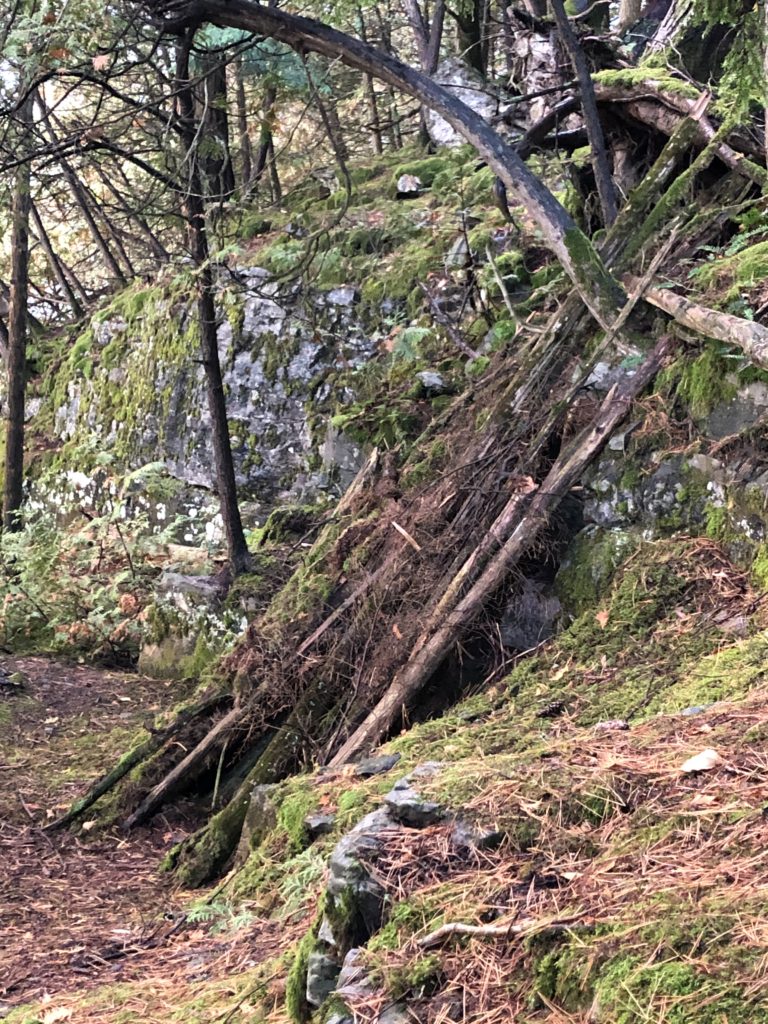
A Hobbit Hut.
Cruising Lake Champlain, October 2020
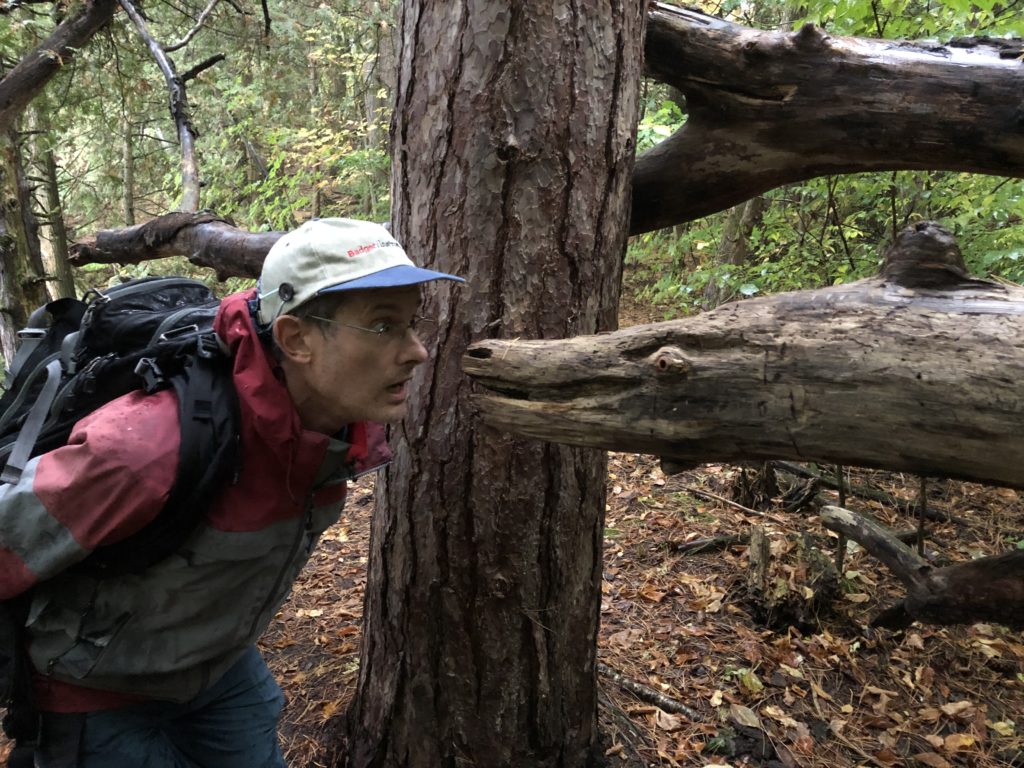
A Wee Beastie.
Cruising Lake Champlain, October 2020
Thematically-Appropriate Wine.

Day 6

Cruising Lake Champlain, October 2020

Planning to go to Crown Point. Called two marinas to confirm showers and mooring available.

We sailed [?] nautical miles. Sailing only on a jib and stay sail, no main sail. Winds predicted 15-25 gusts to 30 NW; After some pfaffing about, we came around Diamond Island and headed S/SW making 5+ kts. Altogether we took ~ 5 hours.

Laconic man with some attitude met us at the marina we opted for that [evening], $25 for the hot showers and a mooring ball.

Tonight is expected to be v. cold – near freezing. Lots of layers and piping breakfast in the morning. Gentler winds promised tomorrow. We will look over the […] and head north.

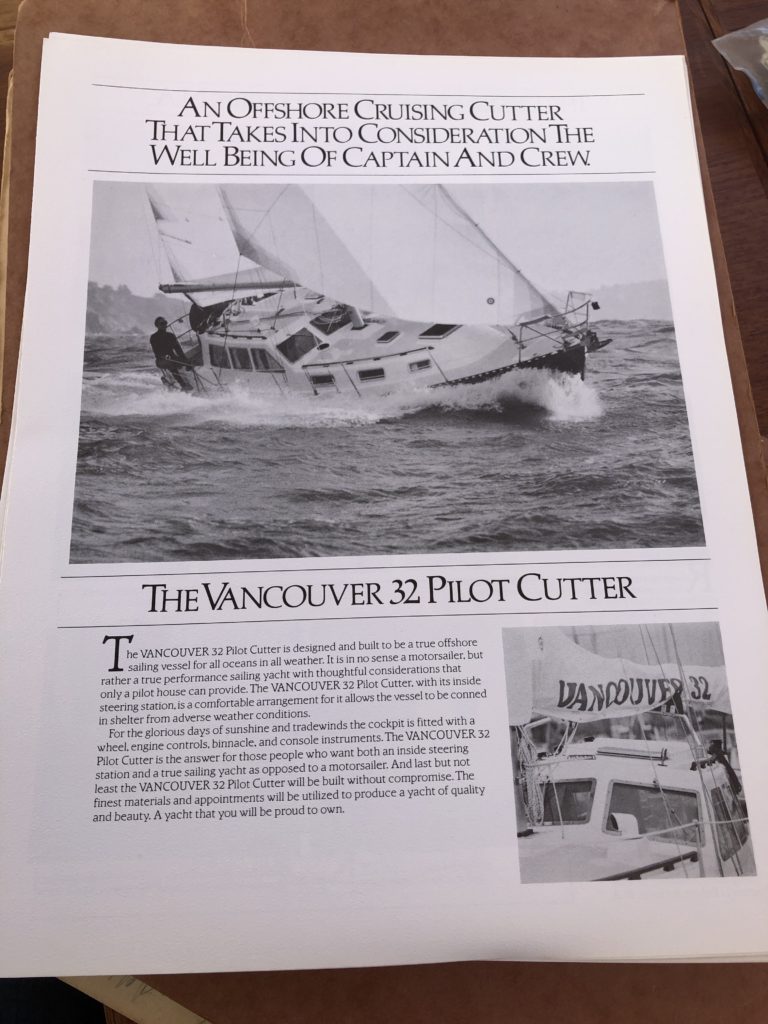
Today we voyaged several hours, negotiating the environment, fixing our position, checking our special “brochure moments”.

Ah yes, brochure moments. The moments we looked for the ship to be like the brochure.

Cruising Lake Champlain, October 2020
The Brochure.

We never got quite that heeled over, but it was exciting at times.

The marina we chose was…strange. There was no overt hostility but neither was there the warm friendliness typical of most hospitality establishments. The cigarette dangling from a mouth at the fuel dock was a sign, albeit when no fueling was in progress.

This was our predicted cold night – down near freezing overnight. David and I had brought many layers, both clothes and blankets, and my number one mission the next day was to make coffee and start the heater.

Overall, it was not bad. In fact, the sun came out and in short order the next morning, the cabin was nearly warm. We still needed layers to be outside, but nothing unreasonable given the season. That was Day 7 though.

Cruising Lake Champlain, October 2020
A Water Run. Technically Day 7.

Cruising Lake Champlain, Part 1

It was a surprising idea, even a worrisome one, proposed by David’s father: in order to have a vacation in Vermont, which at the time required New Yorkers to quarantine on visit, why not live and sail on the family sailboat?

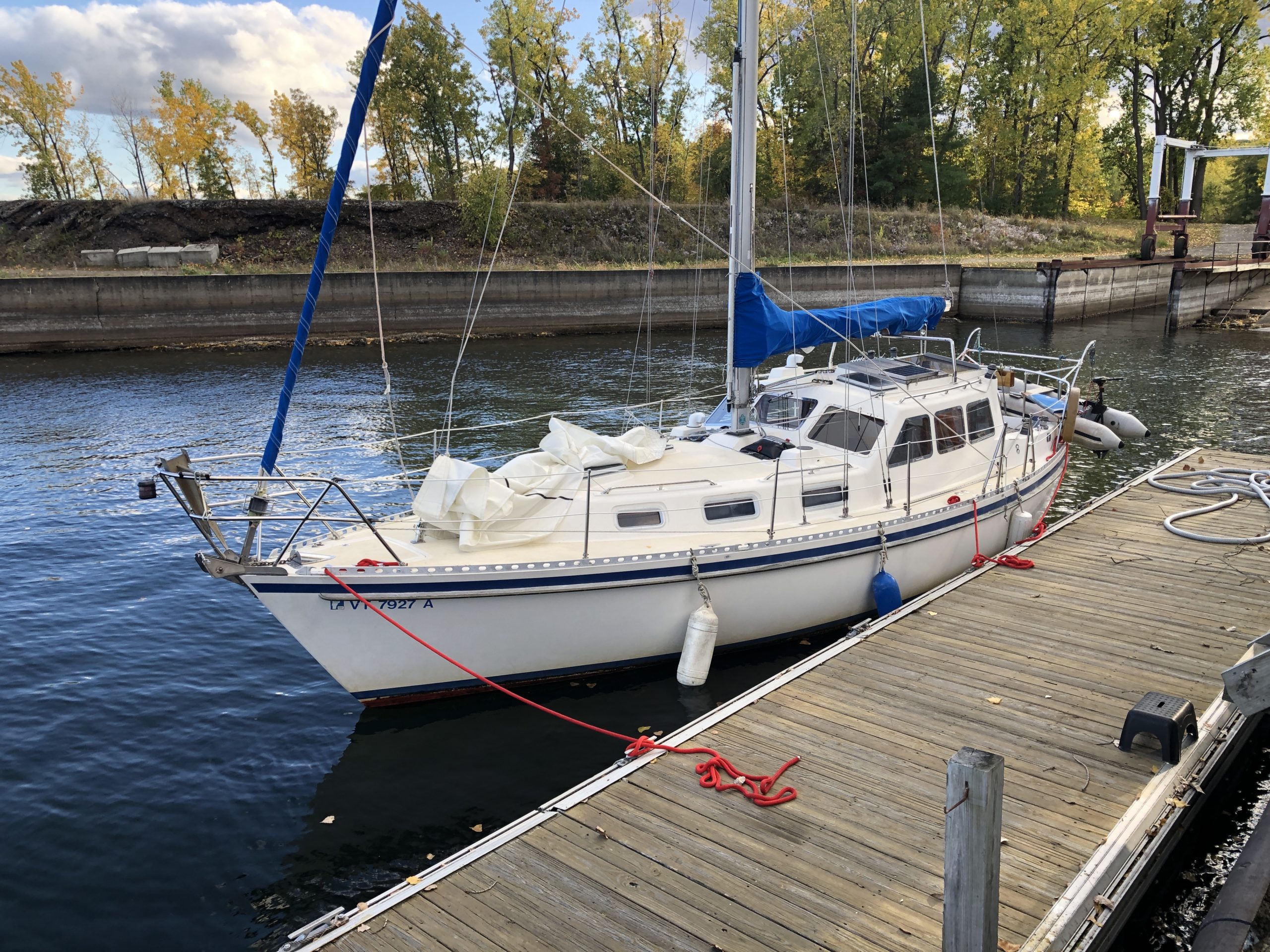
David has experience sailing, but nothing this big. He’s taken me out a few times on boats in the 23-26 foot range, as well as a sunfish, but nothing like this: a Vancouver 32 cutter with enclosed pilothouse. The Wind Rose is a fine ship, one that could comfortably sleep the two of us, with a two-range galley and inboard diesel motor.

It was really, really hard to say no, and after an initial trial weekend, we decided to give it a go.

We drove up in early October; by then, the lake water would be cooling and the air turning crisp. We were a little worried about overnight air temperatures, so we brought a lot of layers: blankets, clothes, extra jackets, wool socks. This was in addition to the food for galley cooking: breakfast, lunch, and dinner, as well as snacks. We also brought on potable water, because while the ship has water tanks suitable for rinsing dishes, the water tanks are thirty-five years old and, according to the owner, difficult to clean.

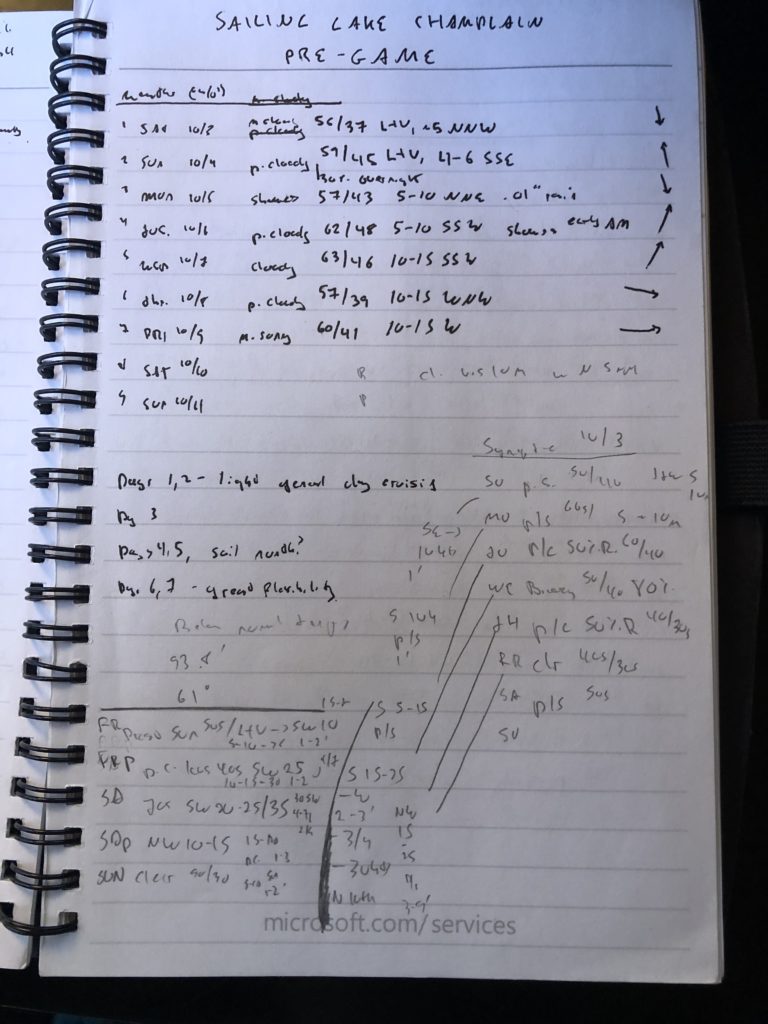
While it was a bit embarrassing how much stuff we had, we were fortunate to load up at a slip in the marina, a bit south of Burlington, Vermont. We had charts and some good anchorages marked on them. We took a look at the weather and went for a bit of a sail, before returning to the marina for our first overnight stay. We’d done some preliminary research.


Cruising Lake Champlain, October 2020
Pre-Planning.

Overall, the forecast for wind kept us south. While we might have headed north, we wanted to take the first few days easy, and not get stuck too far away to come back without much effort.

We awoke early and had breakfast, then started determining our routine: listening to the weather forecast over the radio and determining our goals for the day.

Day 1

Cruising Lake Champlain, October 2020

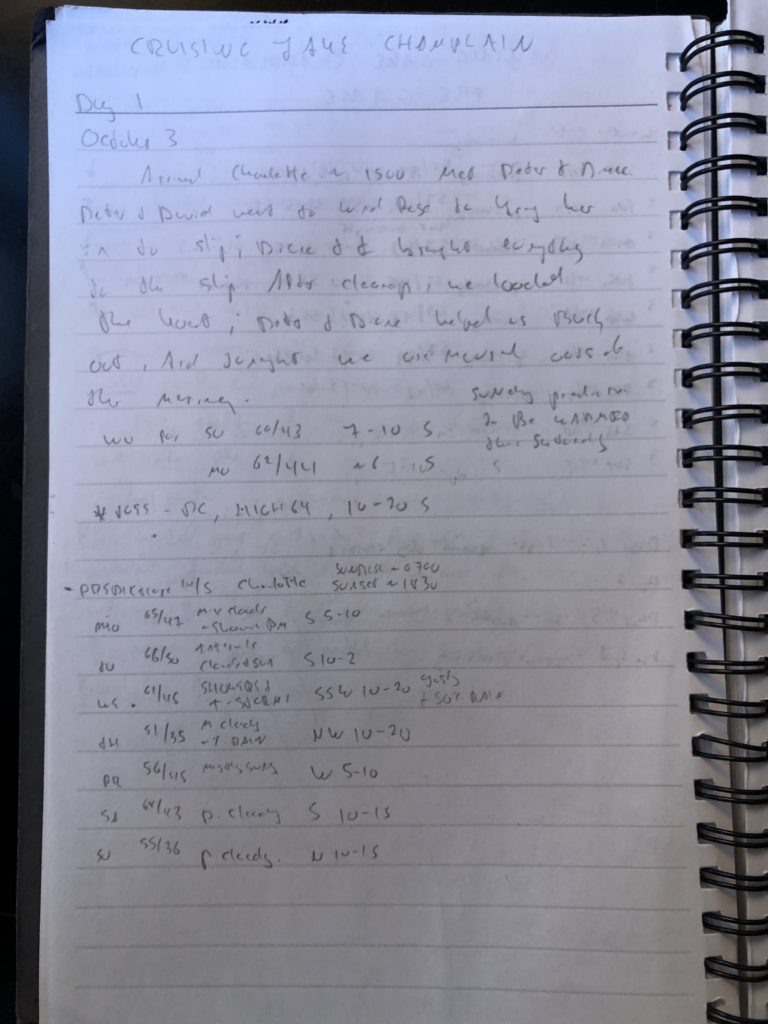
Arrived Charlotte ~1500. Met P&D. P and David went to Wind Rose to bring her in to the slip; D and I brought everything to the slip. After cleanup, we loaded the boat; P&D helped us back out. And tonight we are moored outside the marina.

Essentially, we sailed for a couple of hours and came right back to the boat’s normal harbor, content to sleep aboard the vessel.

Day 2

Cruising Lake Champlain, October 2020

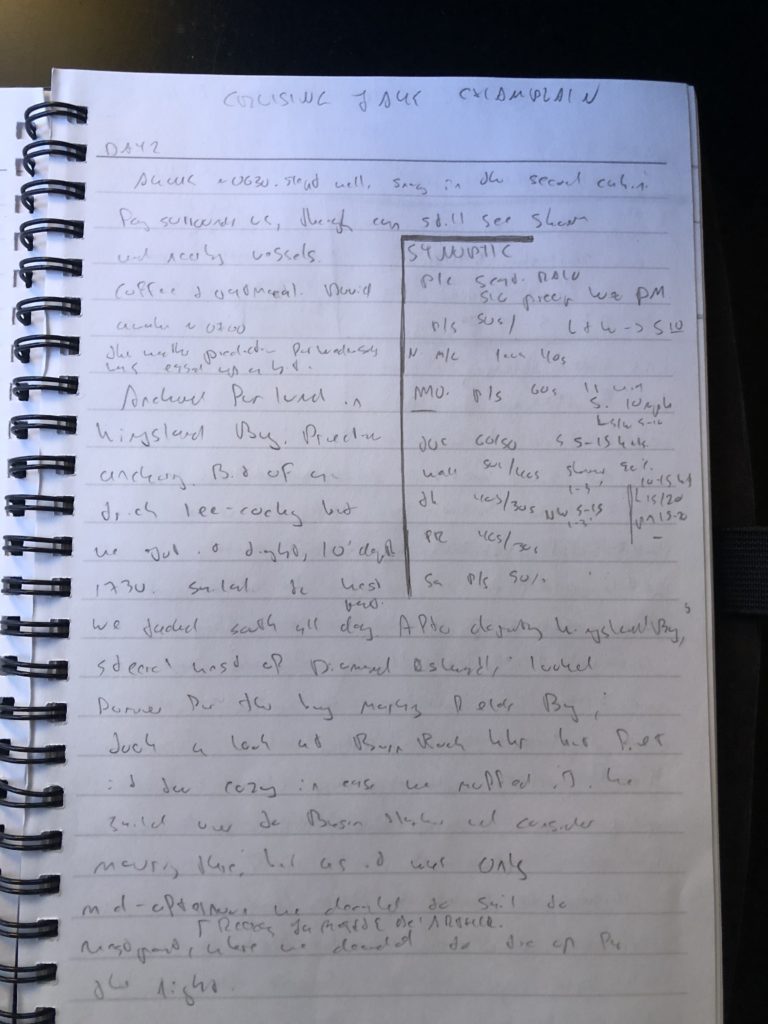
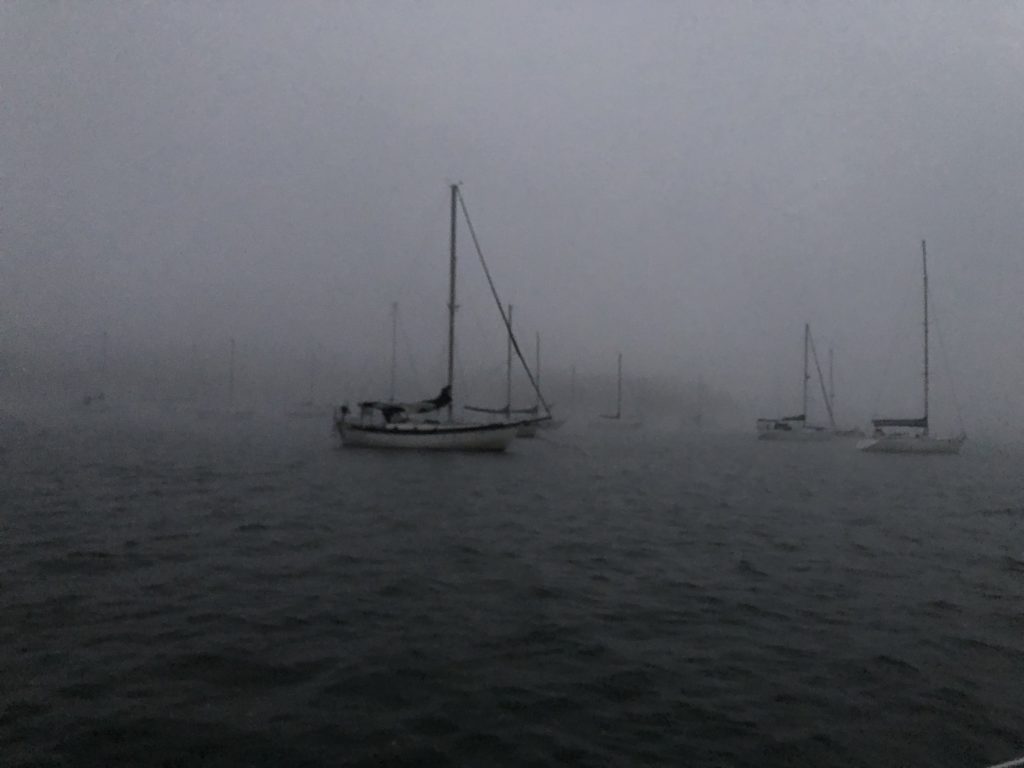
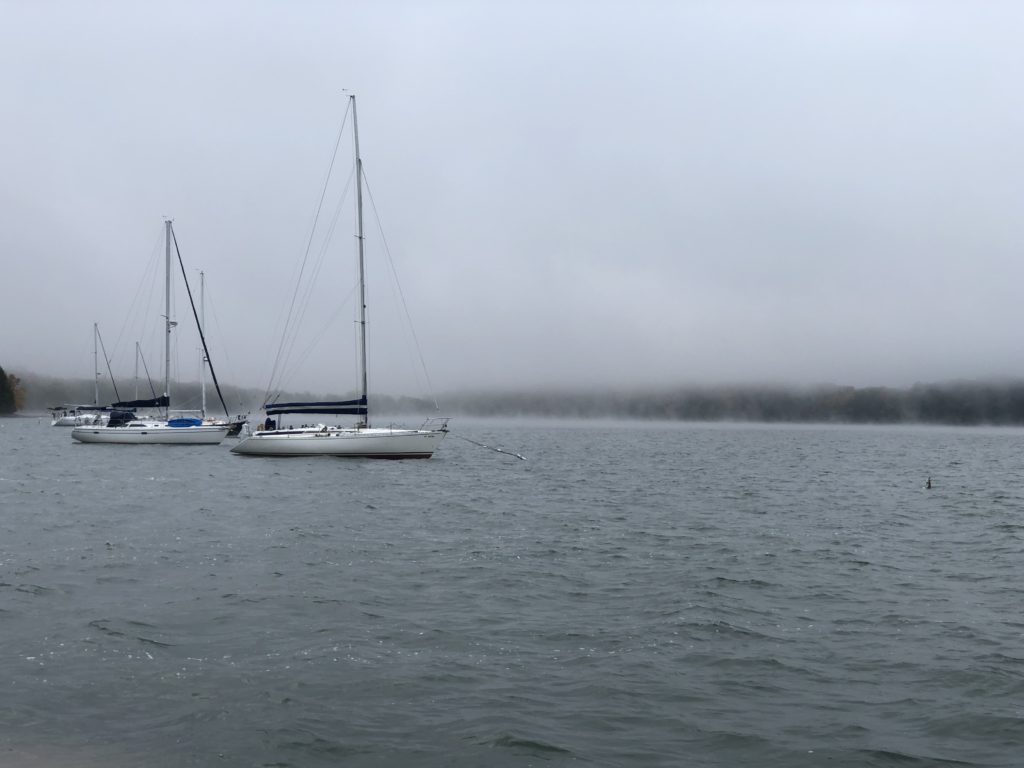
Awake ~0630. Slept well. Snug in the second cabin. Fog surrounds us, though can still see shore and nearby vessels.

Coffee & Oatmeal. David awake ~0700.

The weather prediction for Wednesday has eased up a bit.

Anchored for lunch in Kingsland Bay. Practiced anchoring. Bit of a trick lee-cocking but we got it right, 10′ depth 1730. Sailed to Westport. We tacked south all day. After departing Kingsland Bay, steered west of Diamond Island, looked forever for the buoy marking Fields Bay. Took a look at Barn Rock Harbor but found it too cozy. Then sailed over to Basin Harbor and considered mooring there, but at it was only mid-afternoon we decided to sail over to Westport [read La Morte D’Arthur] where we decided to tie up for the night

The second day was our first day of really sailing. We listened to the weather forecast. We plotted basic courses on the chart. We chose multiple destinations, unsure how far we’d get. We sailed.

We would return to some of these places. Much of the first few days were simply getting familiar with the area, as well as gauging how far and how fast we could sail.

It was foggy in the morning, but but the time we were done with breakfast, it was already burning off to become a beautiful day.

Cruising Lake Champlain, October 2020
Early Morning.
Cruising Lake Champlain, October 2020
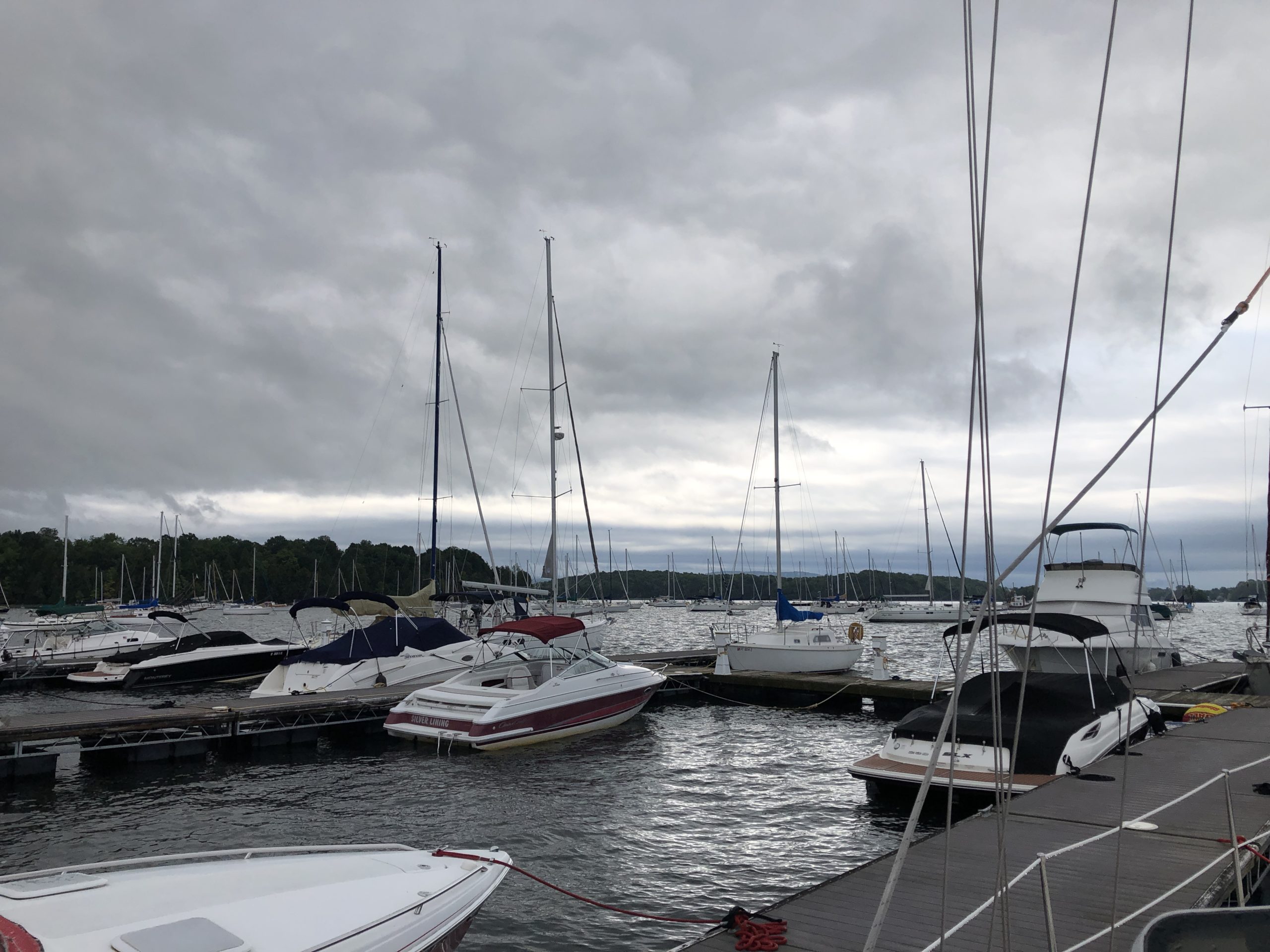
In the Marina.

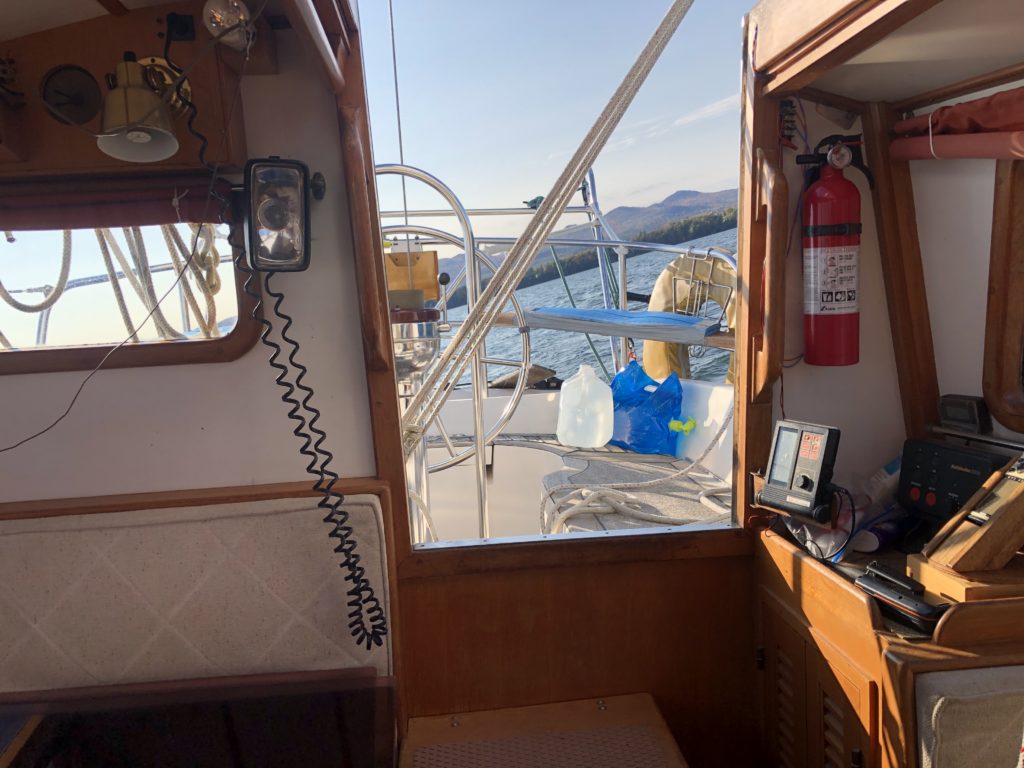
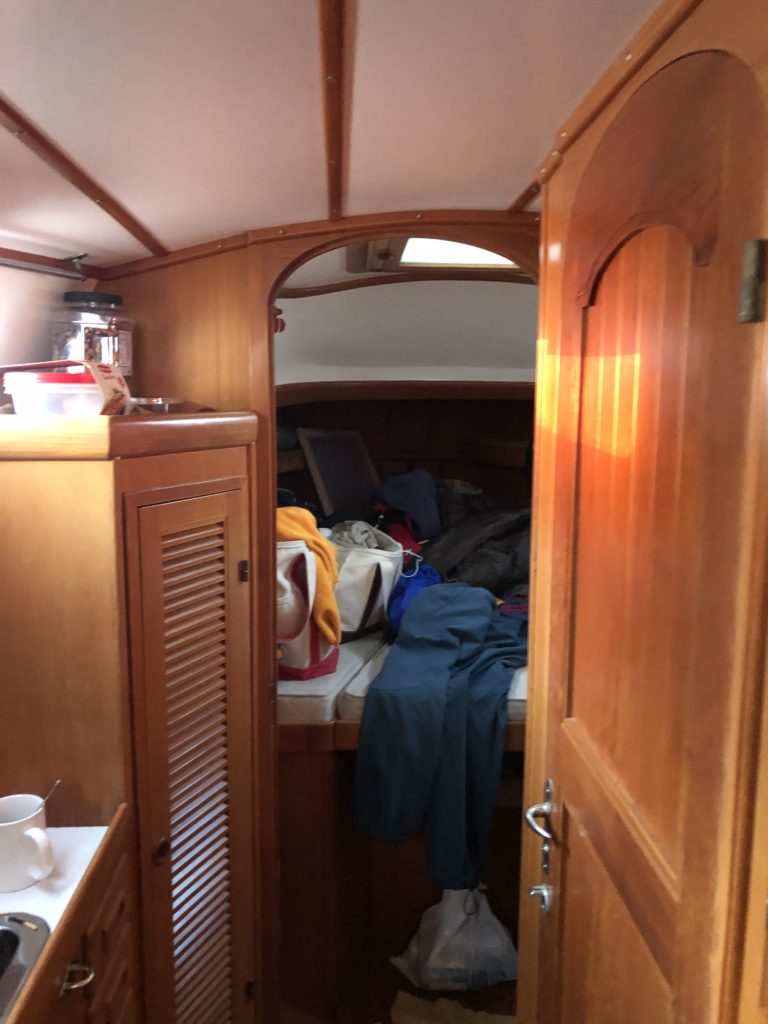
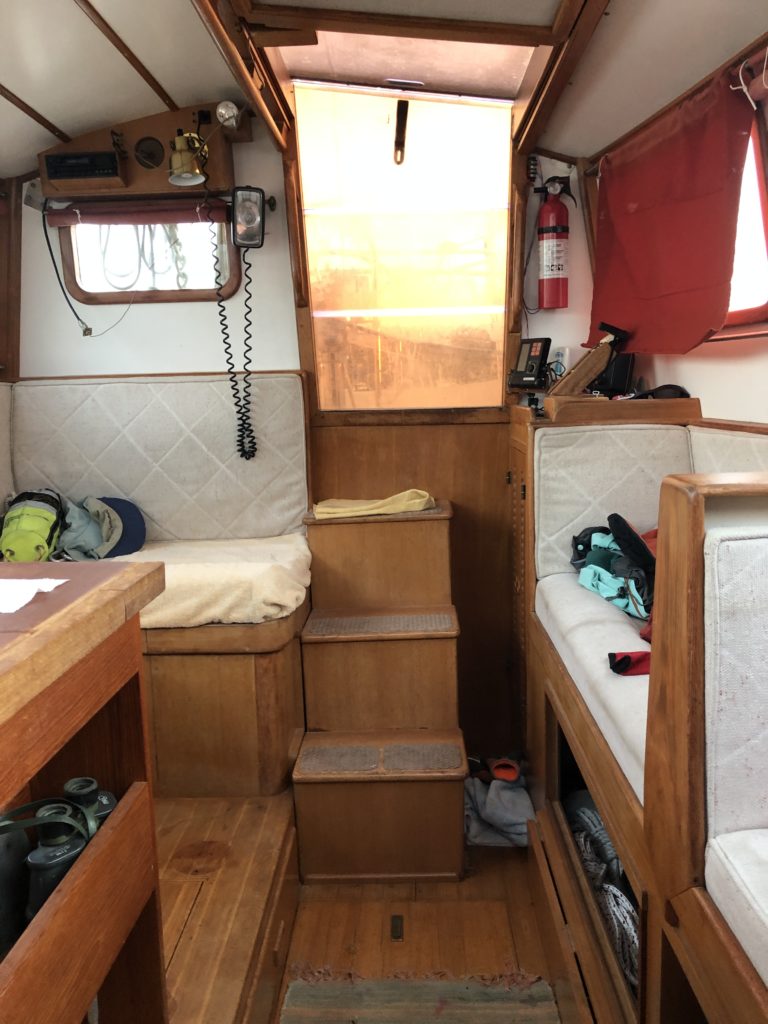
The ship itself proved quite comfortable. In our trial run we’d slept forward, in the V-berth, but I found it a bit high to climb in and out of. We used that for storage and stayed in the side cabin.

Cruising Lake Champlain, October 2020
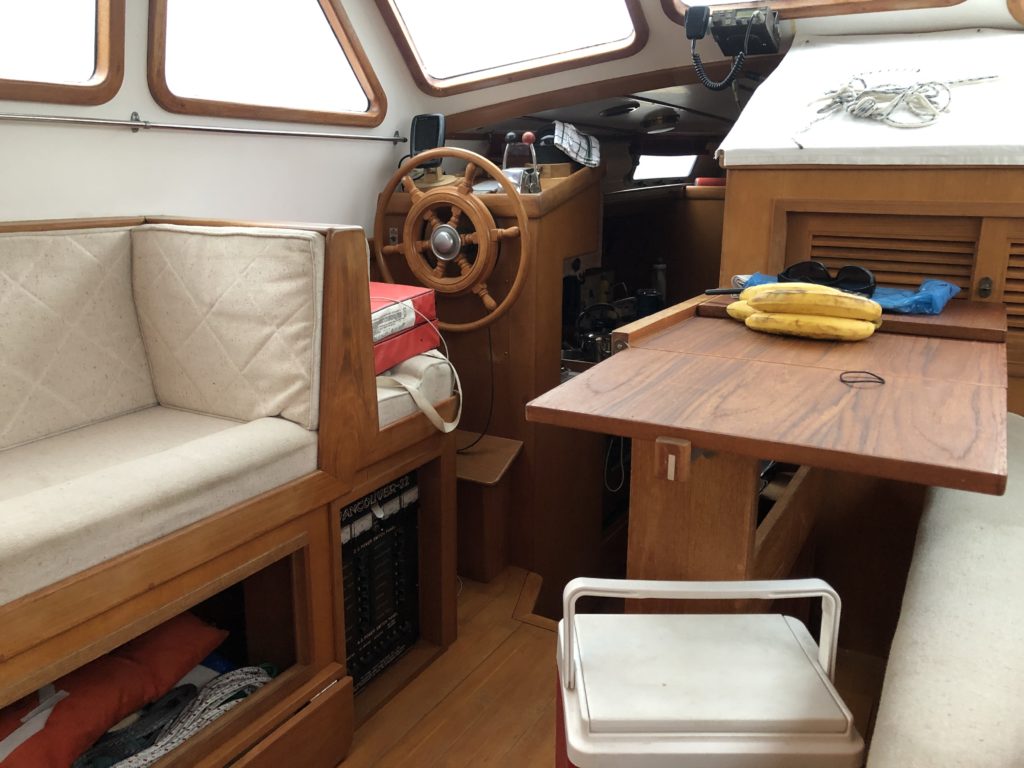
Looking Aft.
Cruising Lake Champlain, October 2020
The V-Berth

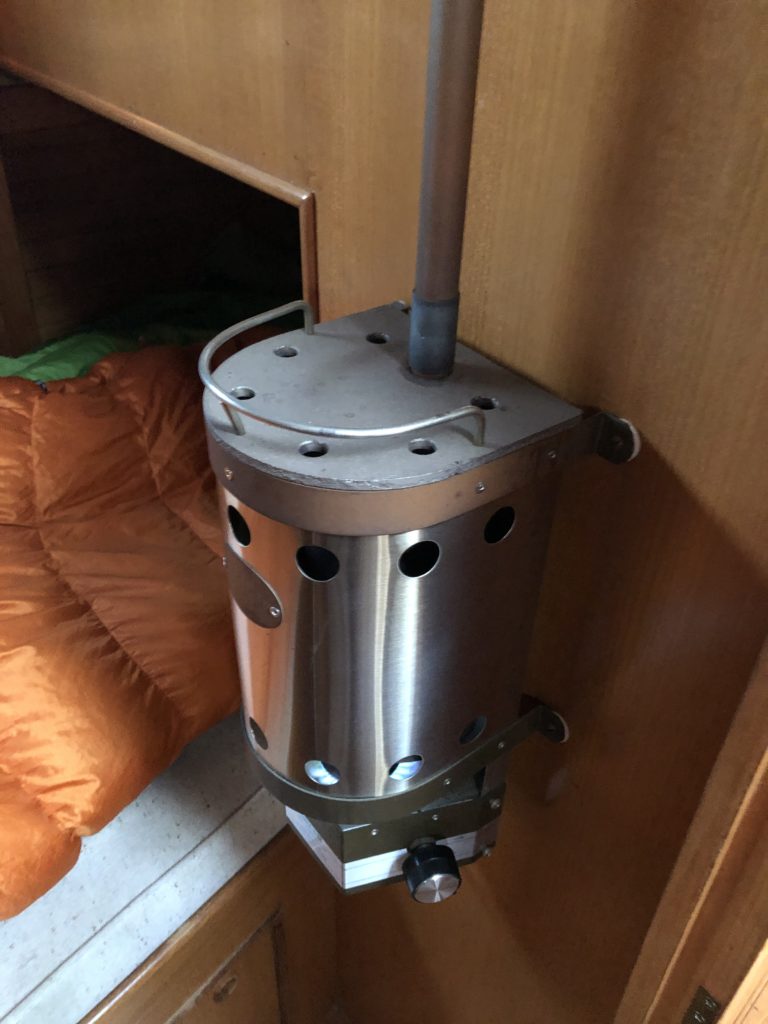
We had been a bit concerned about heat. The ship has a propane heater, which proved brilliant at providing nighttime warmth. We also learned that the sun would heat the cabin up quickly, once it was up.

The Heater.
Heater.

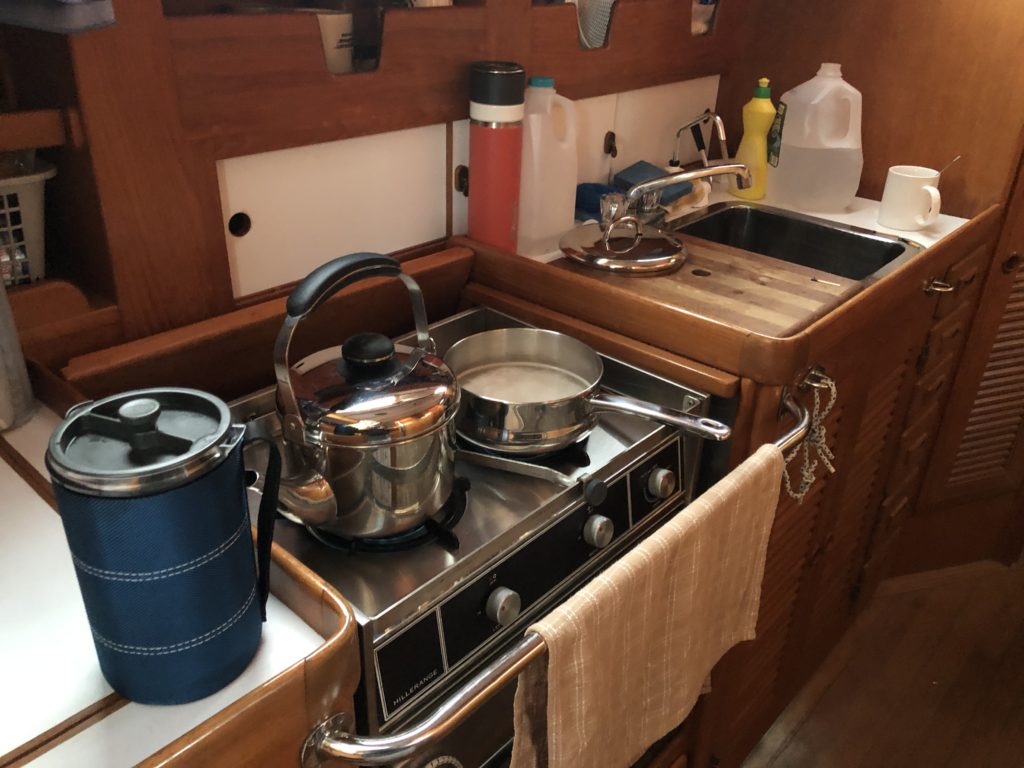
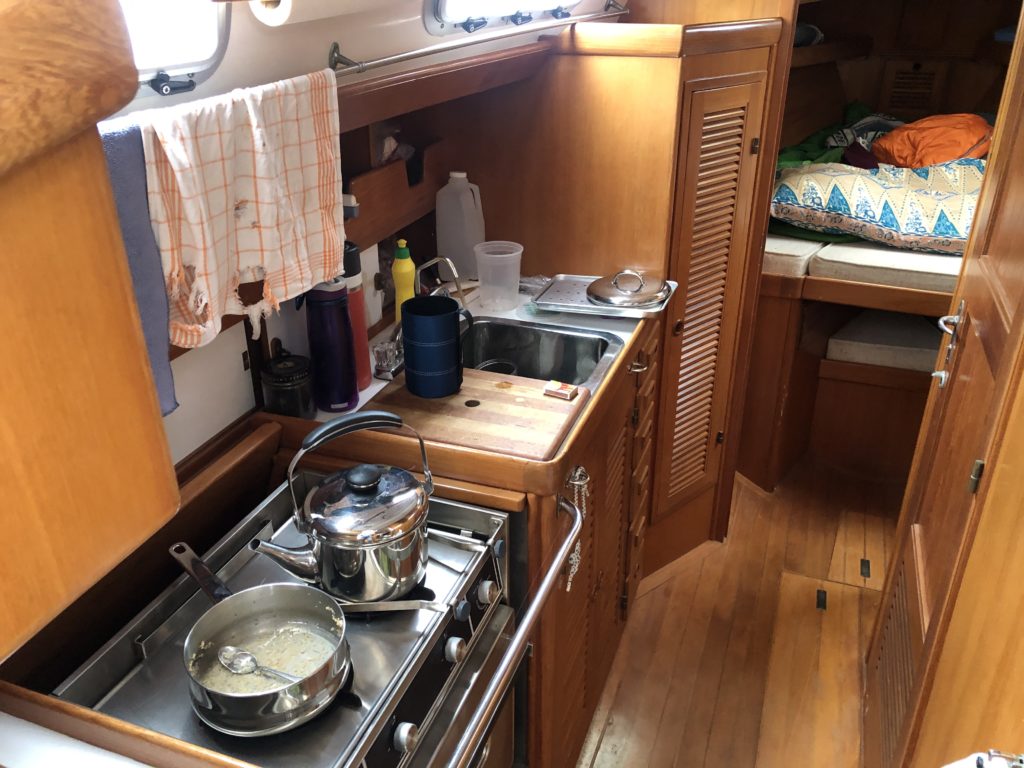
The galley proved more than adequate as well. The ship has an icebox built in, meaning it wasn’t refrigerated but, with some ice in, would keep things cool quite a while. The two-burner range worked, but the oven not so much; to my amusement the entire apparatus is mounted on a pivot, so it can swing with the ship. I didn’t cook on the go, but there were one or two rolly mornings where it was tempting to let it roll freely.

Cruising Lake Champlain, October 2020
Preparing Breakfast.

Breakfast was mostly oatmeal and fruit, though we did do pancakes a couple of days. Coffee was a must.
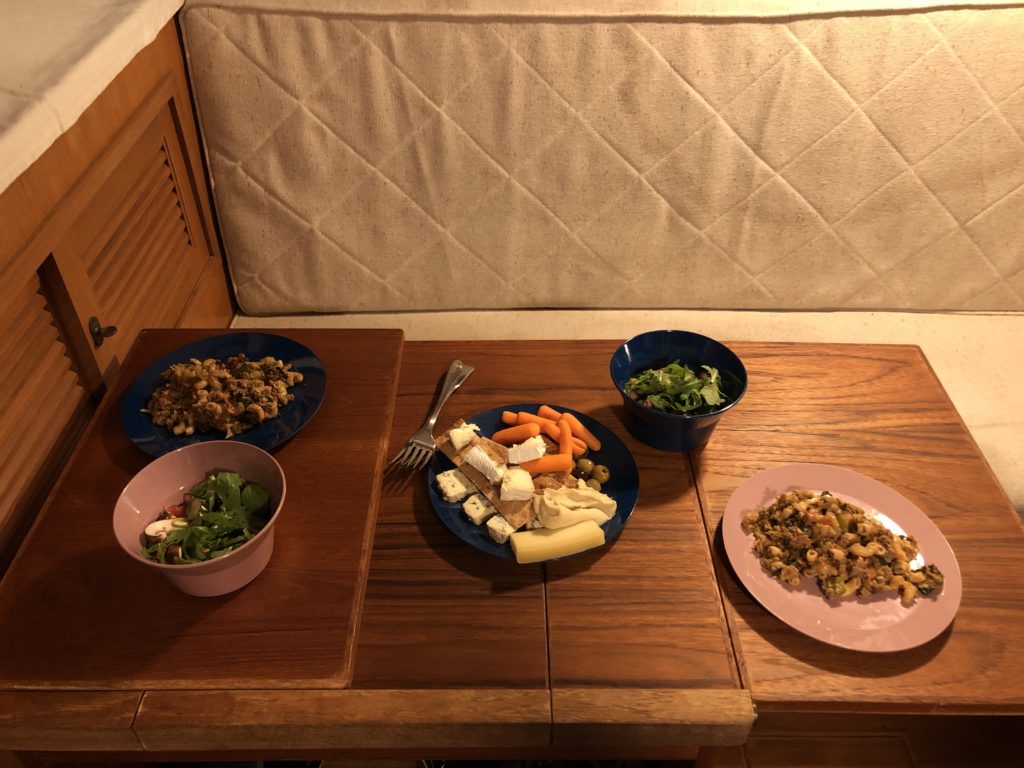
We didn’t have lunch so much as a snack plate – something we could either sit down to, or take turns snacking while we were sailing. Dinner was only put on once the boat was settled in for the night.

Day 3

Cruising Lake Champlain, October 2020

Good overnight stay at Westport. Planning. general Plan to sail ar Northwest Bay, then head north, stopping in cove for lunch.

Tuesday looks blowy. Plan to be Point Bay Marina tonight.

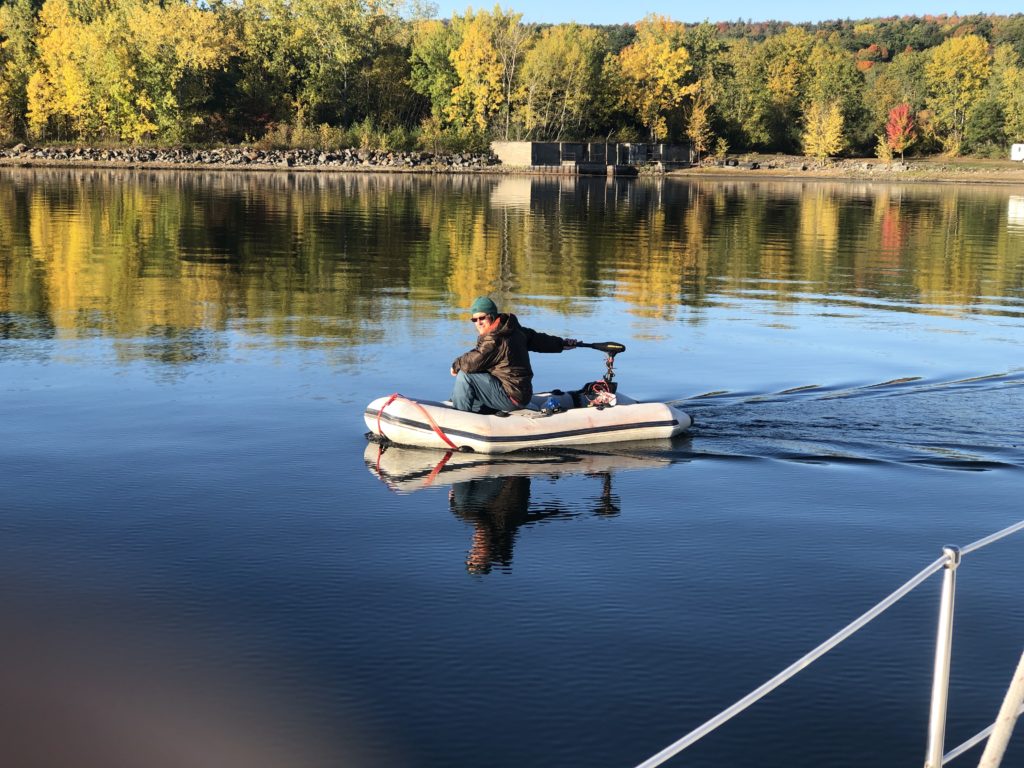
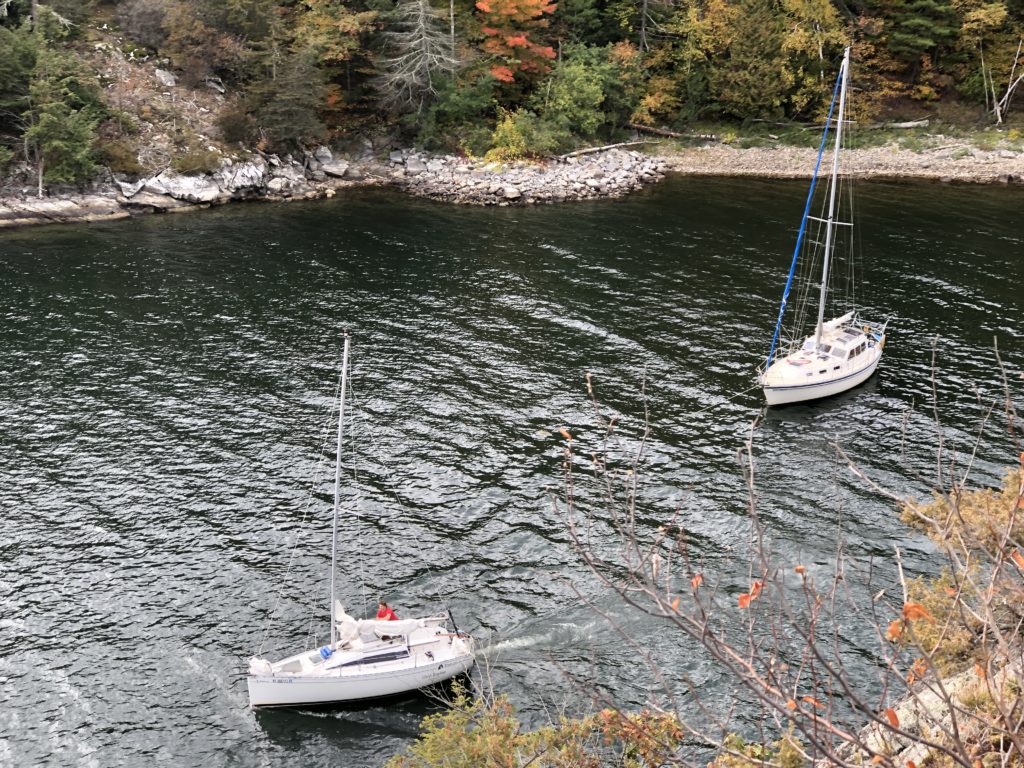
We spent most of the day sailing. First, to Button Bay, staying clear of Button Island […] practiced anchoring, which is difficult given how the anchor mounts. Then, kept a course to Barn Rock Bay [Harbor]. Anchored there, harbor depth was steep. Played out >100 feet of line. Met fellow sailor and exchanged pleasantries. Went ashore ~1 hour to Barn Rock Ledge, splendid views. There is a youth program rowing gigs across the lake to our harbor.
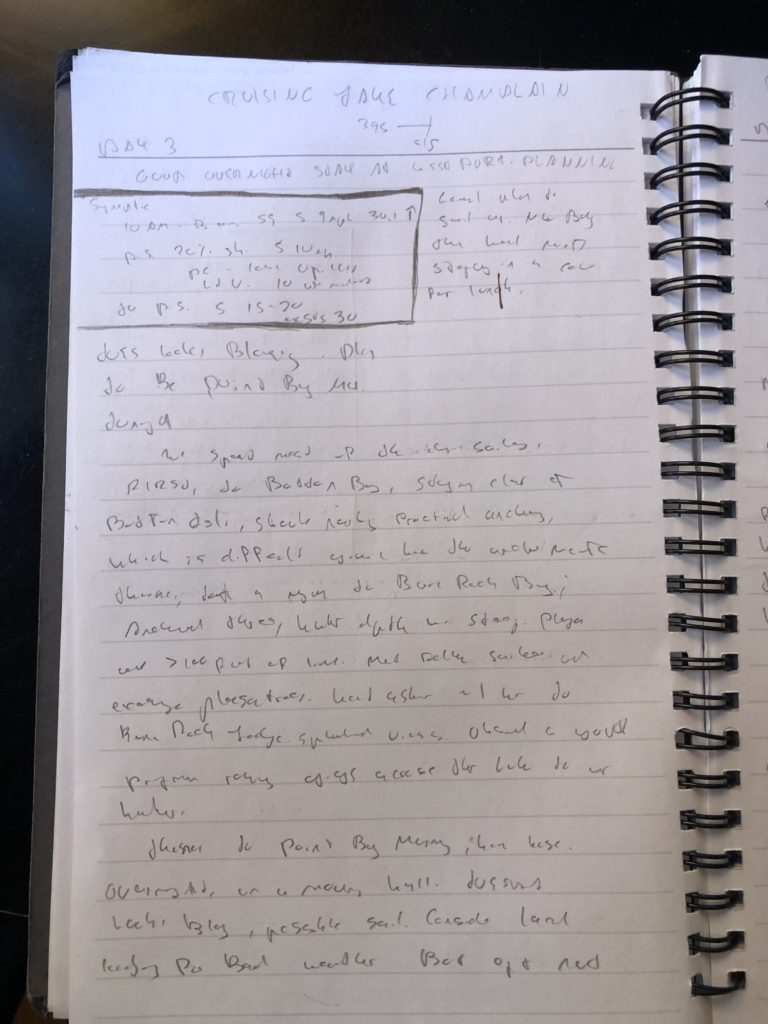
Thence to Point Bay Marina […]. Overnight, on a mooring ball. Tuesday looks blowy, possible sail. Consider land lodging for bad weather. But optimistic not.

Barn Rock was great. It was simply daunting, because it is a small cove with a very steep dropoff. There’s a narrow window between too-deep and too-shallow. In hindsight we could have anchored farther in, but we didn’t want to cramp our neighbor.

Cruising Lake Champlain, October 2020
Our neighbor departs.
Cruising Lake Champlain, October 2020
Kids Rowing.

We could hear them from almost a mile away – the sound of kids, rowing hard in a race across the lake. By the time we climbed down and were sailing again, they were rowing back, and we steered around them.

Cruising Lake Champlain, October 2020
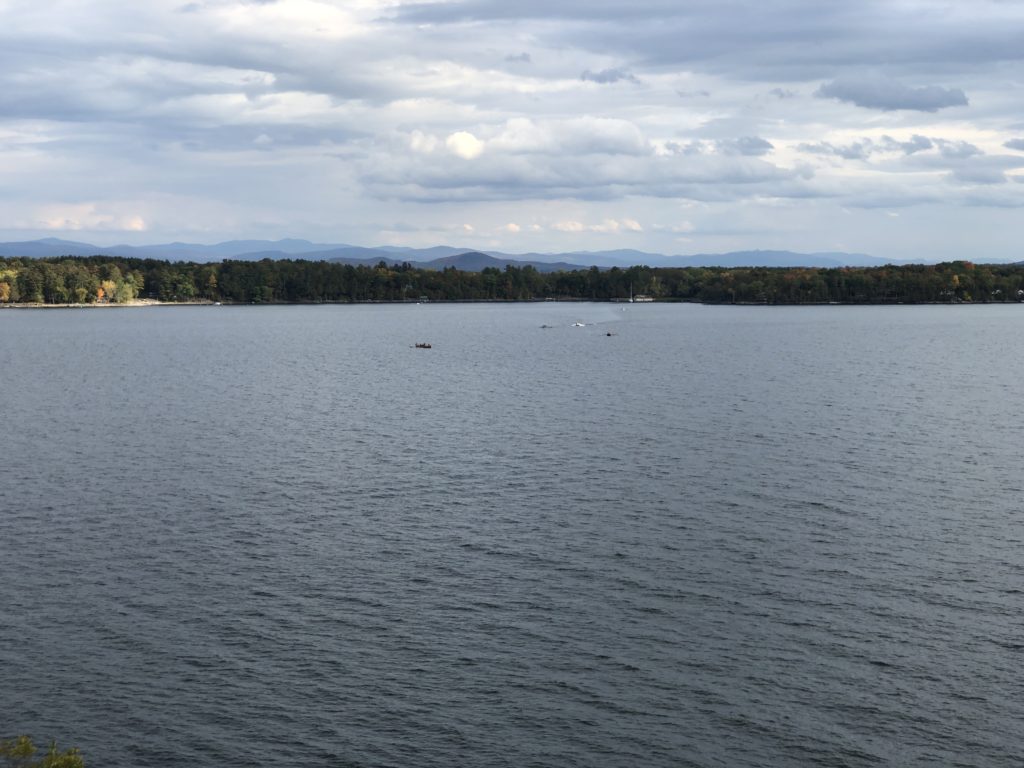
A View From Barn Rock.

The weather was predicted to be formidable Tuesday (Day 4) and possibly thunderstorms on Wednesday, so we set out to “home base” of Point Bay Marina. As I recall though, after consulting with the owner and looking at the wind, we opted to stay in Kingsland Bay, south and facing north across Town Farm Bay to see “home base”.

A Short Sail

You can hear the wind. Not just the wind in the air, rustling trees, rattling lines. Inside, whether a boat or a building, the wind might be imperceptible, until you look outside and see its effect on the world around you.

Yet inside, you can still hear the wind, howling from across the lake, pushing the boat to strain audibly against the lines that hold her to the dock. The wind might push the boat against the dock, creaking against the fenders. Howling, mighty, the wind reminds you of its power, even fully inside the harbor.

David and I were aboard the Wind Rose, a Vancouver 32 closed-cockpit sailboat his parents own, on Lake Champlain. We were trying out living and sailing on the boat over a long weekend. I’m happy to say it was a success, and we hope for a longer journey aboard her soon.

After a Friday evening sail with his parents, who showed us the ropes, as it were, we slept and ate aboard the vessel. This came about in part because so many of the travel restrictions due to Covid require quarantine; here, we were able to minimally quarantine while still having a bit of a holiday.

The Closed Cockpit
The Closed Cockpit.
The Galley
The Galley.
Dinner Aboard the Wind Rose
Dinner.

David has taken me sailing a few times on smaller boats. There was a 24-foot boat we rented for a day in Florida; we’ve been out once or twice on a friend’s boat, recently sold; my paddling club has a sunfish, and most recently he’s been part-owner in a 23-foot Oday kept in Piermont, New York, near the Tappan Zee. Mostly, I steer, or work the jib when we tack.

This was my first experience using a wheel for the helm; everything else has had a tiller. That took a bit of getting used to. Gaining a feel for how far to turn the wheel to change course or hold a course took a bit of practice. Additionally, while we did most of the driving from the open cockpit in the back, we made sure to try steering from the closed cockpit position, which offered less visibility in exchange for a bit more shelter from the wind. That was a novel experience.

The Wind Rose is also by far the largest vessel we’ve sailed. At thirty-two feet overall, she was steady and more reassuring in bigger waves. Fortunately, her size belies her handling; she turns very quickly, and in the world of sailing, and handled well both jib-only as well as main-only.

Day 1

Day 1 - Sailing August 2020

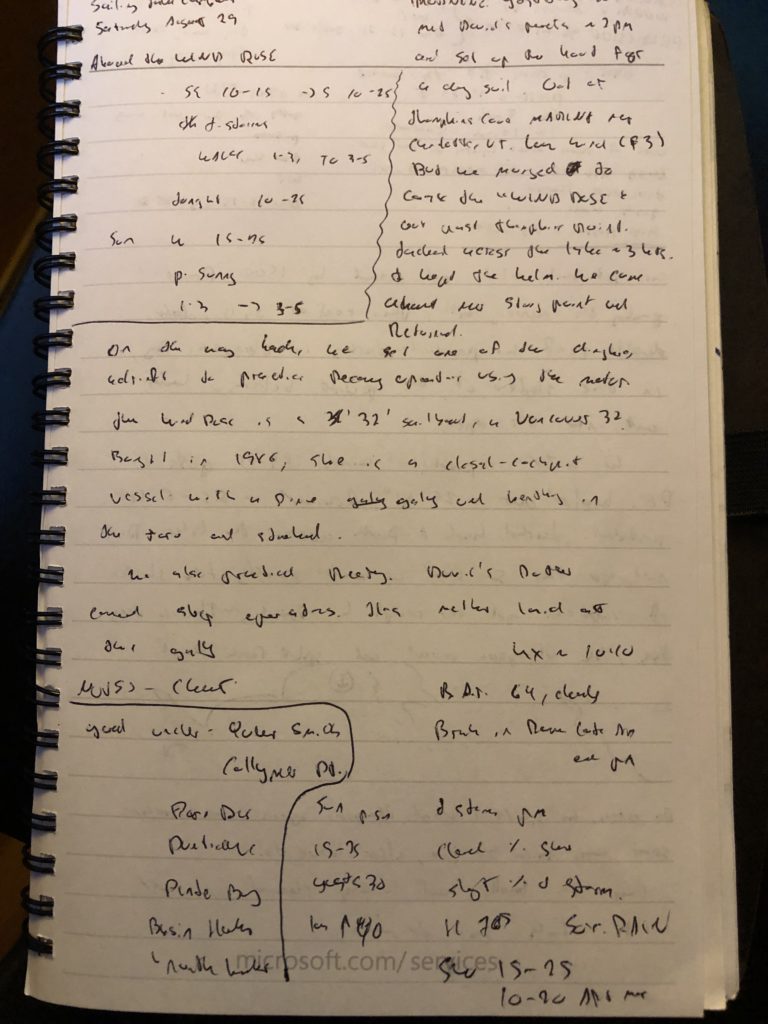
SATURDAY AUGUST 29

SE 10-15 growing to S 10-25; chance of thunderstorms.

Yesterday we met with David’s parents ~2PM and set up the boat for a day sail out of Thompsons Cove Marina, near Charlotte, VT. Low wind (F3), but we managed to coax he Wind Rose out past Thompsons Point. Tacked across the lake ~3 hours. I kept the helm. We came about to Split Rock Point and returned. On the way back, we set one of the two dinghies adrift to practice recovery operations using he motor. The Wind Rose is a 32 foot sailboat, a Vancouver 32. Built in 1986, she is a closed-cockpit vessel with a fine galley, and berthing in the fore and starboard. We practiced reefing. David’s father commanded ship operations. His mother laid out the galley operations. We were given a list of potential destinations to sail should conditions prove charitable.

Unfortunately, our sailing plans were curtailed by the weather. High winds predominated, in the F5-F6 category, gusts to F7 (16-25 mph, gusting to 30). Thunderstorms were predicted Saturday. Coupled with this being the first time David would be sailing the Wind Rose, and our limited area knowledge, we stayed in Saturday, although by the end it was evident that the worst of the conditions had passed to the east.

We pored over the weather all weekend: the synoptic over the radio, radar maps and raw data on our phones. How strong would the wind be? From which direction? What about wave height? Lake Champlain is notorious for winds running north and south, the long, relatively skinny lake offering plenty of fetch for the wind to grab the surface of the water and push it into mighty waves.

Ultimately we stayed in, reading, talking, learning how the boat’s systems worked. The galley proved quite usable, with a built-in icebox, propane cooking range, and tanks for water and fuel.

Day 2

Day 2 - Sailing August 2020

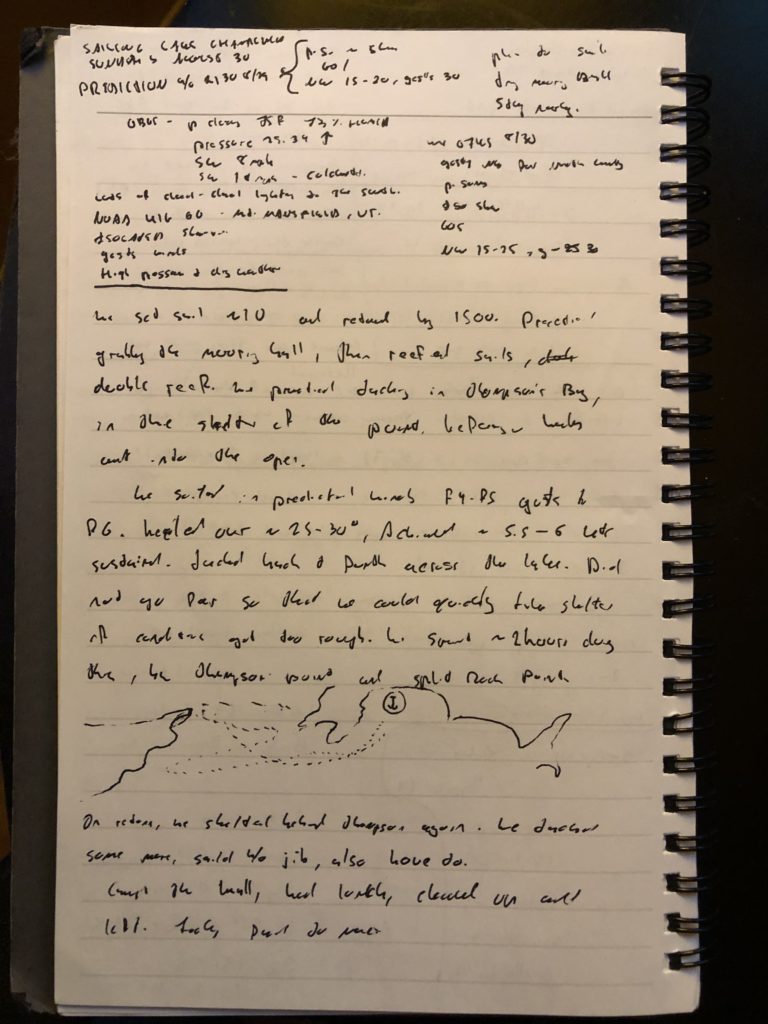
SUNDAY AUGUST 30

Isolated showers, gusts of wind. High pressure system and dry weather coming in from the west. P cloudy 75 F, pressure 29.34 and climbing. Winds NW 15-20, gusts to 30.

We set sail ~10 and returned by 1500. Practiced grabbing the mooring ball, then reefed sails, double reef. We practiced tacking in Thompsons Bay, in the shelter of the point before heading out into the open. We sailed in predicted winds of F4-F5, gusts to F6. Heeled over 20-30 degrees (?), achieved 5.5 to 6 kts sustained. Tacked back and forth across the lake. Did not go far so that we could quickly take shelter if conditions got too rough. Spent ~2 hours doing this, between Thomspons Point and Split Rock Point. On return, we sheltered behind Thompsons again. We tacked some more, sailed without jib, also hove to. Caught the ball, had lunch, cleaned up and left. Looking forward to next.

Day 3

https://www.smugmug.com/app/organize/Non-Kayaking/2020/Sailing-Lake-Champlain-Sept-2020/i-MTxtNjF

Sunday was our big sail. We were underway by 10, and returned a bit before 3. The first thing we did after leaving the slip was to practice grabbing the mooring ball and tying up, which was easier than anticipated. We then tacked back and forth in the shelter of Thompsons Point; with the wind from the northwest, the point protected us from the brunt of the wind while we got a feel for the boat’s handling, and our ability to handle her. We could see bigger water out past the point.

Eventually we set out, and oh my did we catch some wind. We heeled over and our speed ramped up considerably; we touched seven knots but were generally cruising in the five to six knot range. We did not go far; our thinking was that we wanted to be able to quickly duck back behind the point if conditions became too much. Essentially, we tacked back and forth across the lake.

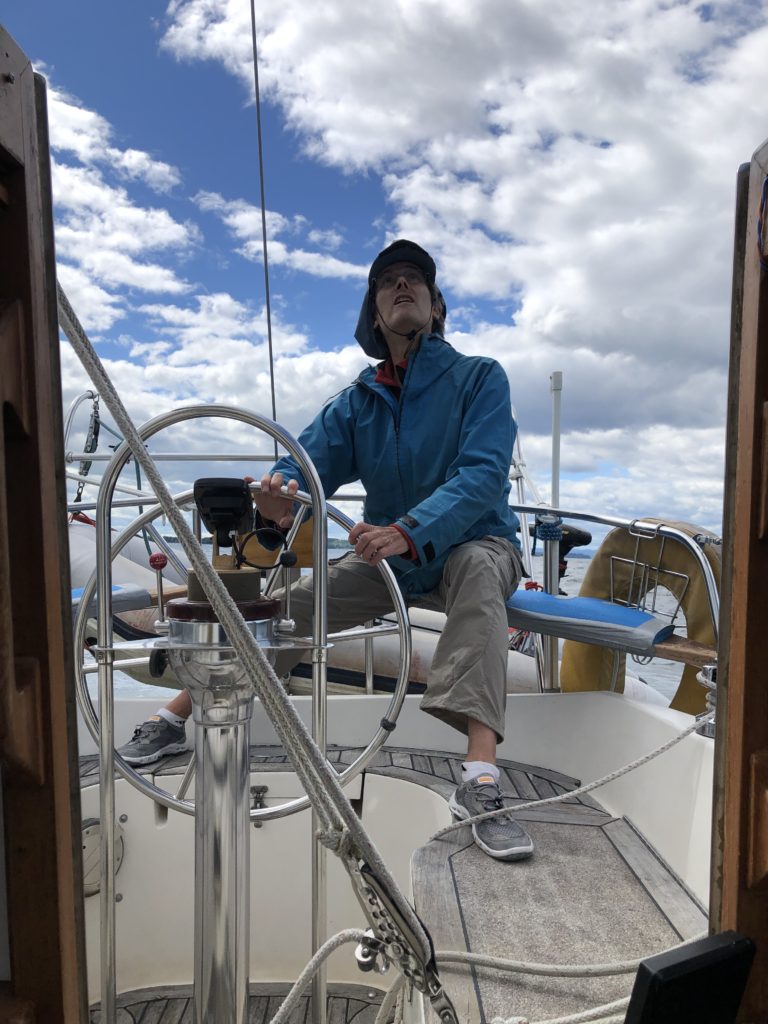
David at the Helm
Helmsman.
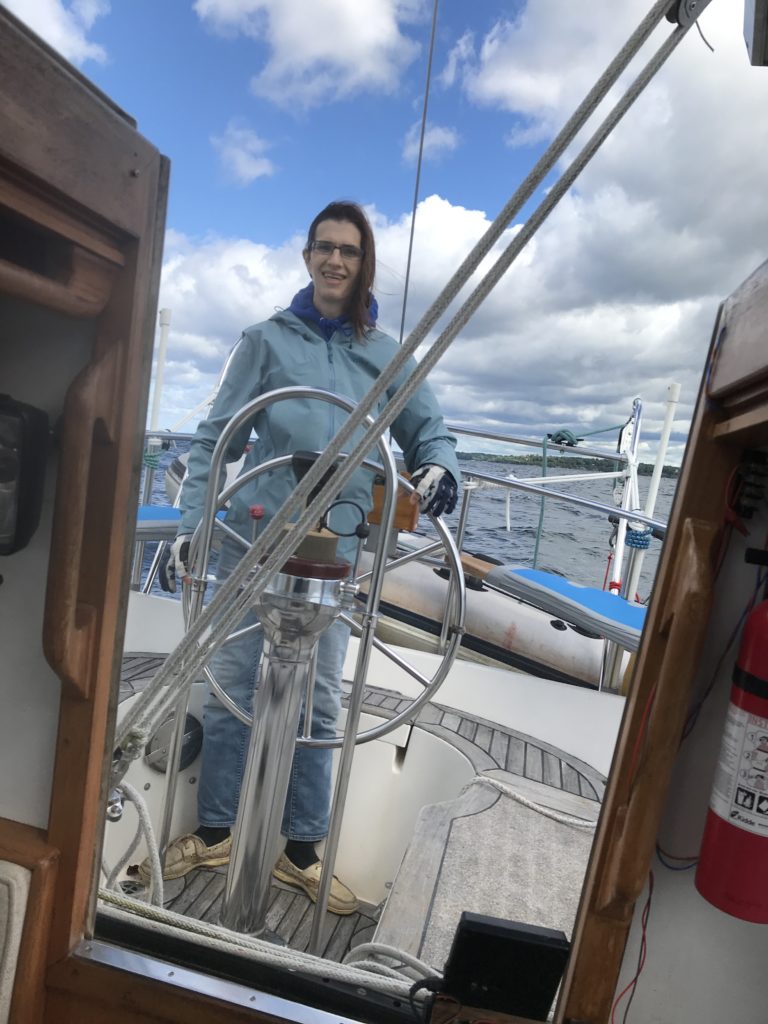
Julie at the Helm
Helmslady.

While it was exciting, I have to admit that after a while I was a bit queasy, and didn’t want to prepare lunch while slapping bow against the waves, which were solidly in the two-foot range. We pulled in behind the point and compared strategies of vessels heading out; one was under full sail, another was jib only. We later saw a motor boat being towed back by the marina’s crane rig.

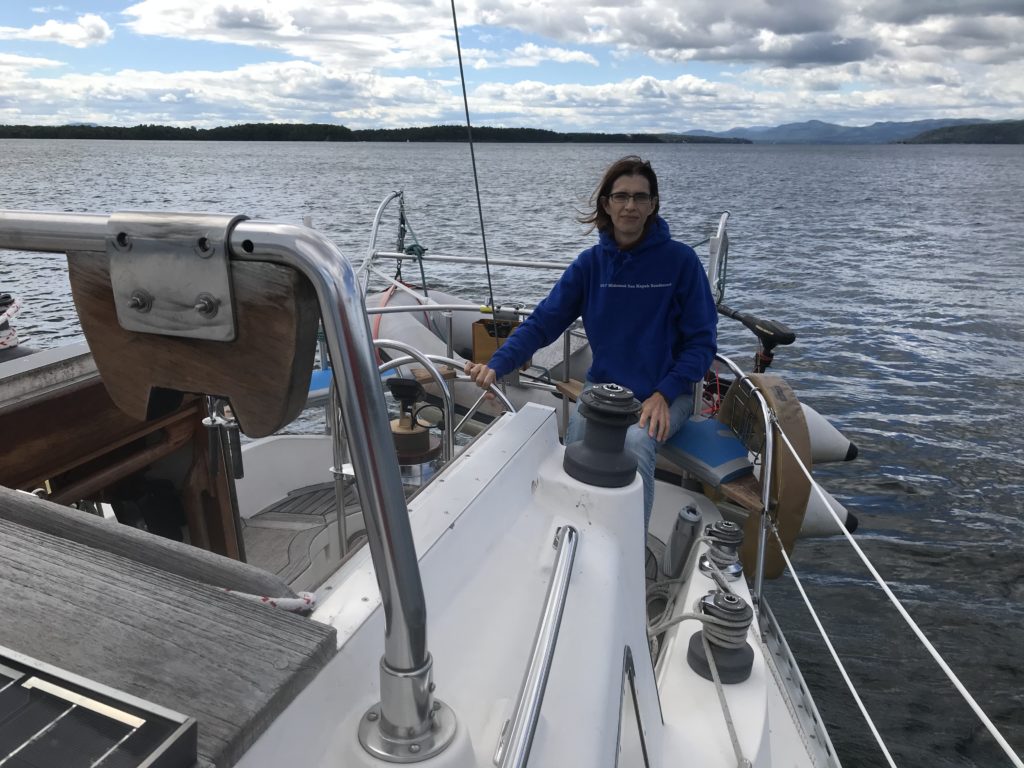
Steering
Relaxed Steering.

When we decided to try and heave too, it turned out his parents were on shore, watching, and apparently we didn’t look too shabby in our efforts. Stopped, barely moving sideways, we took a much-needed break.

When we were done, we started the long process to break things down. Caught the ball, lowered the sails, cleaned the berths, head, and galley, gathered our belongings. We left her ship-shape, and took the dinghy back to shore.

Tropical Storm

“I am so tired!” Madame moaned as she set the fish on the table.

“Certainly not from baking the fish, Madame,” said the Musician. “It is so simple, no? Herbs, oil, bake?”

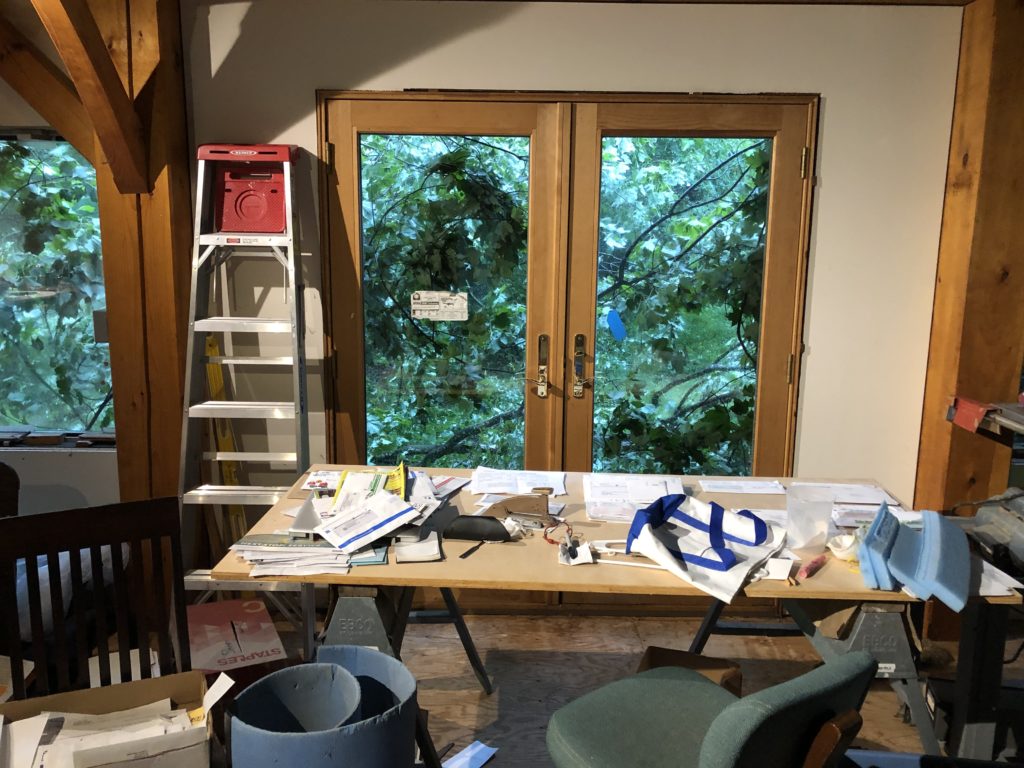
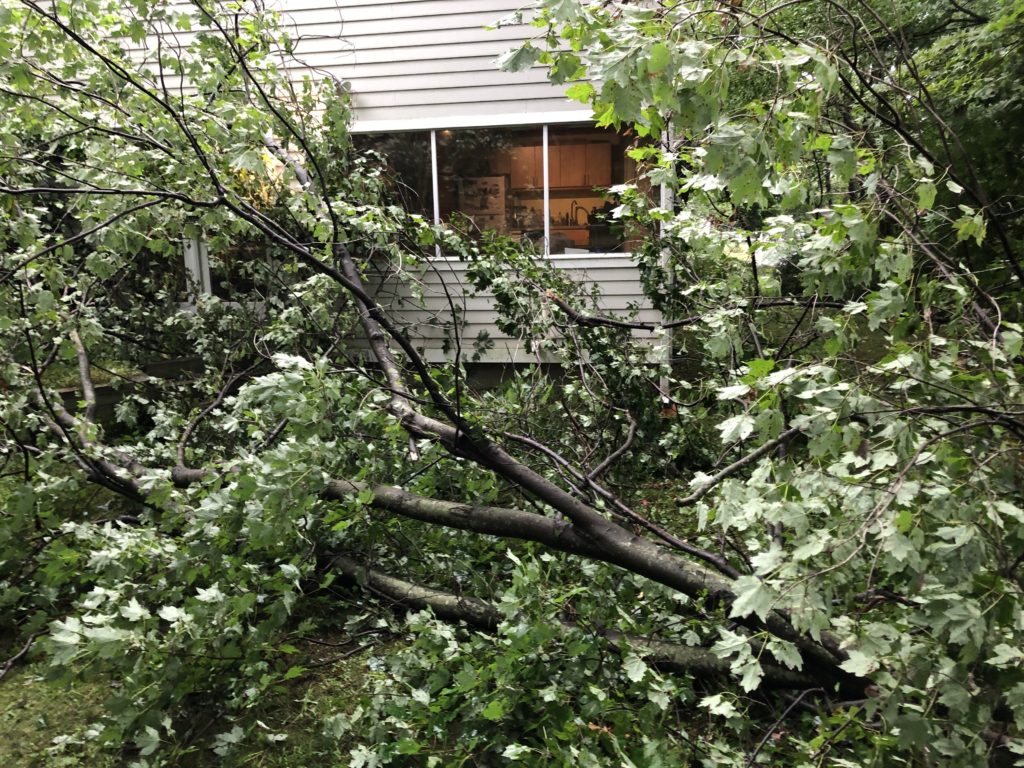
“I was chopping wood! Do you not notice the distinct lack of tree pressed up against the house?”

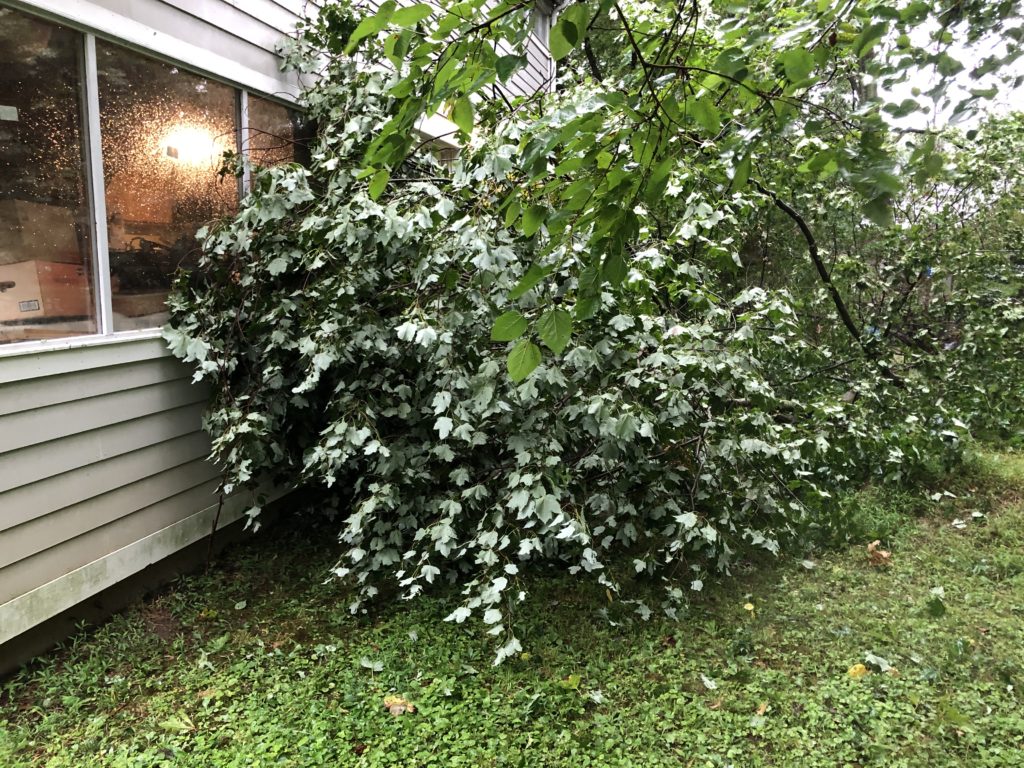
Tree Against House.
Tree Against House.

The storm had come through the day before, dropping immense amounts of rain, but also bringing high winds.

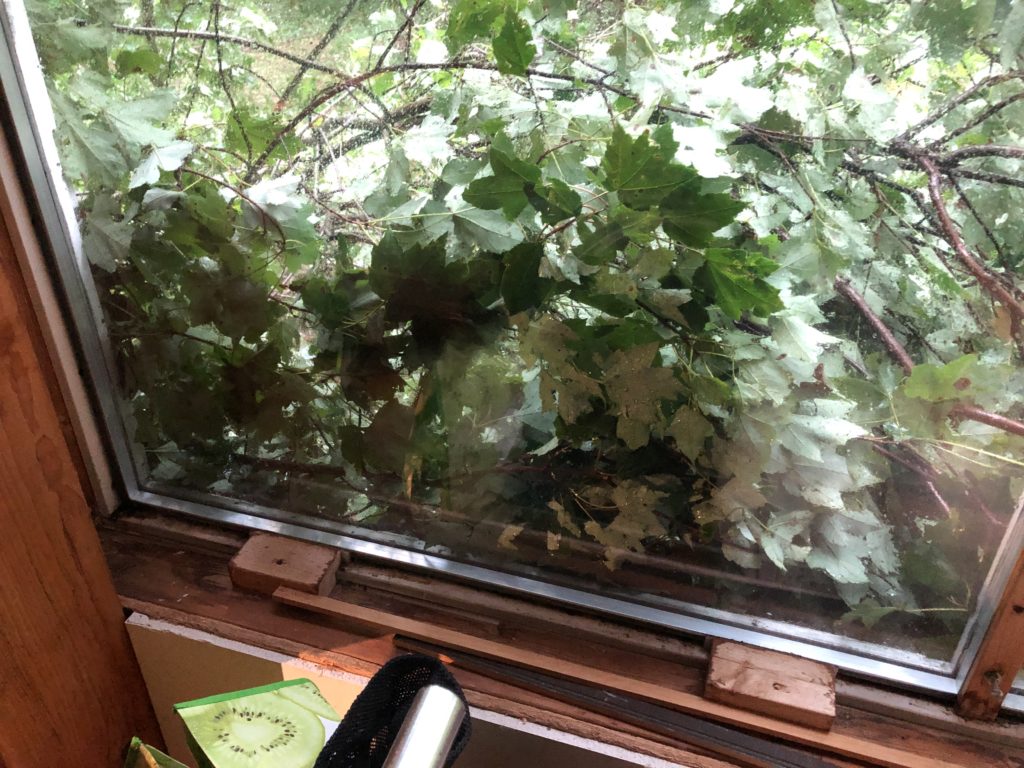
“I was in the office, working, as I often do,” said the Engineer. “I heard a loud whomp sound. I thought it was inside the house, but found nothing had fallen. I looked out the front door, and saw nothing had fallen. When I turned around, however, I saw a bunch of leaves pressed against the back windows of the house.”

Oui, we were so lucky,” Madame continued. “The tree fell to the ground and only tickled the house. It could have been worse.”

Tree Closeup
Tree Closeup.
Tree External
Tree External.

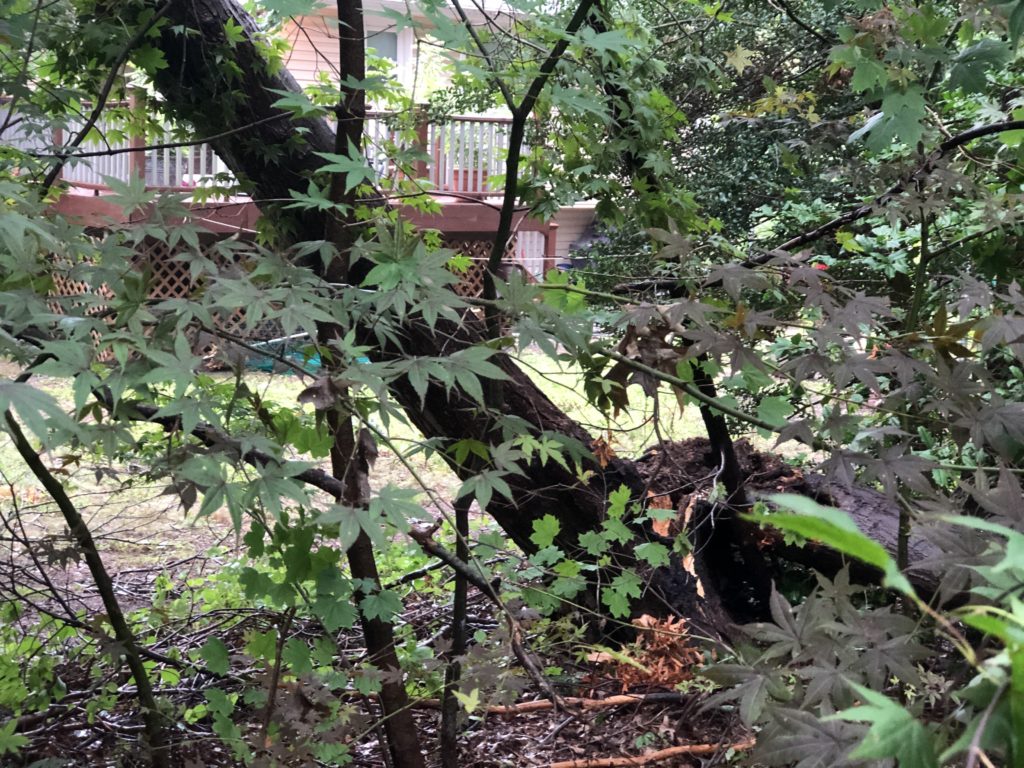
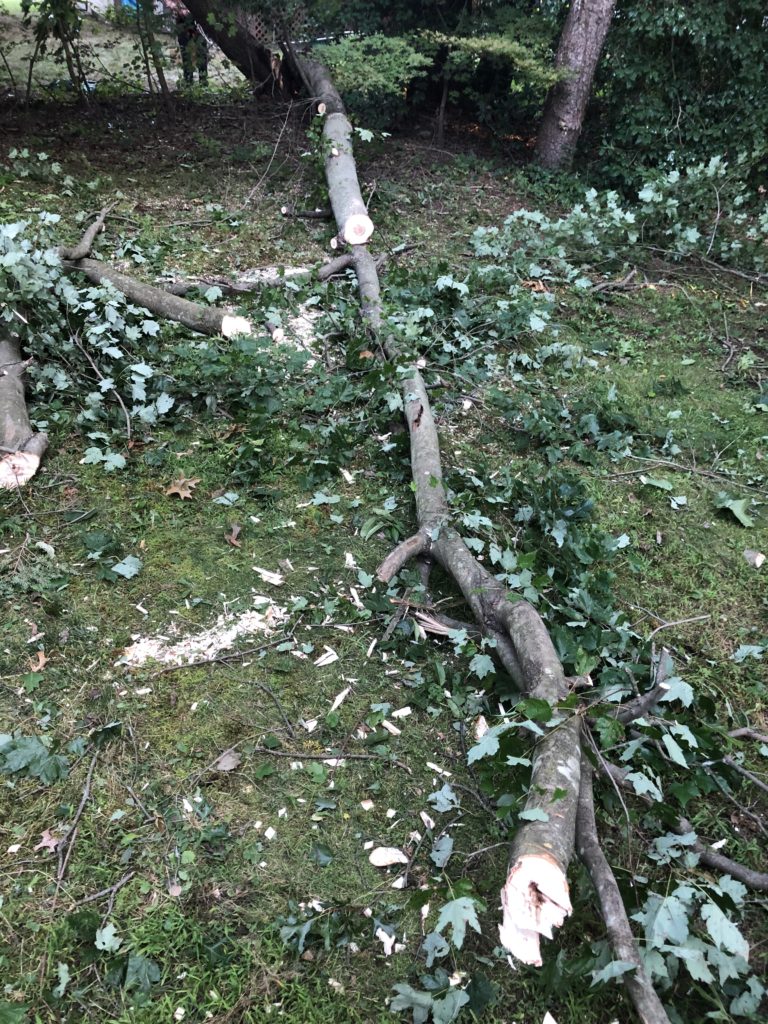
“As it stands – or rather, no longer stands – the tree was actually two trunks, split near the base. The other trunk has fallen towards the neighbor’s yard, threatening their trampoline.”

The Tree Root
Root of the Problem.

“An amusing image, that of a tree against a trampoline,” said the Musician.

“True and fair,” declared. “But it presented a challenging obligation, of how to safely re-safe-itize the area, by careful removal of the looming flora.”

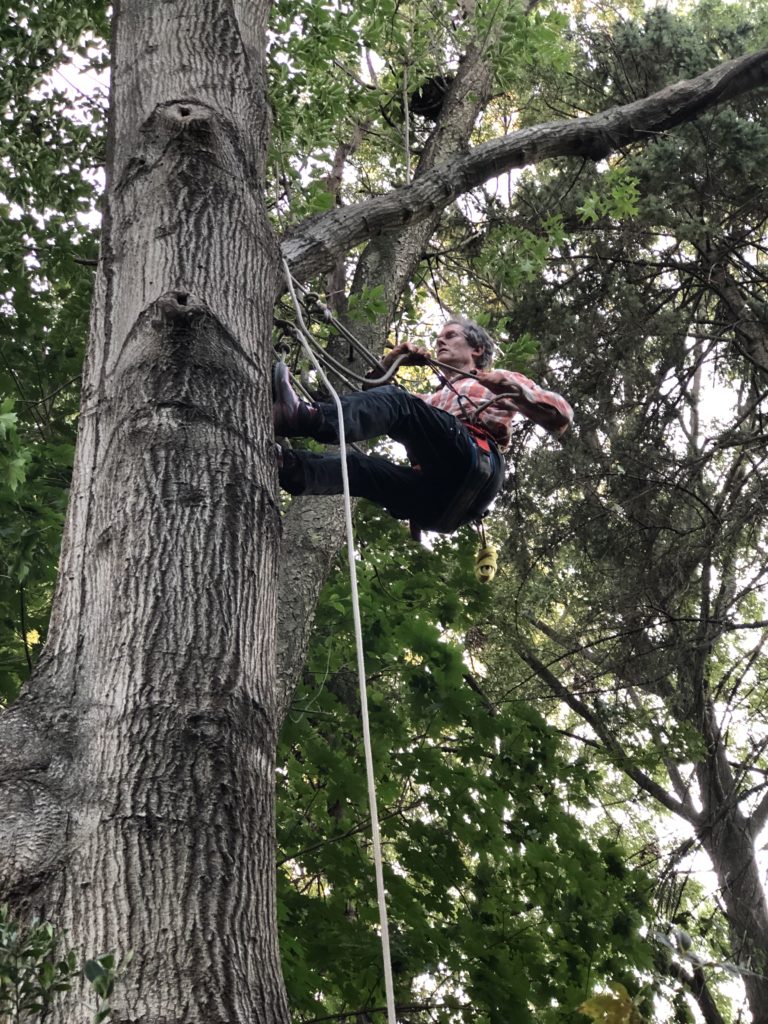
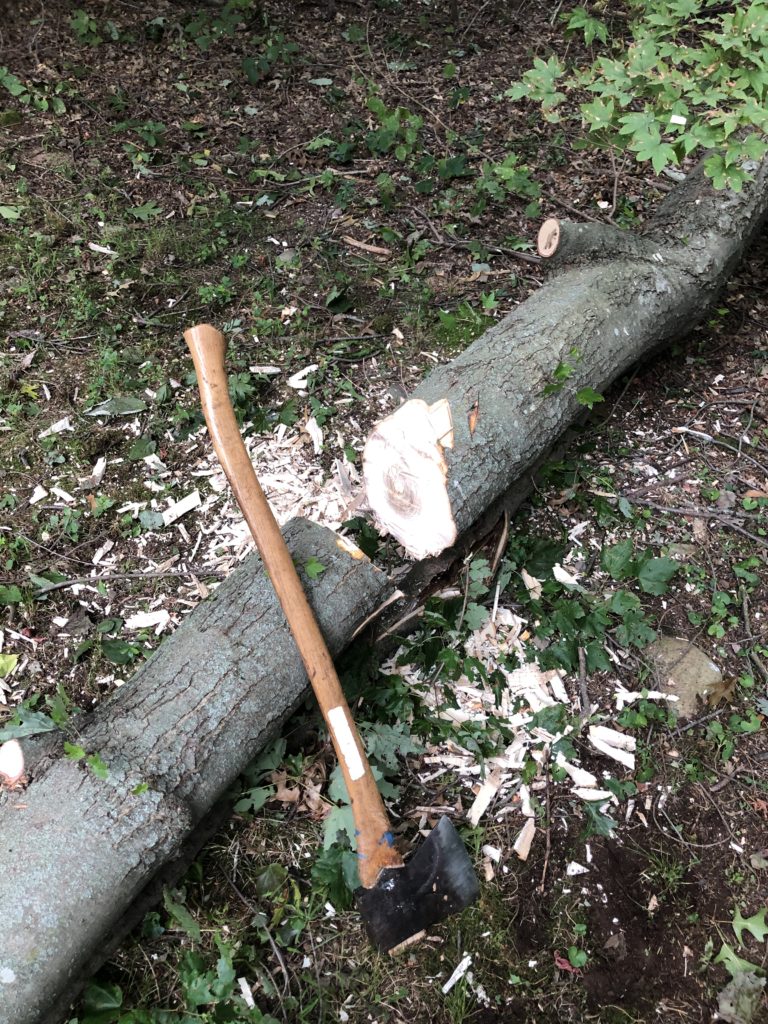
“And yet still the tree!” Madame was exasperated as she sat down, and served cuts of salmon fillet, with roasted baby potatoes and sauteed cauliflower. “I am not qualified to climb such a tree, but I took clippers and an axe to the one in the yard.”

“Aye, she did,” nodded the Engineer.

Tree from the Back
From Behind the House.
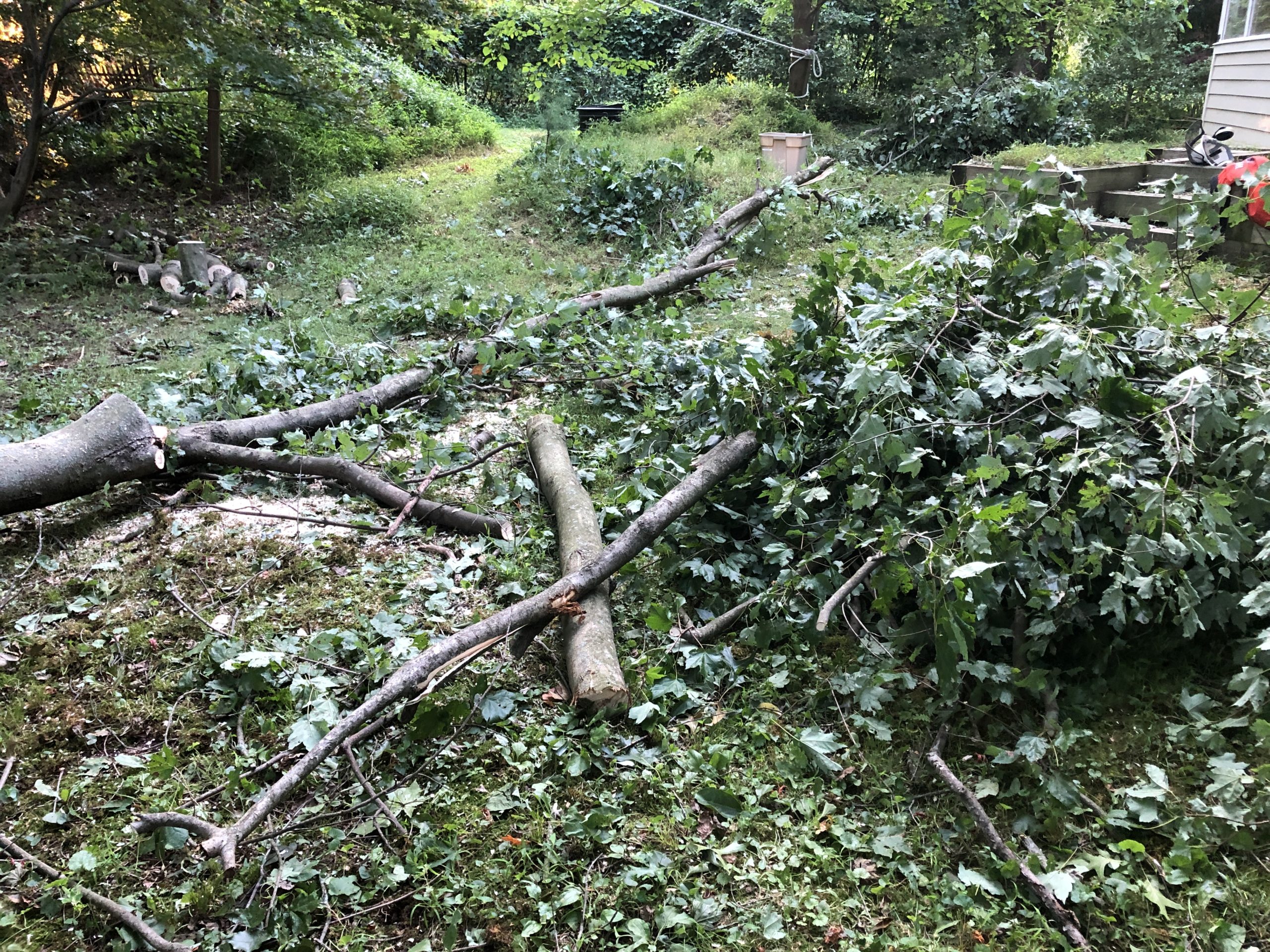
Chopped Tree.
Progress!

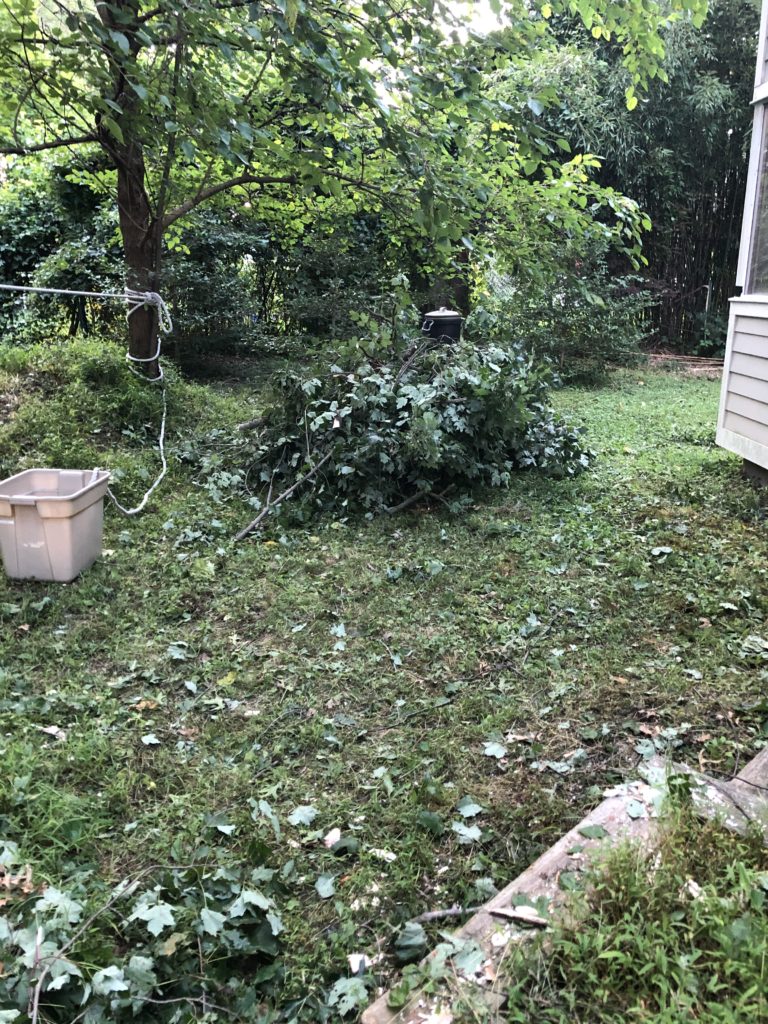
“That would explain the pile of yard waste I saw this morning. Whatever happened to it? It was gone when I returned from music practice.”

Yard Waste
Yard Waste.

“The children!” Madame exclaimed. “The family next door insisted on helping! They said the children loved to move branches. They were like the von Trapps of tree disposal. No more than seven years old, they dragged each branch to the curb.”

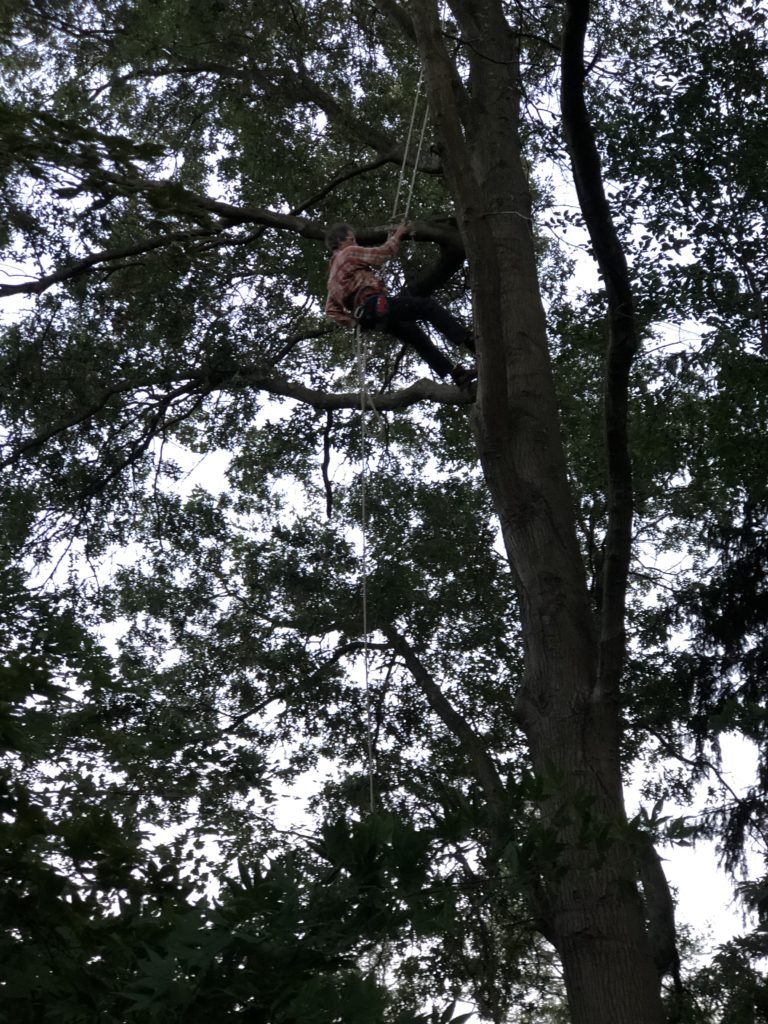
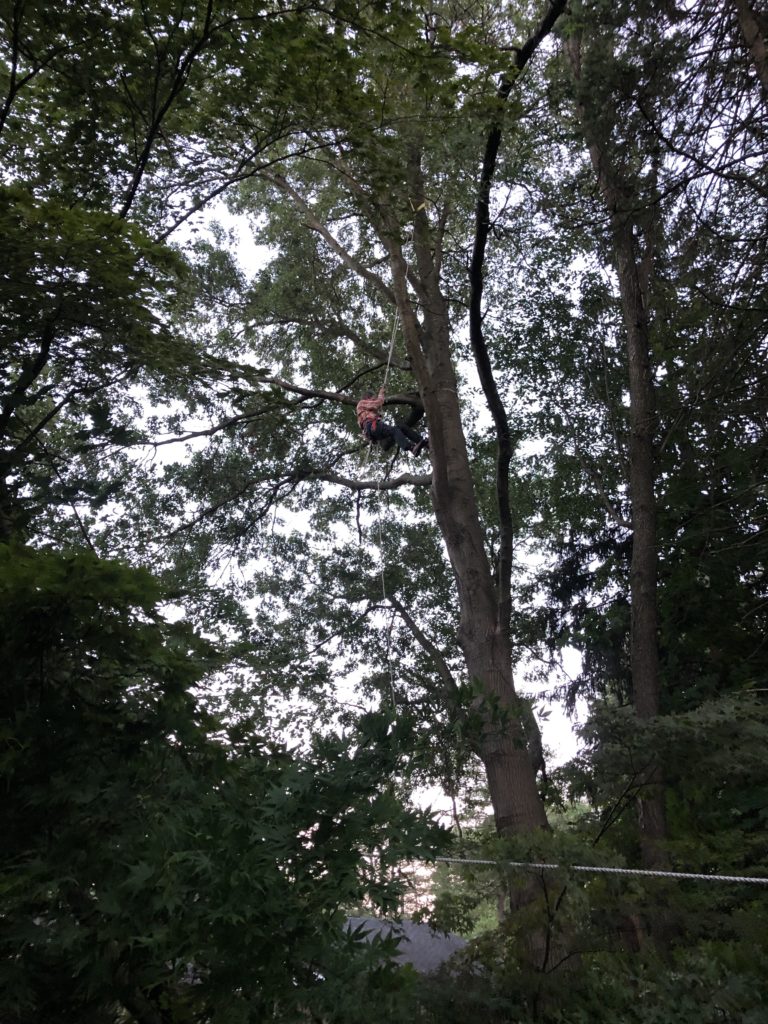
“We are still left with the remaining problem, that of the other trunk. I believe we will have to call a professional. Our man went to great lengths to determine whether he could dispose of it himself.”

Climbing the Good Tree
Climbing the Good Tree.
Higher.
Higher.
Higher and Higher.
Higher and Higher.

“What’d I miss?” Jody Hipster entered, leash in hand, having taken Polo for a walk on the rail trail.

“Nothing we can’t leave behind,” said the Musician.

“We might branch off the conversation,” said the Engineer. “Did the dogs bark?”

“Why no,” said Jody. “Why would you ask?”

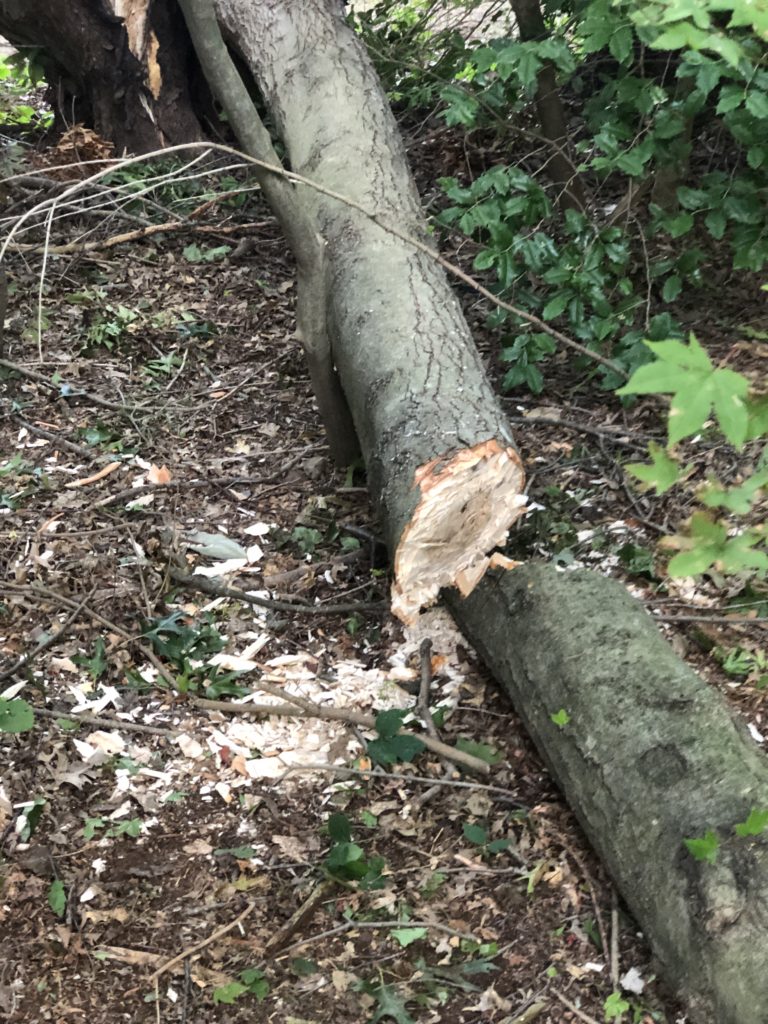
“It was sick. As I chopped through, in the middle was soft, dark wood, like mulch. It is no wonder the tree gave way.”

“Poor old tree,” said Jody.

Clovis circled the table, angling for fish, his tail arched like a shark swimming near the surface of the ocean.

“May I?” The Musician’s heart always melted first.

“He is transactional by nature, that one,” said the Engineer. “Don’t expect good behavior supplied on credit.”

“Someone else do the dishes tonight, please,” pleaded Madame. “I’m so tired!”

Chop One
Chop One.
Chop Two
Chop Two.