The Autoclast is not a car blog. It’s a portmanteau of “Autocrat” and “Iconoclast”; in a perfect world, a spiritual descendant of “The Autocrat of the Breakfast Table”.
I rarely do social media anymore; I won’t say what I do, but I will say the ones that come up most often, I no longer use. I feel they’re just garbage, nothing but ads and political spam, and on some platforms, quite a bit worse.
When I want to share something with friends and families, I use my website. Some things – most things – are public, but some are not.
When I think about the development of social media, I think of the development of media in the past, and how often it has been advertising-based. Newspapers, magazines, radio, television: Here is some entertainment, perhaps here is some news, and alongside all of the are some ads. These days, even if you pay for access to a streaming service, you’re still likely to get ads.
Traditionally, advertising was brokered by intermediaries. With social media, anyone can create an account and start spewing ads. They can join online forums and participate anonymously or via automated bots. The barrier to entry is so low, anyone can pump a message to thousands of people easily.
There’s a notion that lowering barriers to entry allows more voices, a positioning of democracy over gated access. However, the volume of messages, coupled with some people being clever with algorithmic manipulation, makes the experience worse. There are countless pages, sites, channels, and other means of distribution that no one can be equipped to understand deeply.
All of that is before we get into shortform swipable formats that have emerged lately.
Hence, my anti-social media. A website I control, which I can use to share with family and friends.
It starts with a QR code; when you travel to Japan, you register your trip and personal information online and receive a QR code that you can save, print, or screenshot for later. When you enter the country, you present that QR code along with your passport, and that’s it: you’re in.
There are additional rules for medications, and if you don’t have the QR code handy, you can fill out paperwork on the spot, but it takes time.
David and I returned from Japan less than a week ago, and since then I’ve traveled quite a bit for work; I won’t be home until the end of March. A week ago as I write this…adjusting for time zones…we were asleep in Tokyo and preparing for our penultimate day (well, pre-penultimate day, but we’ll get to that).
This was my second trip to Japan and David’s first; it was more complicated than my last trip, and we had the kinds of complications that arise from complicated trips: weather delays, missed buses, multiple transfers by train, and a touch of illness on both our parts. However, it was a good trip, one that took me to places in Japan I’d wanted to see, gave David a chance to ski in Japan, and served as a bit of a romantic getaway, long overdue.
It will take me a while to go through the photos, and write the pages, and organize my thoughts. Even now my head swims at the breadth of our trip: a week in the northern island of Hokkaido seems like a different trip than our time in Miyajima, Kyoto, and Tokyo.
We traveled a lot in-country. We took trains, planes, and buses between cities; I rented a car in Hokkaido; there was a short ferry ride to Miyajima. We took the Shinkansen (bullet train) a couple of times. We ascended and descended mountains via ropeway (cable cars). We covered a lot of ground on foot.
After a week in Hokkaido, split between a few days in Sapporo and a few more in Furano, we flew south to Hiroshima and stayed on the small island of Miyajima. We had an afternoon in Hiroshima and then stayed in Kyoto for a few days with day trips to Kobe, Osaka, and Amanohashidate. We ended with a couple of days in Tokyo.
Of course we met up with Tamu: Taichi Tamura, our guitarist family friend who performed in Osaka.
Our flight back was delayed by bad weather in New York, forcing us to stay one more night in Tokyo near the airport. This put is a day behind returning to work, but ultimately worked out: we arrived at JFK Tuesday morning.
David and I took a short vacation recently to Maryland; the occasion was a friend getting married, but we decided to make a long weekend of it to see some sights, rather than drive six hours each way just for the wedding.
The location was a peninsula near the Patuxent River Naval Air Station, which turns out to have been one of the US Navy’s flight test centers; shortly after, we learned that the Smithsonian Air & Space Museum has a facility out near Dulles airport, where they keep many, many historical aircraft and aerospace artifacts. This would be a great place to see a lot of aircraft without having to contend with D.C. traffic (much).
Oh boy, were there a lot of planes. The Patuxent facility was all military planes, mostly from the 1960s and onwards, most of which were outdoors. Highlights were an X-35 and, very rare, its competitor the X-32.
They also had a recently-added Blue Angels F/A-18 Hornet; the Smithsonian had one as well. And, they had a V-22 Osprey.
Most of the rest blurred into a series of varied aircraft with similar looks or names, many of which we were passingly familiar with, but have rarely been up close to. Inside the museum was a small exhibit devoted specifically to naval aviators who had gone on to space. The area in general was a Navy town, and the Patuxent NAS Museum clearly a navy place.
They had a separate building which had the “guts” of planes, as well as models of various aircraft carriers. Scopes, sonobuoys, electronic warfare computers, and incredibly, various engines cleaned and cut away to show how they worked. We watched some boy scouts rotate the business end of a turbo prop while we could see the gears whirring inside.
As it happened, one of the fathers along with the scouts had worked on that engine, and gave David a thorough explanation of that engine, and a Harrier V/STOL. Turned out he worked on the only civilian version currently in use, so I’ll guess he was the second-from the right on this photo.
The day after the wedding, we checked out of our hotel and went to Dulles. After a brief detour for extra caffeine, we arrived easily; really, if you like planes and are in the area, it’s an easy drive off the ring roads.
They have planes that are old.
Historic (the Enola Gay, which dropped the first atomic bomb used in war).
Also hang gliders, sailplanes, and high-altitude parachuting.
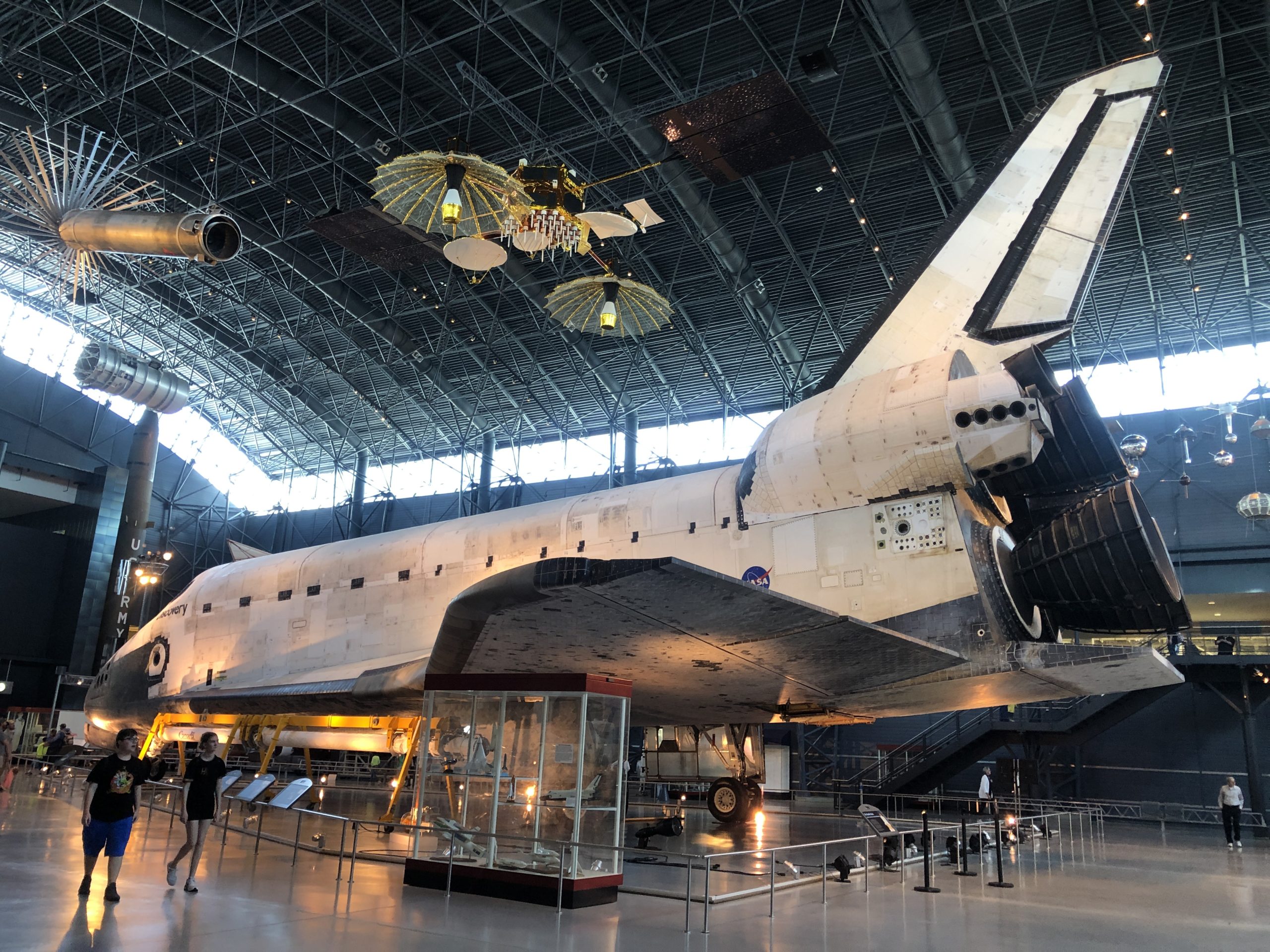
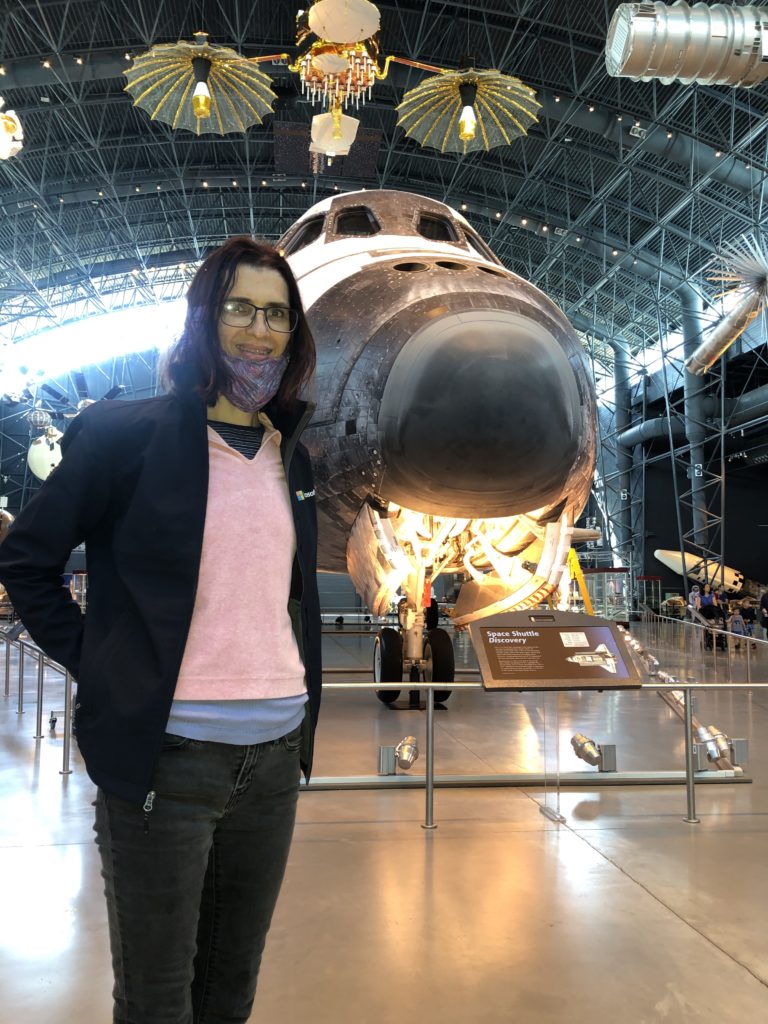
My favorite part was the space wing. They have the Space Shuttle Discovery, as well as various 1960s capsules, rockets, and artifacts.
The most interesting to me was that at one point NASA considered a glided flight option to recover the Gemini capsule. An inflatable wing would allow it to paraglide to the ground. While it was flight-tested, ultimately NASA decided to stick with the drop-in-the-ocean method for recovering spacecraft.
Lastly, they had an SR-71 Blackbird. One of the fastest planes ever made, this was the demon beast of military planes I grew up with. It’s not a fighter; it just takes observations and flies very, very fast. This one flew from Los Angeles to Washington, D.C. in 68 minutes.
Notable, you can view the restoration hanger, which has several projects going on at once. The red plane was one that Amelia Earhart used to set a record.
Altogether, between the two museums we saw a lot of aircraft. If you’re in the area, both are worth a visit; Patuxent was a neat find, and Smithsonian should already be on every aviation nerd’s list.
We were in an old building, apparently an antique store with a coffee cafe on the side. After caffeine and a nosh, we wandered the store, and realized it was not just antiques, but all kinds of things: souvenirs, scented candles, fancy tchotchkes, etc. We even got a little lost, moving from room to room to room, eventually finding our way out past the elderly man at the register.
We had a bit of conversation, remarking on the building, and got to talking history. He’d been working there over fifty years, since 1970; evidently it’s been in the family since the 1930s, and dates back to the 1700s. This withstood later scrutiny of the outside; the building was clearing a stone box, later had balconies added, perhaps a third floor, with a couple of extensions off to the side.
It had been a hotel for a long time, a stagecoach stop between Trenton and Philadelphia. We were in Pennsylvania after all, just over the river from New Jersey, by a tributary of the Delaware. He said only one President he knew of had stayed there, once: Grover Cleveland.
“Big fan,” I said. I rattled off the basic trivia: Sherrif, Governor, President; first Democrat elected to President after the Civil War, only two-term non-consecutive President.
“I hope we don’t have one of those again,” said the man. Clarifying, “you know who I mean.”
“Pretty sure I do,” I replied, taking his implication.
“And I’m a Republican!”
“I know plenty of others like you.”
We said pleasant goodbyes. Notable, in Bucks County, PA.
More to come, but I have the “Founding Fathers” up now. I’ve also linked some from the Reconstruction era.
I call these, ” Presidential Book Reports“. I read one or two biographies of a US President, maybe some supplemental reading, and write about them. It’s a fascinating way to learn more about American history.
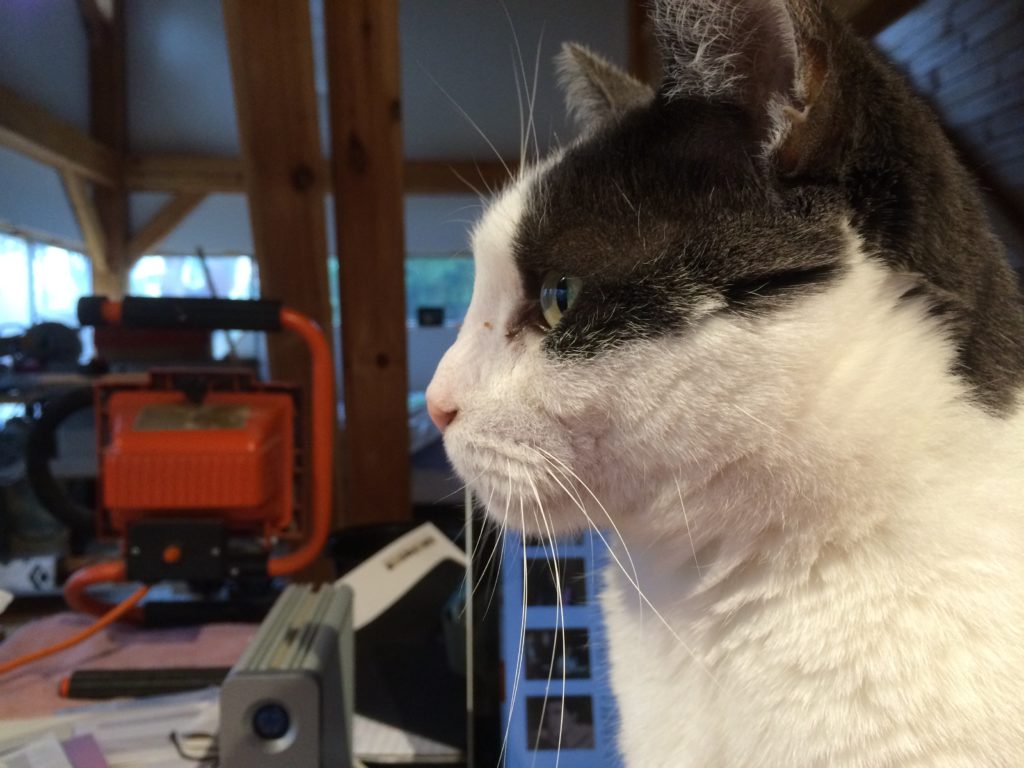
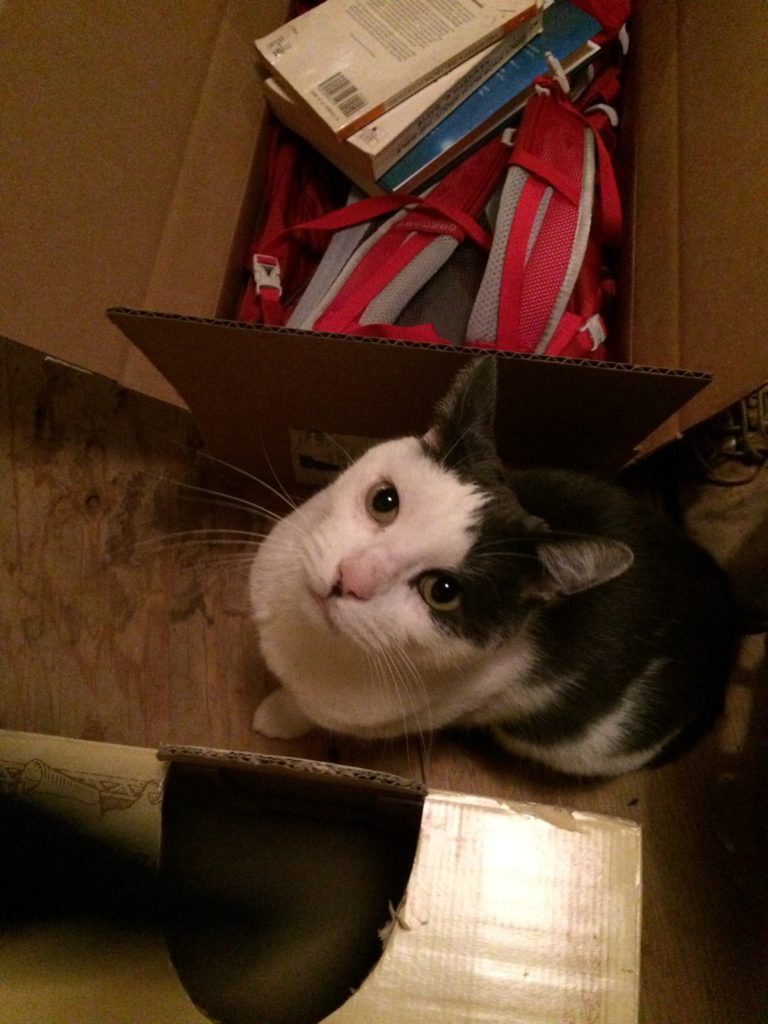
“Clo-vis, the kitty cat, the kitty kitty kitty cat.” That was my little singsong for our special guy, Clovis. He passed away Wednesday, November 17, 2021.
Clovis led a good life, one far better than the one he was born into. He was rescued about ten or eleven years ago by a previous girlfriend of David’s from Liberty State Park; he was with another cat who was later rescued, and who disappeared with the girlfriend. He was afraid of people and clearly not domesticated; David slept with him in the bathroom until he was trained, and even after, he never worked out to be an indoors cat. He had free roam to come and go as he pleased through a cat door David’s father rigged in a basement window.
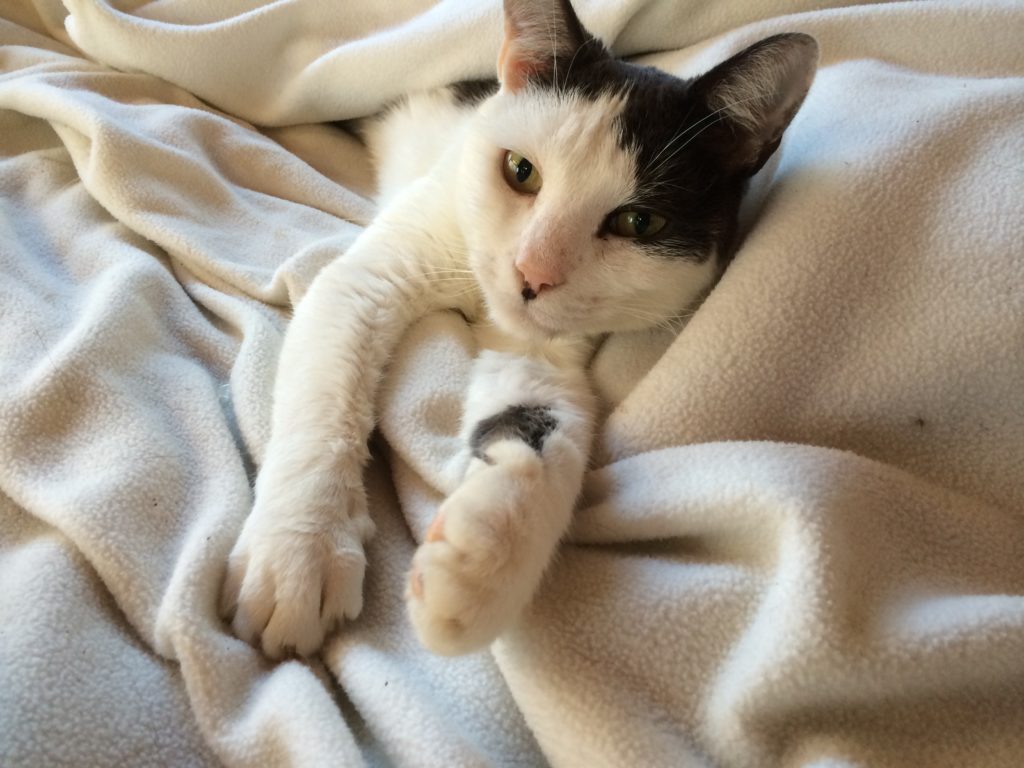
Clovis on a blanket.
I met Clovis not long after David and I started dating seriously. I only knew him at the house, but it was clear David loved him very much and, according to cat tradition, Clovis had fond feelings for David he would not outwardly express. He did like a good game of race, when David would come in from the driveway to the house, and he had a somewhat punctual schedule of getting groomed at the bottom of the stairs by whatever human entered the front door.
I’m not sure where I fit into his life, but as I took on more co-feeding duties and learned how to give him attention, he seemed to warm to me. He did not like “the kangaroo”, where I would hop and rotate ninety degrees in place, or “the crab”, moving sideways with arms and legs stretched wide. However, this past summer as I worked at the house, he would curl up in his chair next to me (it was indeed his chair; David and I have both been kicked out by expectant eyes), or he would curl up on the couch while we watched TV or I played Xbox.
Clovis Staring.
Like many cats, he was not fond of the “Va-koom”, but he didn’t seem bothered by the table saw in the living room, or the pull saw upstairs, or much of anything else. His favorite spot was on an old couch in the corner that caught the most sunlight; outside, he enjoyed a grove of cherry trees, or occasionally would take shade under an old evergreen tree.
He was the terror of the neighborhood. In his prime, he would regularly bring rabbits and chipmunks, living or no, to share with us, or more likely to teach us how to hunt. We are, after all, just other cats, albeit strange ones. There will be multigenerational lore amongst the local rodents about the spackled stalker who once hunted these grounds.
On the other hand, he was clumsy. In particular, one time we had a large ball of rope we’d use for decor, and it swung like a pendulum close to the floor. He watched it go this way, then that way, then back again. He took one step forward and was clocked before we could do anything. He seemed to have only wounded his pride, shocked that anything could surprise him inside the house.
Clovis looking up.
It was very, very difficult to see him go. He’d begun to slow down in the past year or so, but he was still active, would still play race, would still curl up, and occasionally bring us meaty gifts. However, about two weeks ago he seemed to stop eating, and after a couple of days trying to encourage him, we took him to the vet, who prescribed some medicine for him.
The medicine didn’t get him to eat more, and he was barely drinking any water, and so we took him in to the vet again, who sent us to an emergency vet who had the equipment to scan him more thoroughly. What they found was evidence of likely intestinal cancer; the only way to know for sure would be for more testing that was considerably more expensive. We were given prescriptions for more medicine, and decided to keep him home for comfort rather than in a caged, unfamiliar place.
That was this past Monday (November 15). He did not last long, and we were ready to take him in to be euthanized, but he beat us to it. How many cats can be said to die in their own homes, with their loved ones? Especially an outdoor cat.
We miss him terribly, but are glad his suffering has ended. He was a good cat. We loved him, and he evidently loved us. Rest in peace, Clovis.
“We have arrived abruptly in Autumn,” pronounced Madame. “I must break out the warm blankets and fetch the gloves from storage.”
“Aye, the storms,” said the musician. “I hear of tornadoes and hail out on Long Island, oh my!”
“Clovis has not been eating for days. The engineer is losing his mind.” Jody Hipster exuded more sympathy than usual.
“He won’t eat! I mean he has, but only after madame’s superlative efforts.”
“My baked salmon entices the laziest of palettes,” she replied.
It’s true, the engineer was going out of his mind with pre-staged grief, because the cat was taking nary more than a nibble from any food placed before him. He had hardly been observed drinking water, either, and when picked up, was decidedly less cat than he had been just a week ago.
“Oh and he sniffles. Wheezes. Like ahhuksss-hrrrhhzzz ahhuksss-hrrrhhzzz ahhuksss-hrrrhhzzz – I can’t do it justice,” said Jody.
“It is not necessary, we can all hear it.” Madame put in the final word on the matter. “Prescription medicine has been ordered and should arrive this afternoon. Let us hope it is sufficient. In any case we will contact the vet again tomorrow.”
Madame returned to her plans for Thanksgiving (American, not Canadian). The sides were wall easily sorted from past, recent experimentation, but the entree? Definitely fowl this year, but what sort? A chicken gathering ice in the freezer already has been deemed too small for roasting purposes, and so the question is whether to seek a larger chicken, have a traditional turkey, or perhaps something more exotic.
“The leaves have gathered on the automobiles,” said the musician, nursing his afternoon coffee. “Thankfully the recently detailed car has been given leave to hide in the garage from the pine needles, but the maple and oak leaves have clung to the outside like colorful stickers.”
“Not to mention the boat,” added the engineer. “It is sadly clogged with innumerable needles, and every rain adds water and hence wait to that dang-blasted wreck of a trailer.
“We can continue scooping and cleaning,” said Madame. “There is a degree of work involved in property ownership.”
“The den is nice,” said Jody. Now if only we can clear and organize the rest.”
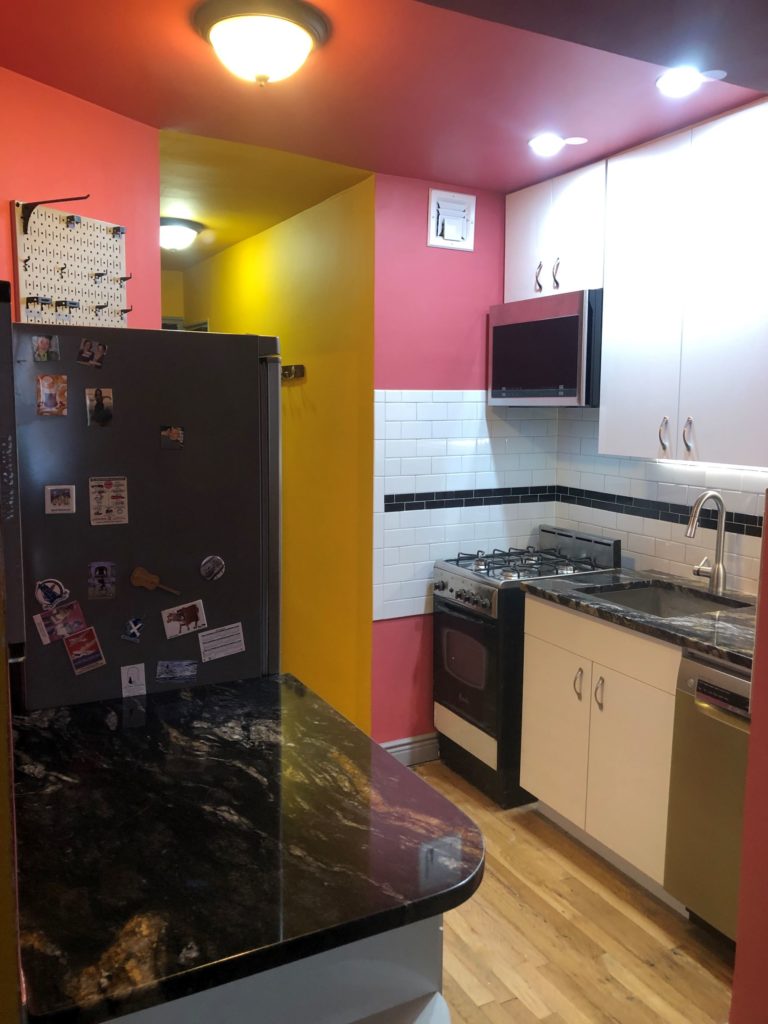
I remodeled my kitchen this past summer. First answer: no I did not do it myself, I hired a contractor. Second answer, it took about four months, which was about six to eight weeks longer than expected. Final answer? Yes, I am very happy with the results.
My apartment kitchen is essentially a six-foot hallway with nooks on each side. Along the north edge is space for a small cooking range, sink, and cabinets; along the south, an angled wall and then space for a refrigerator and shelving.
I’ve lived here for over ten years, longing to replace the cabinets and make other improvements. When I moved in, I replaced the fridge and range, and added an adjustable baker’s shelf, but that was about it. The cabinets were OK, but I suffered a loose hinge and an even looser handle that would fall off without warning.
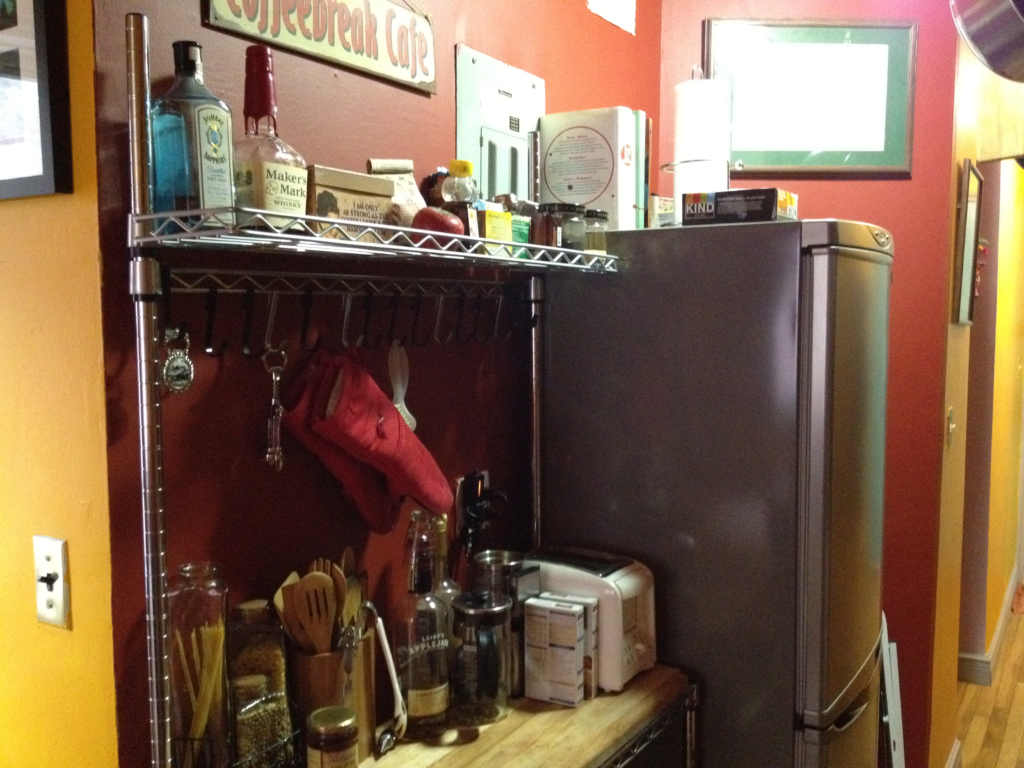
Here’s what the south edge looked like before the remodel:
The Old Setup (South Wall).
I don’t have good pictures of the old north wall, but basically: a smaller sink, and the cabinets stopped short of the ceiling about a foot. I also did not have a wall-mounted microwave, and I had no dishwasher.
Notice how in the picture above, the butcher-block shelf does not extend out as far as the fridge.
My goals in this remodel were to 1) get more counter space, 2) get better lighting, and 3) refresh the cabinets.
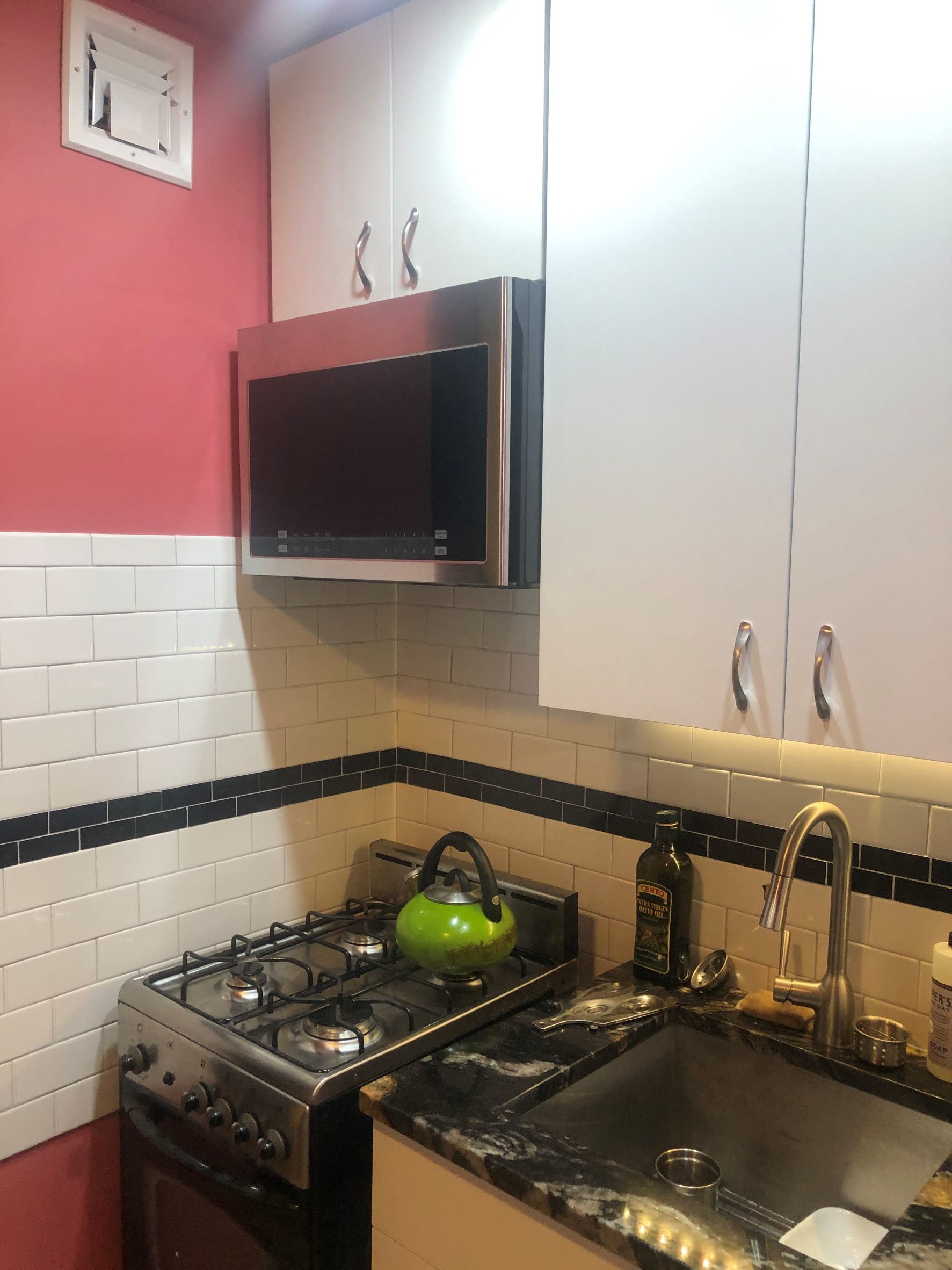
Mission Accomplished.
The new kitchen (view from SE)
First of all, from a similar angle: the new south countertop extends fully, givign me almost +3sf of counter space. Also, by adding the dishwasher, I no longer need to keep a dish rack in the space right of the sink – just a little flat towel for the occasional hand-wash item. Additionally, there was tile under the north edge, and old tile for the backsplash.
The new sink is wider by about 4 ” and quite a but deeper, and undermount. The countertops are quartz. In a perfect world I would have had more of an ebony black, but the mottling is nice, and altogether it breaks up what would otherwise be an all-white space.
The cabinets have an acrylic cover – the best way to get the modern slab look I wanted. Originally I wanted color cabinets and white tops, but reversing that scheme was an acceptable compromise.
I spent a ridiculous amount of time choosing a sink faucet. The array of choices are dazzling, and the range in costs quite wide, and I know nothing about design. In the end I went for something less baroque and more modern, and I’m happy with it.
We did have to angle the handle out though – if parallel with the wall, the “on” for cold could not extend fully back. I say it gives the sink character.
The cabinets now extend to the top, offering better storage for rarely used items. I also took the opportunity to relocate where things are kept – the baking dishes are now lower, in the bottom drawer of the south cabinet, and decorative/seasonal things are up high. The bread machine lives in the cabinet above the microwave.
Speaking of which: originally I just wanted a range fan. My old microwave, probably 15+ years old, was fine, but when I learned of combination range fans/microwaves, and searched for the most narrow one I could find, I settled on a Haier. It’s a GE brand I was able to get a discount on through work. It has fancy options I’ve only begun to explore.
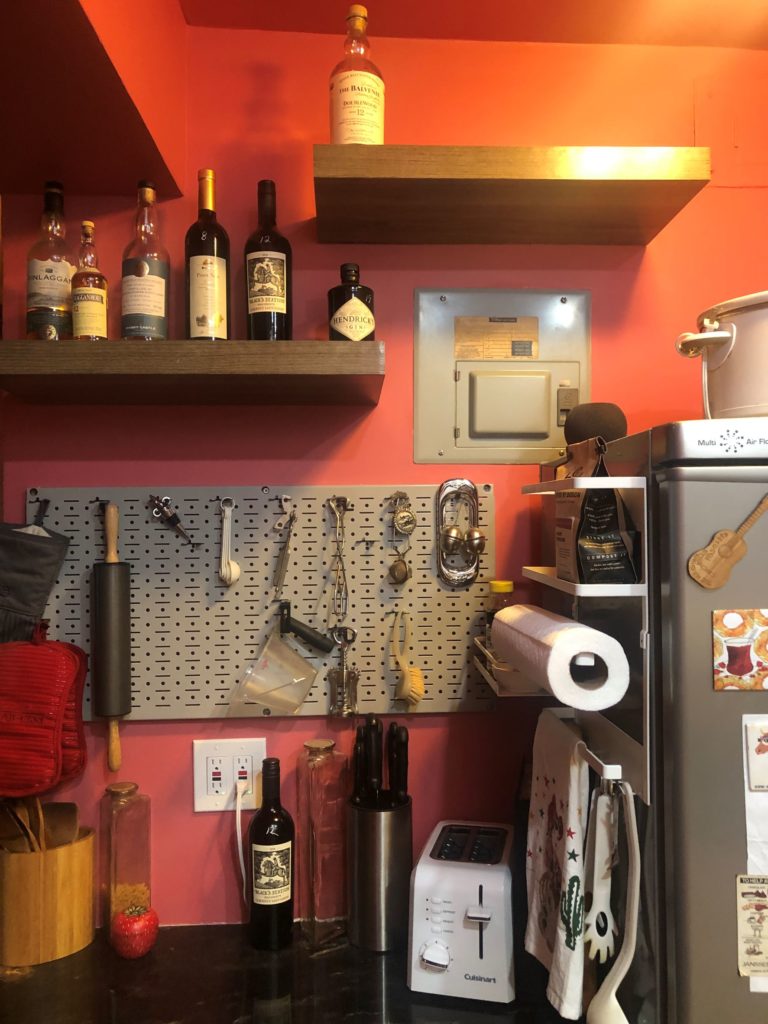
New South Wall.
I now have some cheap shelves to make up what the baker’s shelf provides, and these industrial Wall Control brand panels provide great customizable pegboard storage. Originally I was going to have 4×4, but with the outlets I split them, as you’ll see.
With that increased counterspace, I have room both for the toaster and cooking utensil bins, as well as room to prepare food.
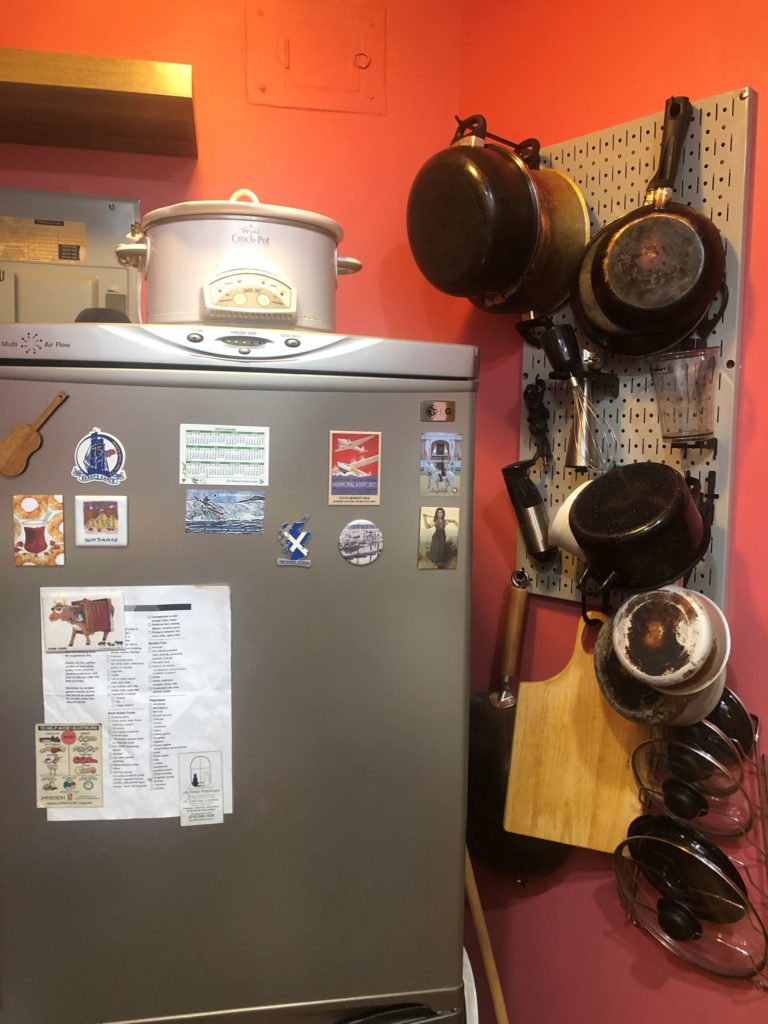
New Pot Rack.
The other Wall Control unit ended up becoming a pot rack in the little nook between the fridge and the angled wall. I also bought a lid holder. The pot fleet will clear up when some new cookware arrives is cleared up (it’s arrived!) but even at this level it is manageable, including the electric hand mixer.
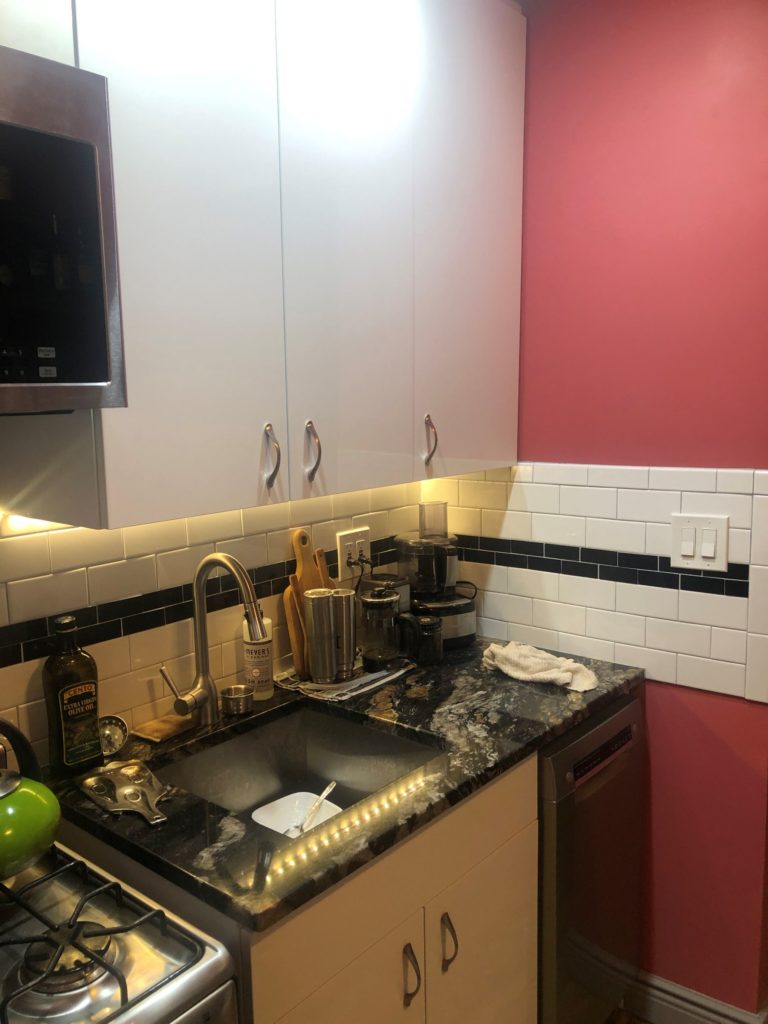
New Cabinets.
Here’s the north edge, with the sink and counter in action. I have a roomy place now for both the food processor, which has hardly been used, and the coffee grinder, which has seen considerable user. Both are Cuisinarts, as is the toaster.
The under cabinet lighting has been desired for years, and its lack was a regular complaint by Mister Autoclast. The only downside to the work is that with a deeper sink, the sliding rack for trash and recycling would no longer fit, so I have to pull those cans out more manually.
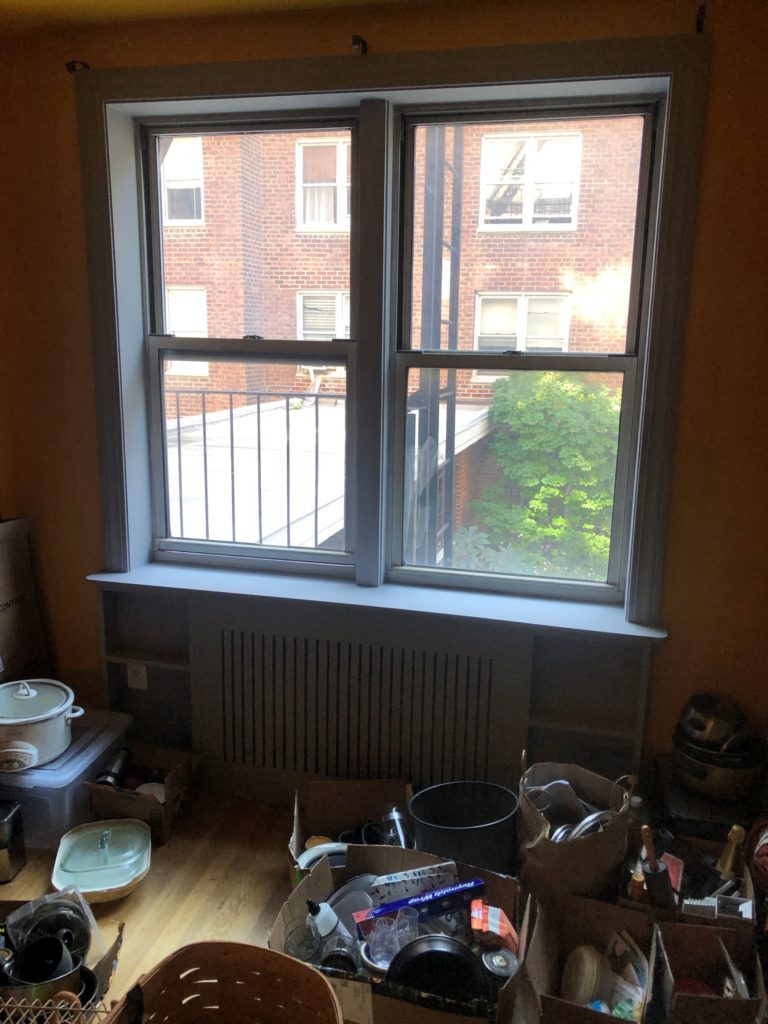
In addition to the kitchen, I also had the window frame and radiator cover redone. My original idea was just to paint the radiator cover – the radiator lives in the wall – but my contractor suggested building out a wooden frame with shelves.
This picture is from before I put things away.
The new window sill and heater cover.
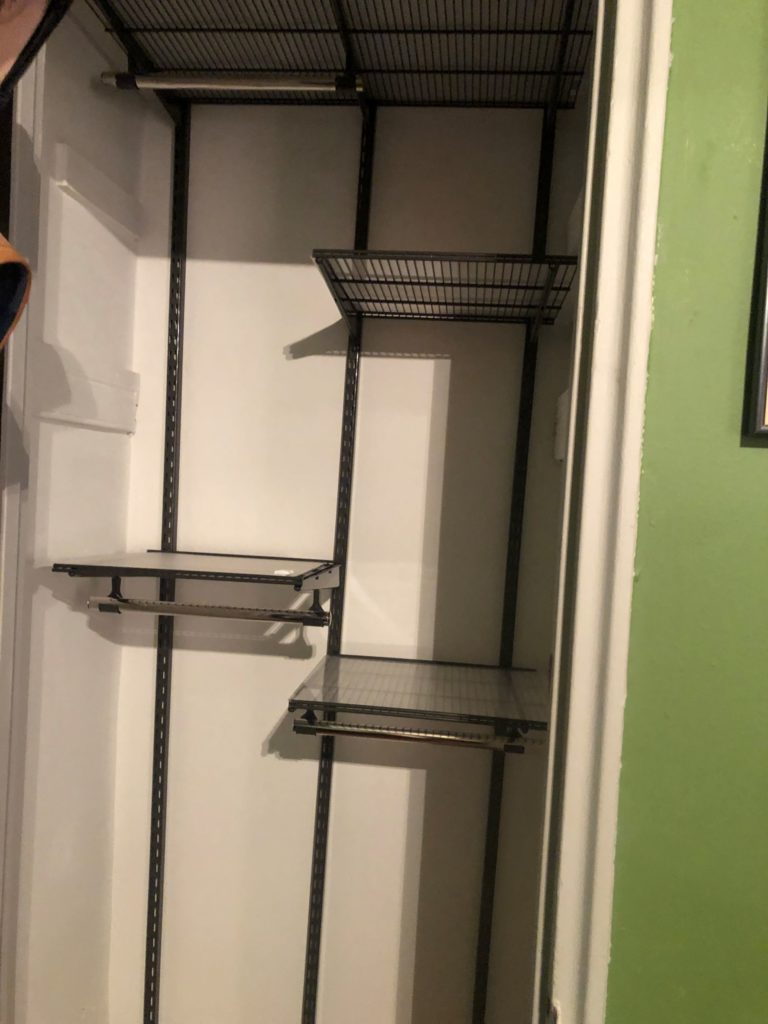
I also had Elfa closet organizers installed. I have to mention that I had a very good customer experience with Elfa. Basically the hall closet is slightly narrower that the bedroom closet, and the organizer I wanted for the former was too wide by about two inches. I called to ask about adding on items to the next smaller kit-size, and the rep said they could just trim the kit I wanted at the factory, at no extra cost. So yeah, if you’re looking for custom cabinet organizing, you could do worse.
Closet Organizers.
This brings me to the only negative I had in the whole experience. Up until this time I was able to sleep in my apartment if I needed to, to do something in the city early the next day, for example. Even with no stove or sink, I could crash out even while I lived most of the time at David’s. To get the organizers installed, however, I had to dump everything out of the closets, to the only place left: my bed.
I thought they would get installed in a few days, and I could load everything back. Somehow, all work seemed to have stopped, so it was a month before I was motivated enough to say something firm enough to get the work done.
By that point, we were approaching Labor Day, and David and I were going on vacation. The very morning of vacation, I drove in early to go over some final details, and a week later, upon our return, almost everything was done. We just needed to add a couple of shelves and the pot lid holder.
Speaking of which, as I write this, my new cookware has arrived. I can’t wait to inaugurate it. The kitchen has worked well so far; in a way using proper pots and pans will make it feel official.
What to do, what to do? In times of Covid, travel restrictions and our own uneasiness have made David and I less willing to travel. Normally we might go to Europe, or try some other far-away place, but the state of the world being as it is, in late summer we opted to drive to Maine.
Last October, I went to the Mount Desert Island area for the first time, to take a four-day kayak instruction course. The course was great, but also the venue was eye opening. While I’ve been to Maine regularly over the past several years, it’s always to the same coastal area nestled between the Kennebec and Sheepscot rivers.
In particular, the area has some great kayaking, and we organized our trip around two days of “rough water”. I put that in quotes because the ocean was, in fact, quite tame while we were there, but we did get some good experience on a reversing falls known as Sullivan Falls.
I’ll write about that separately. Here is what to know about our travel on the way up.
We got off to a later start than we would have liked; partly this was because I had to run into Manhattan early to meet a contractor, to get the final stages of my apartment done. Then I raced back to the house to find that things still needed to be packed and boats placed on the car (the Prius, or as I call it the Prubaru, the Prius we treat like a Subaru).
We were on the road by . . .11 AM? We had already changed plans to meet a friend of David’s near Boston and possibly overnight, but that friend was busy with packing and preparing for his own vacation, so we wouldn’t come in until the evening. Boston is only a four hour drive, typically, so what might we find to kill some time along the way?
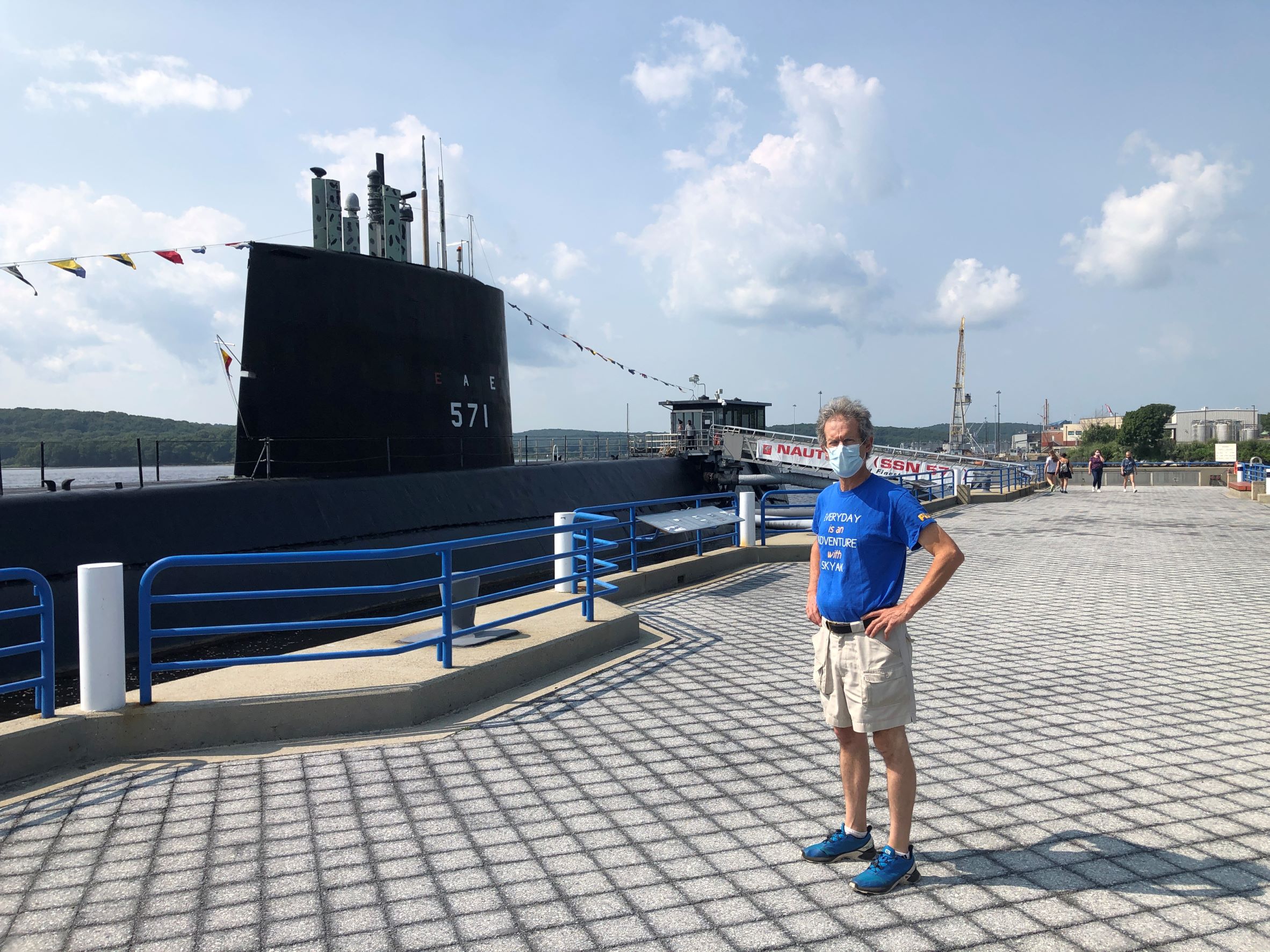
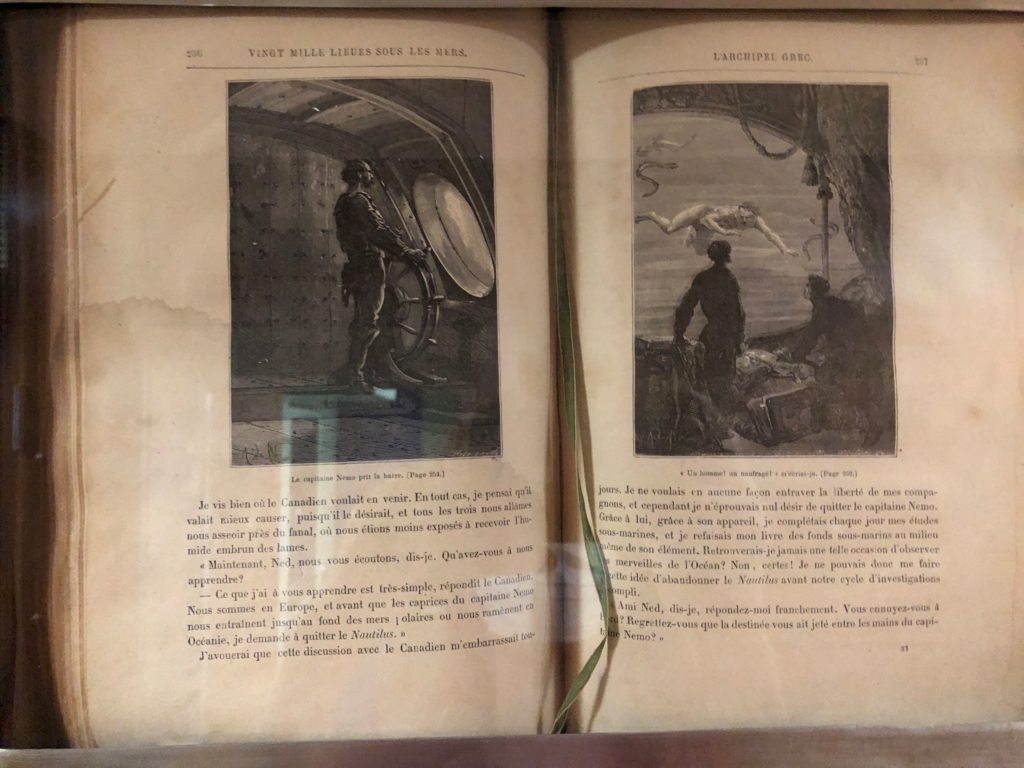
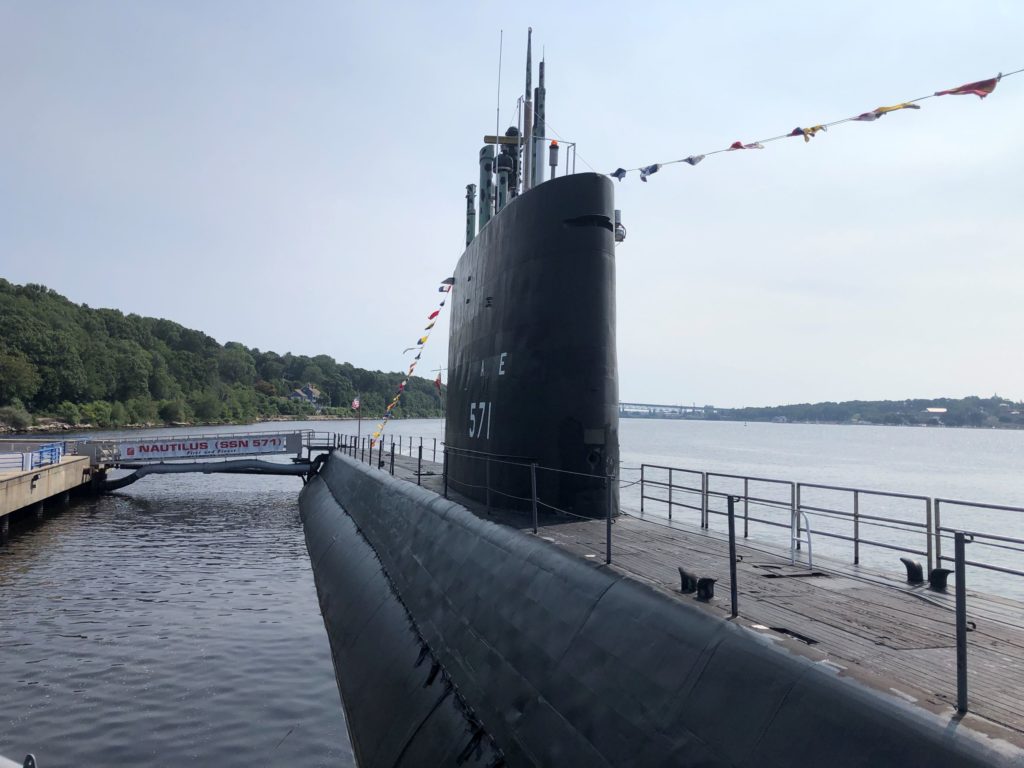
That’s right, the submarine museum in Groton, Connecticut. I’ve driven past signs for it so many times, and David and I are both technically-minded people familiar with various submarine lore. The Nautilus is parked there for touring; the world’s first nuclear submarine, named for Jules Verne’s famous vessel captained by Nemo.
We’d get there just in time to catch the last hours of the museum.
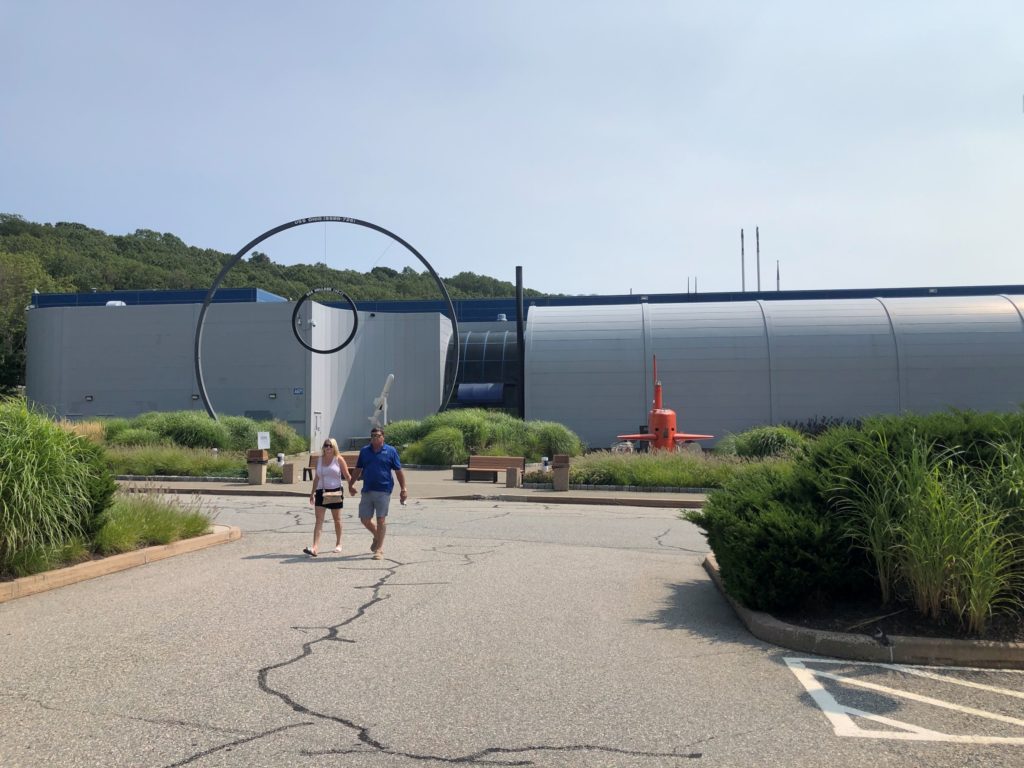
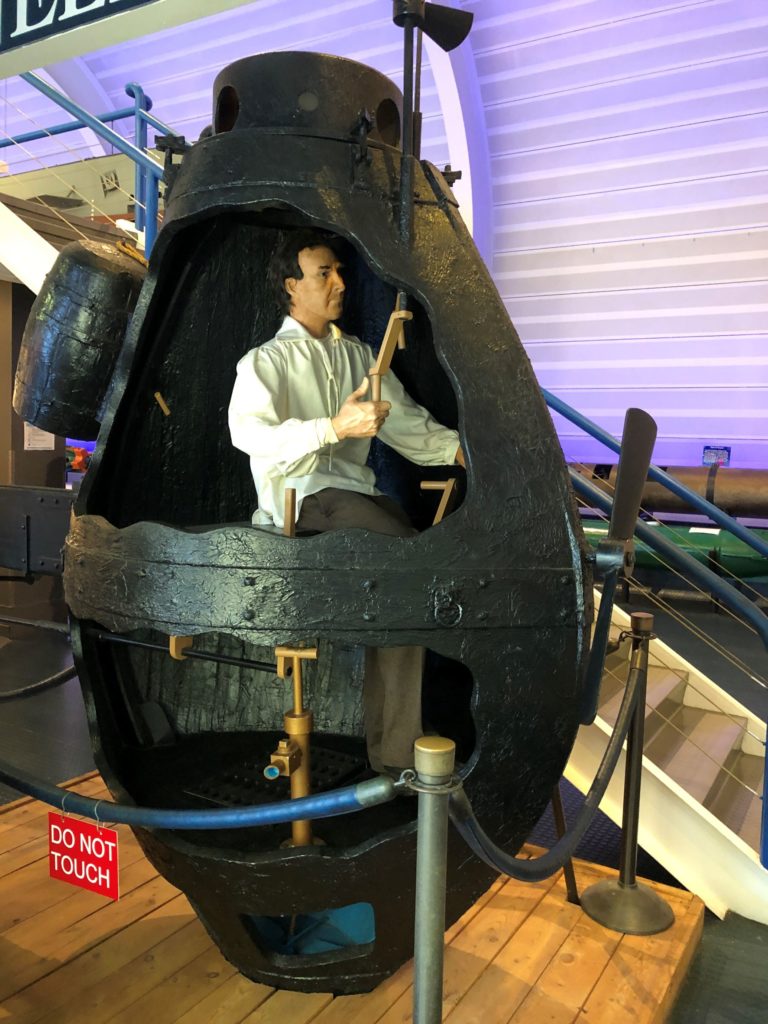
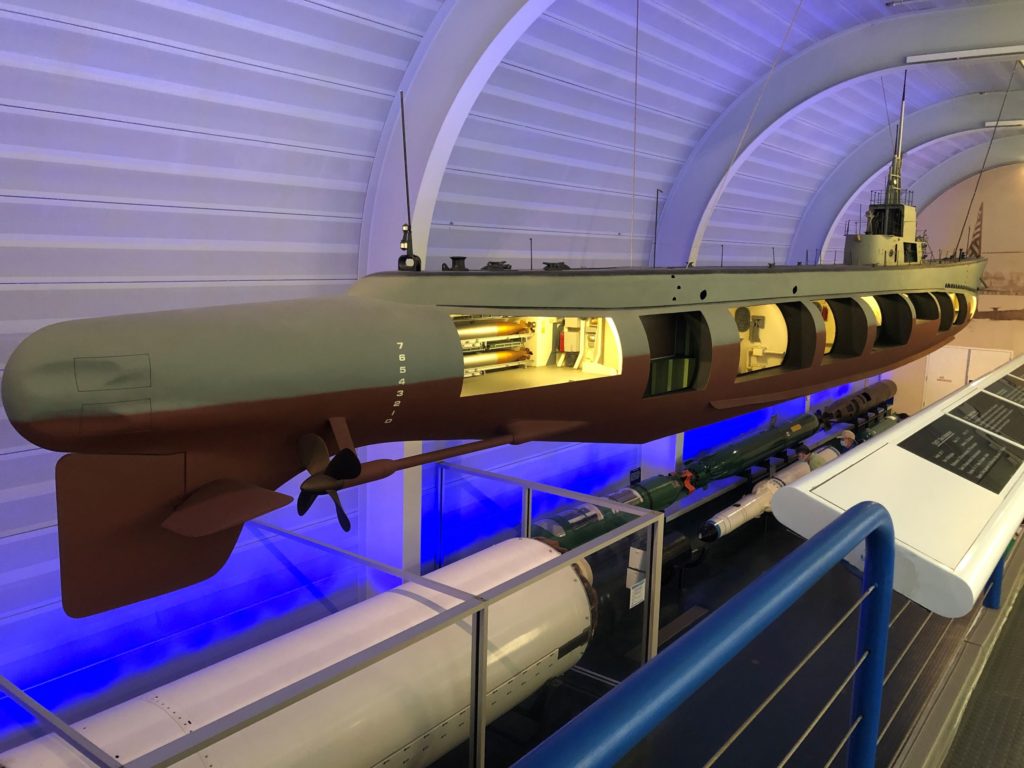
Entrance.The Turtle.On the Nautilus.Model Sub.
One thing to keep in mind is that this is a military museum. On the one hand, the military has funded a lot of submarine research; the dive tables most scuba divers use today were worked out by Navy researchers. Many of the most dramatic, and also tragic, stories of submariners are of military vessels. Even the ship commonly credited as the first American submarine, the Turtle, was essentially a foot-pedaled barrel intended to attach an explosive to British warships during the American Revolution.
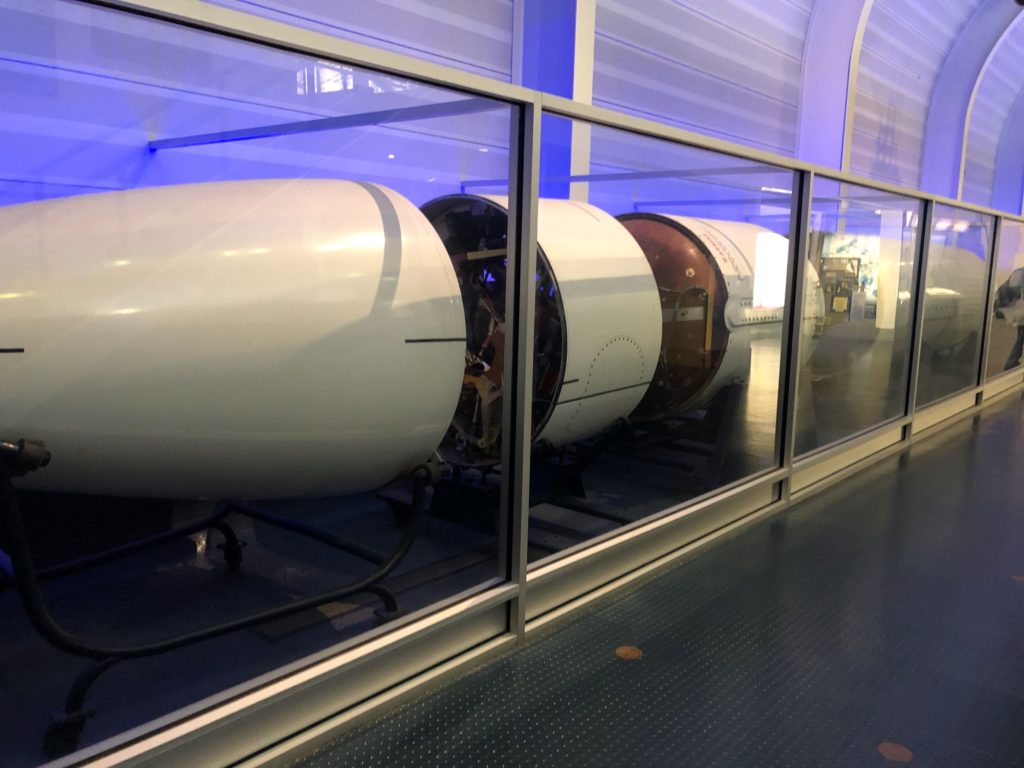
Polaris, Disassmbled.
On the other hand, after a while, it was clear that a significant portion of the museum was devoted to the Silent Service, submarines deployed during World War Two. In the back of one wing are the stages of a Polaris missile, the first submarine-launched ballistic missile developed by the United States. A small hall of heroes details stories of bravery by submariners in the service, and the final wing glides through various develops during the Cold War.
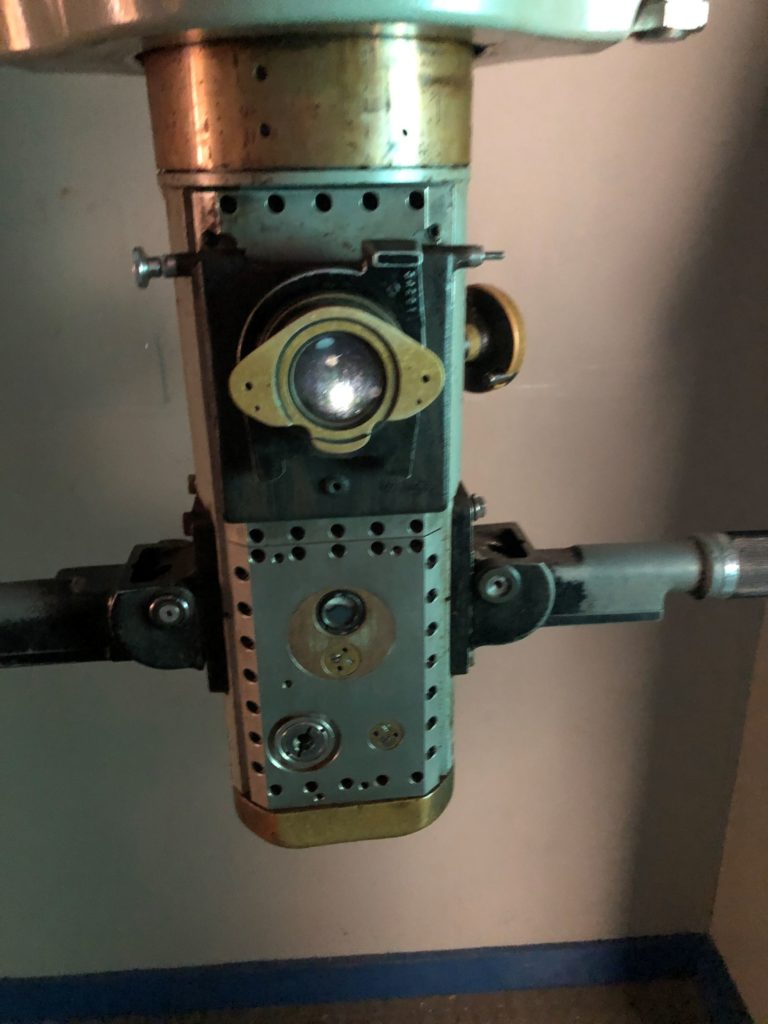
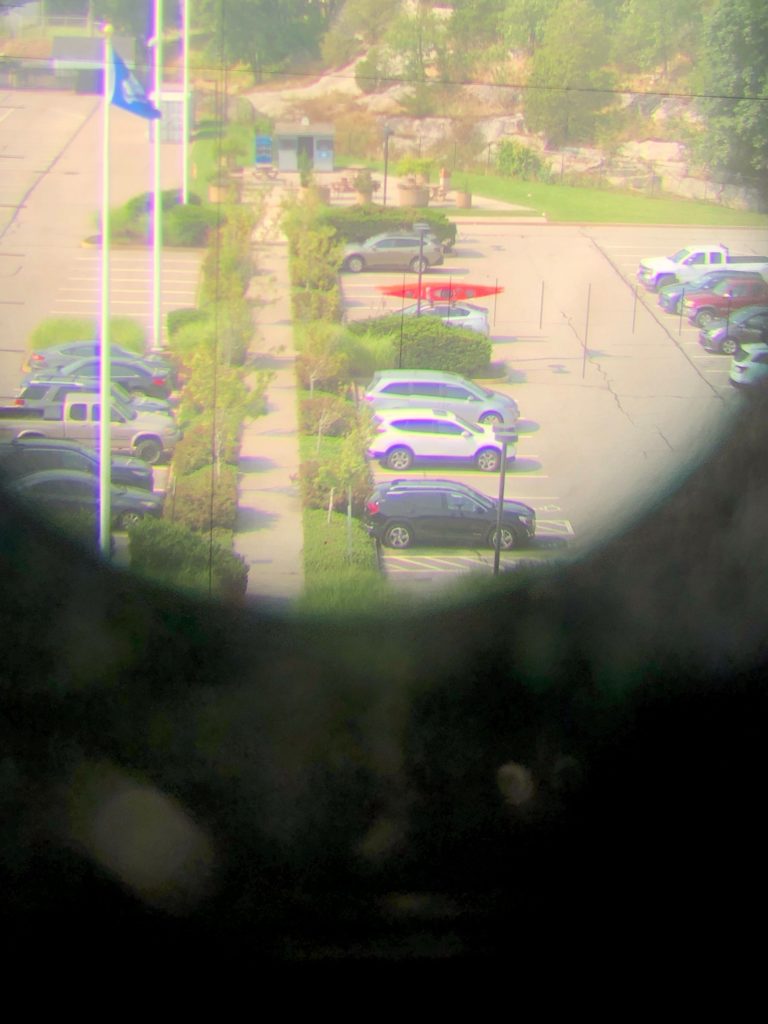
The one cool thing we found was that in a hands-on area apparently intended for children, the periscopes were real, and we could look out on the parking lot – to check on our kayaks, of course! We could even point the periscopes at each other, and wiggle for a friendly little wave.
Periscope.I Spy.
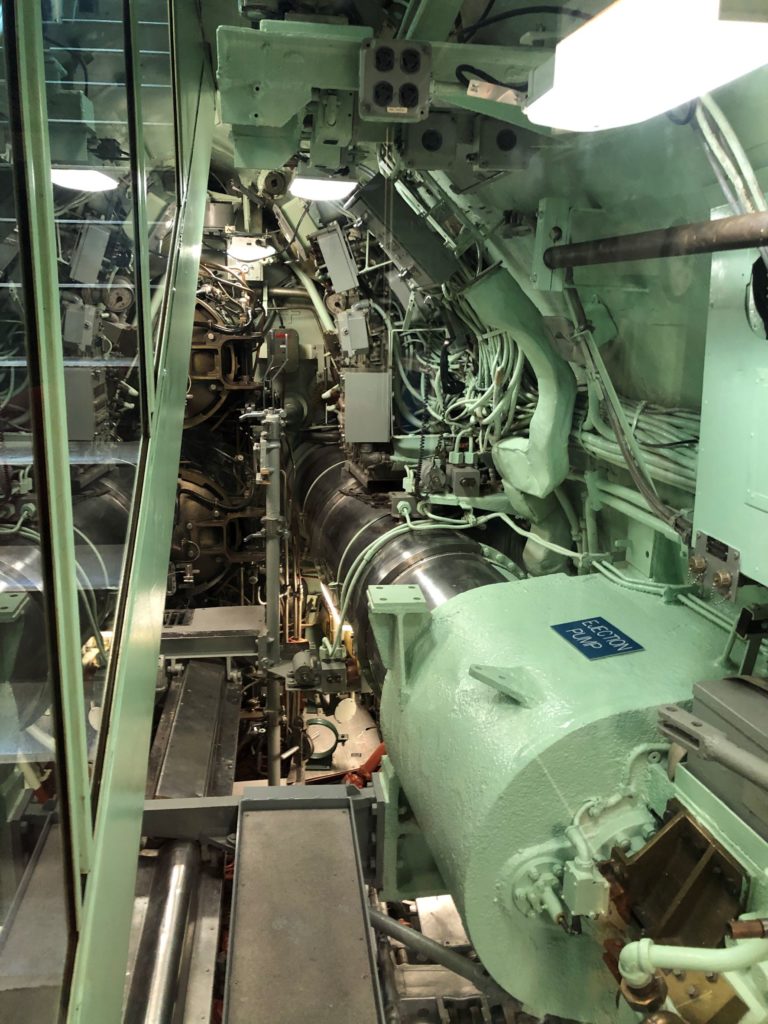
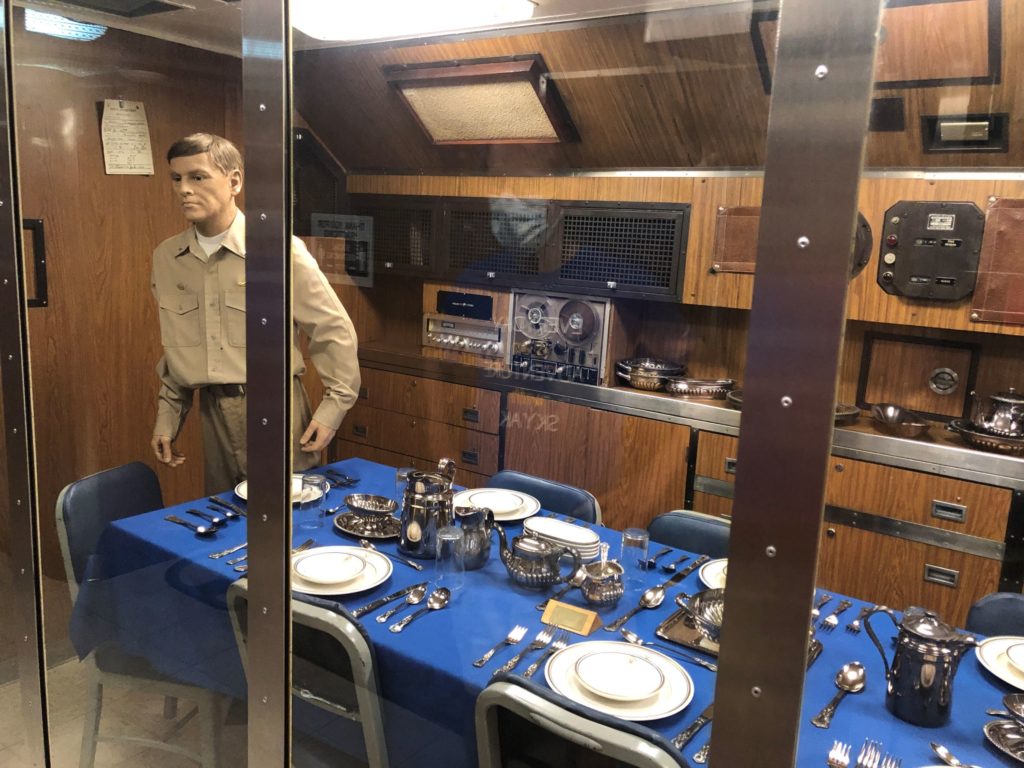
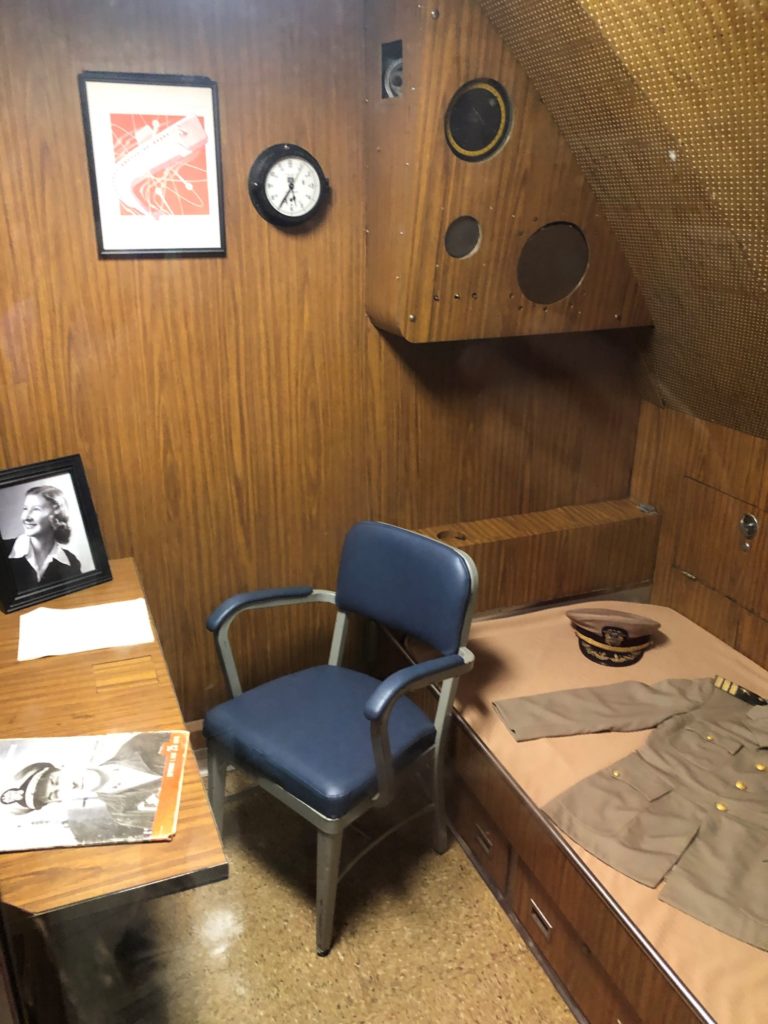
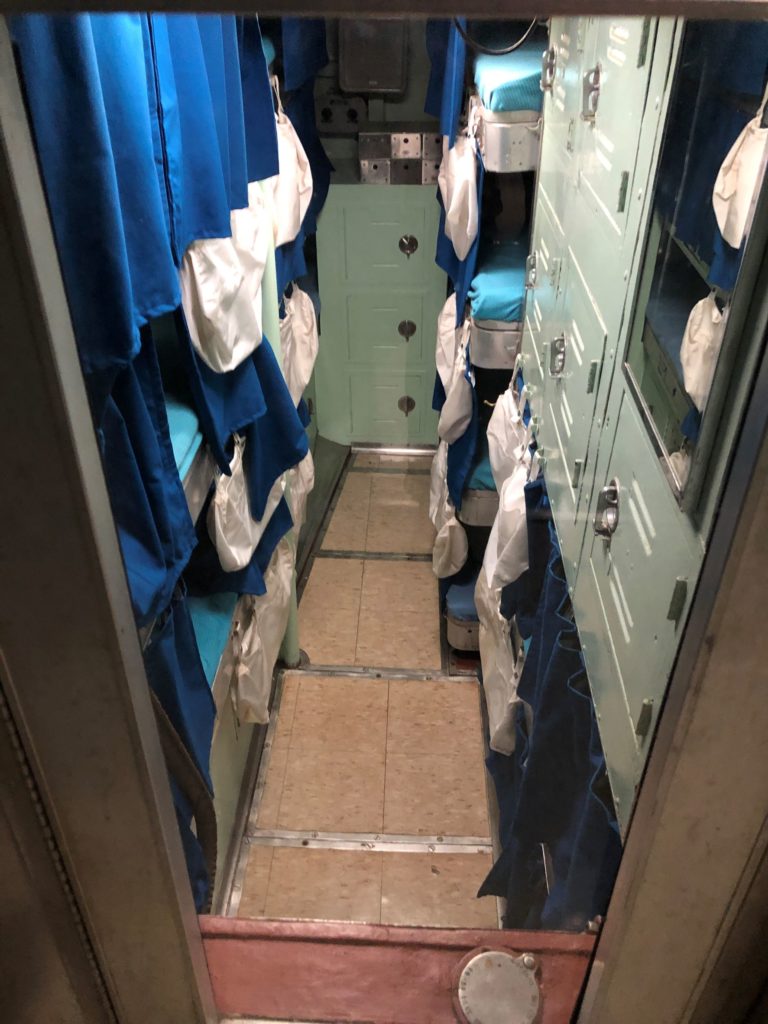
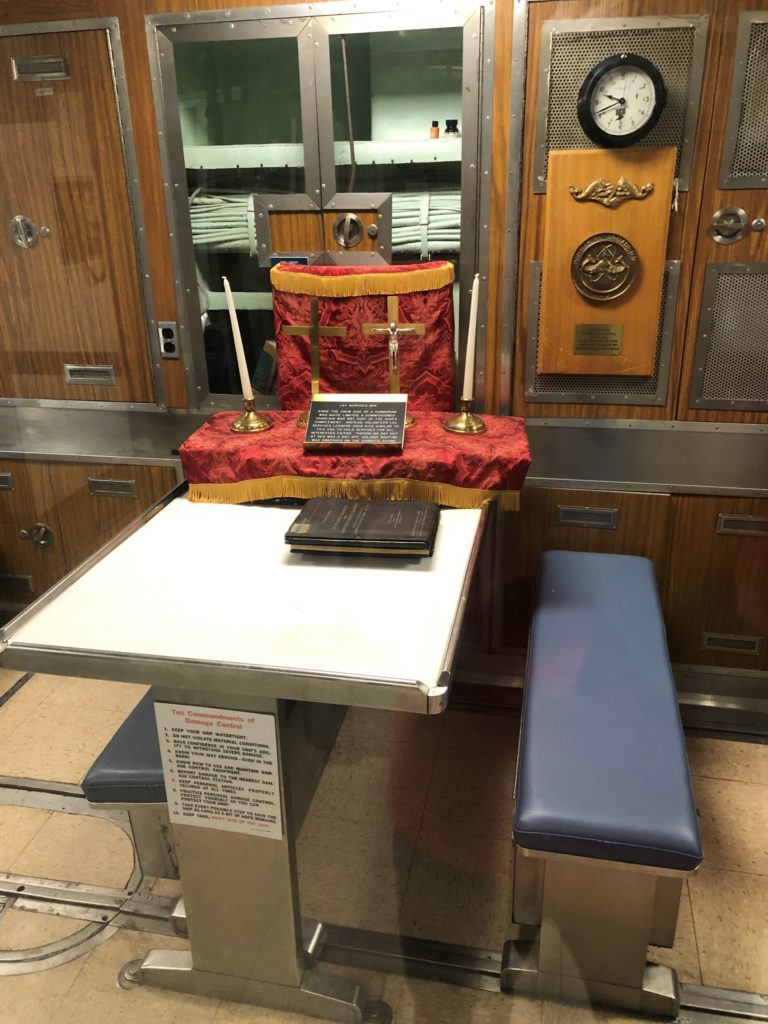
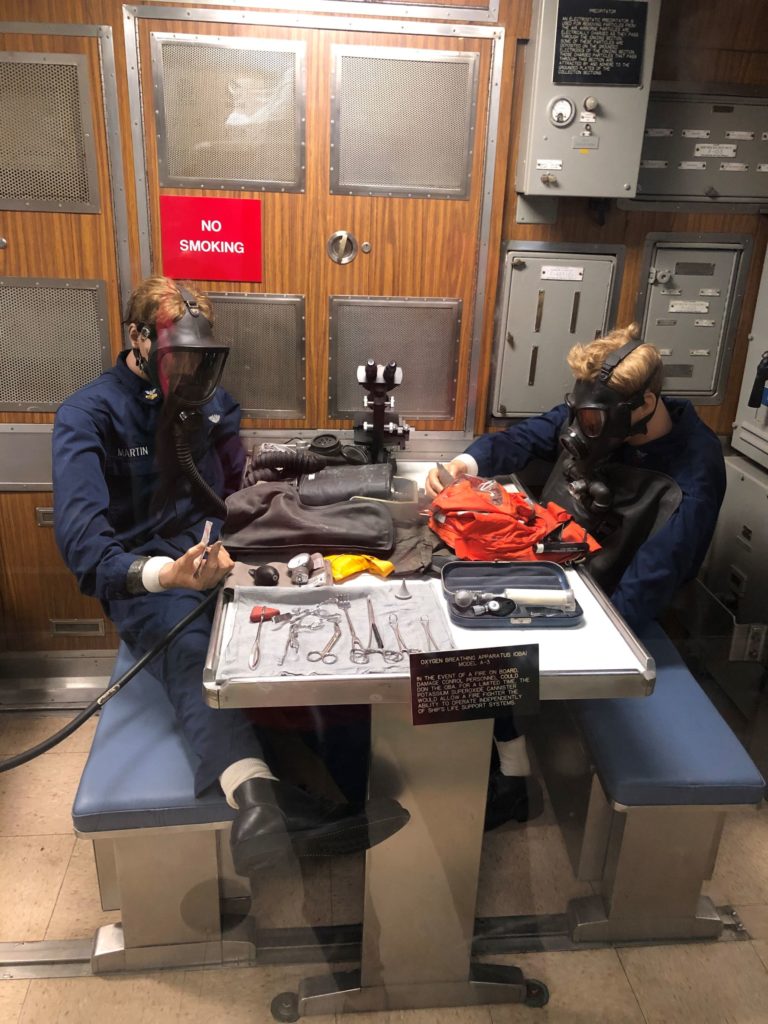
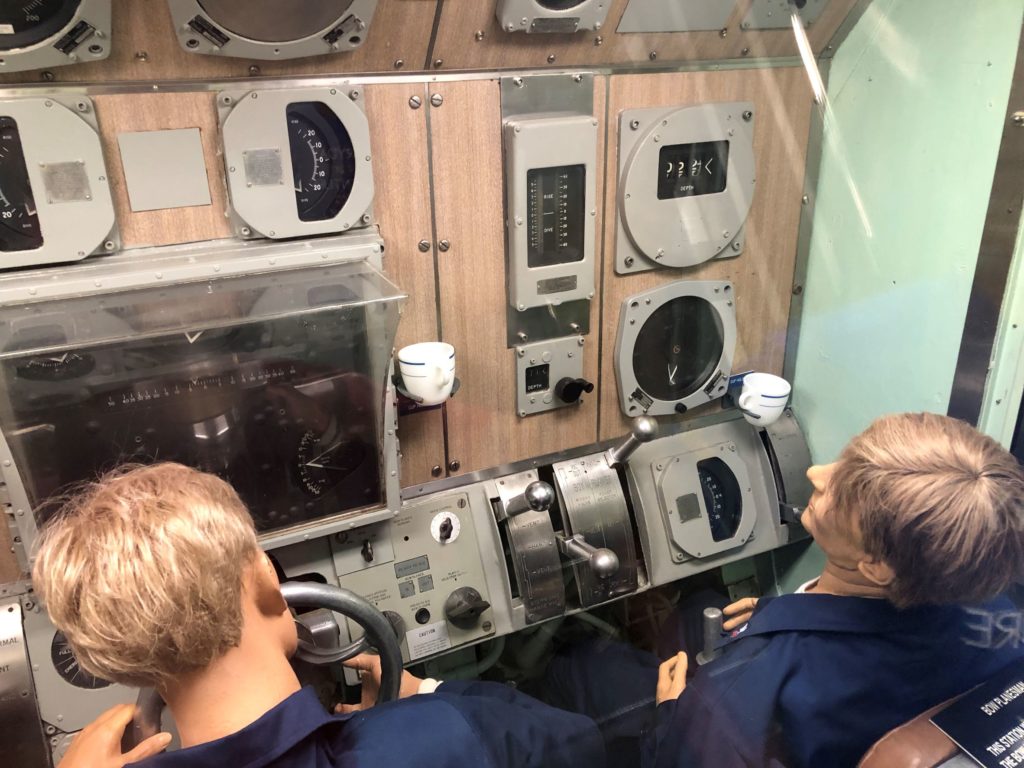
The Nautilus, of course, was the centerpiece, and the first thing we visited. If you’ve toured other decommissioned ships, the experience is much the same: the halls have been widened for better touring, dioramas with near-lifesize mannequins have been set in a scene, and much of the old machinery and electronics are still in place, with placards describing their history and purpose.
The SSN Nautilus.Mechanicals.Officers’ Mess.Officer Quarters.Enlisted Bunks.Makeshift Chapel.Repairing Gear.Helm.
The ship is quite a throwback for our era of location services in our phones and easy communications of all means. How would a submarine know it was at the North Pole? How would a message be sent from the depths of the sea? Just how tight was the bunking? Pretty, tight, it turns out.
We stopped in Mystic afterwards, studiously avoiding the famous Mystic Pizza in favor of a themed pub. Thence, we continued our drive to Woburn, MA, to meet the friend, have a chat, and sleep.
The next morning we lingered over coffee and admired the backyard from a raised porch; the yard slopes steeply away, and an impressive bird feeder dangles high from a tree, at a far enough distance that the birds could eat peacefully while we watched them.
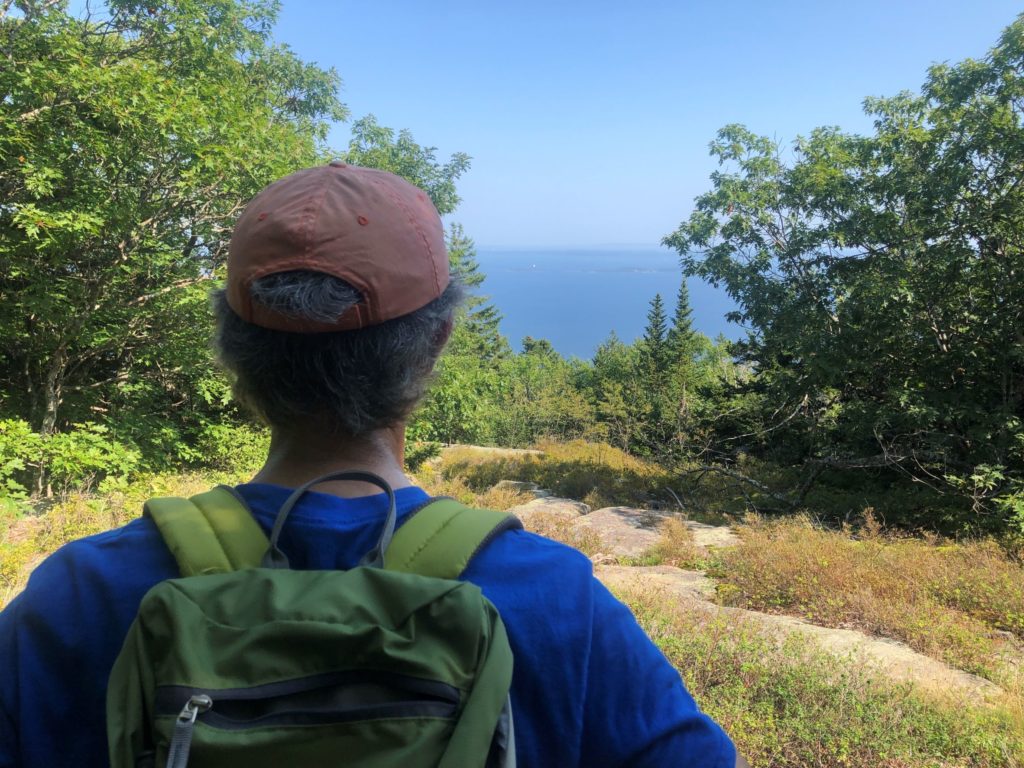
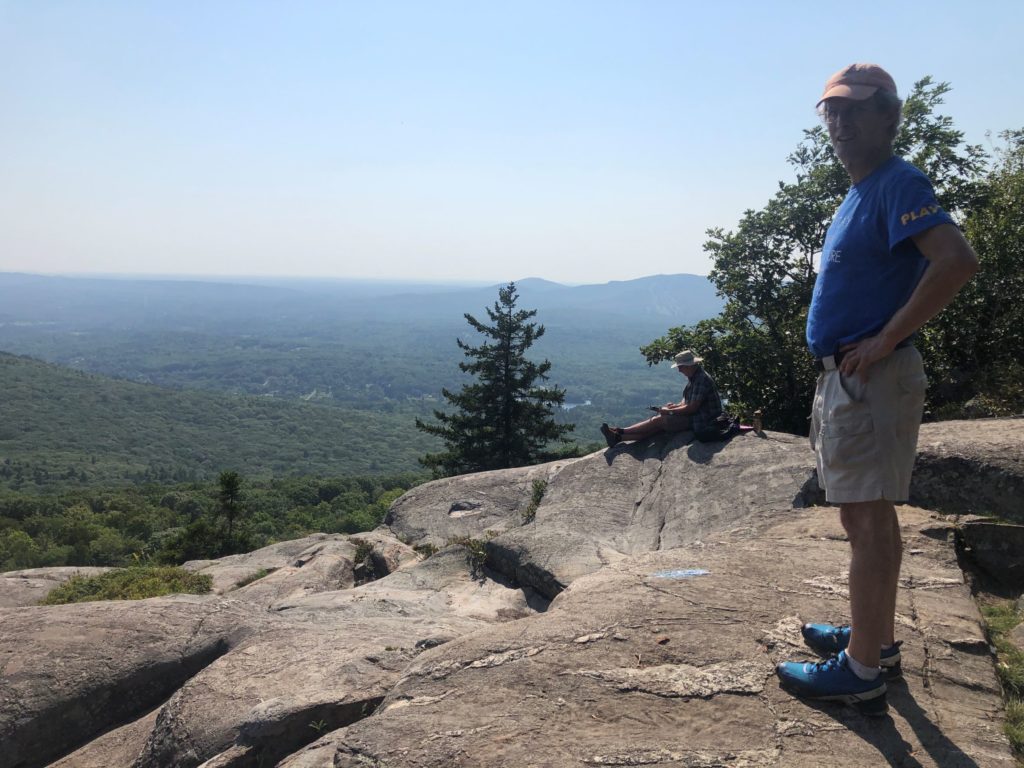
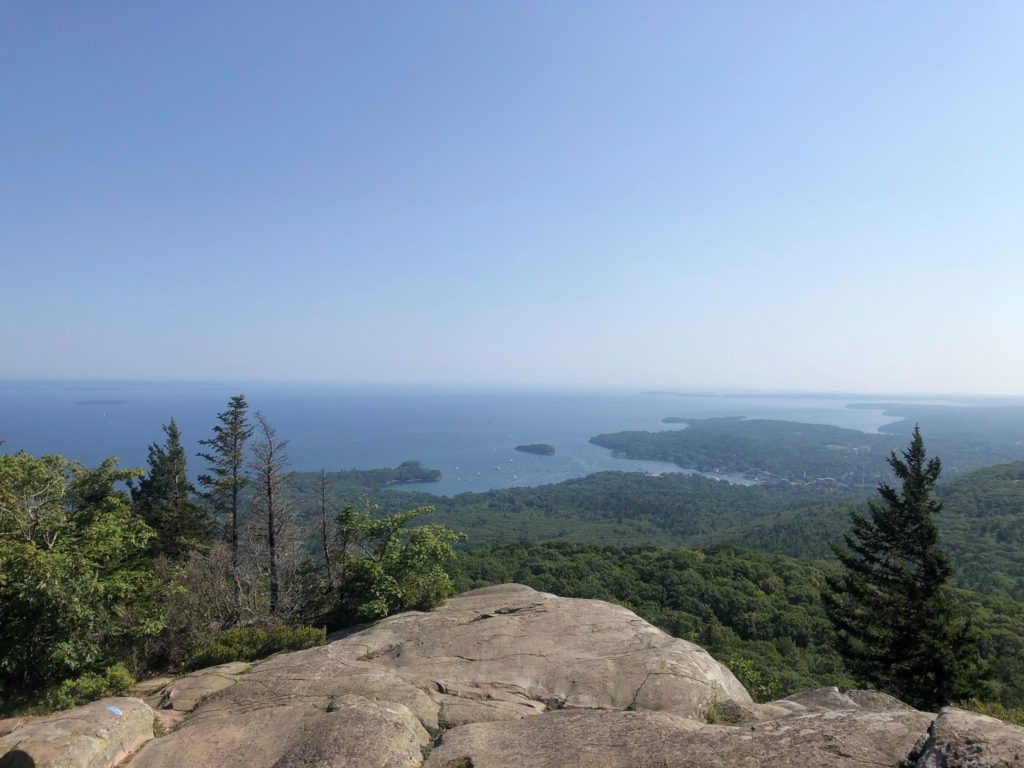
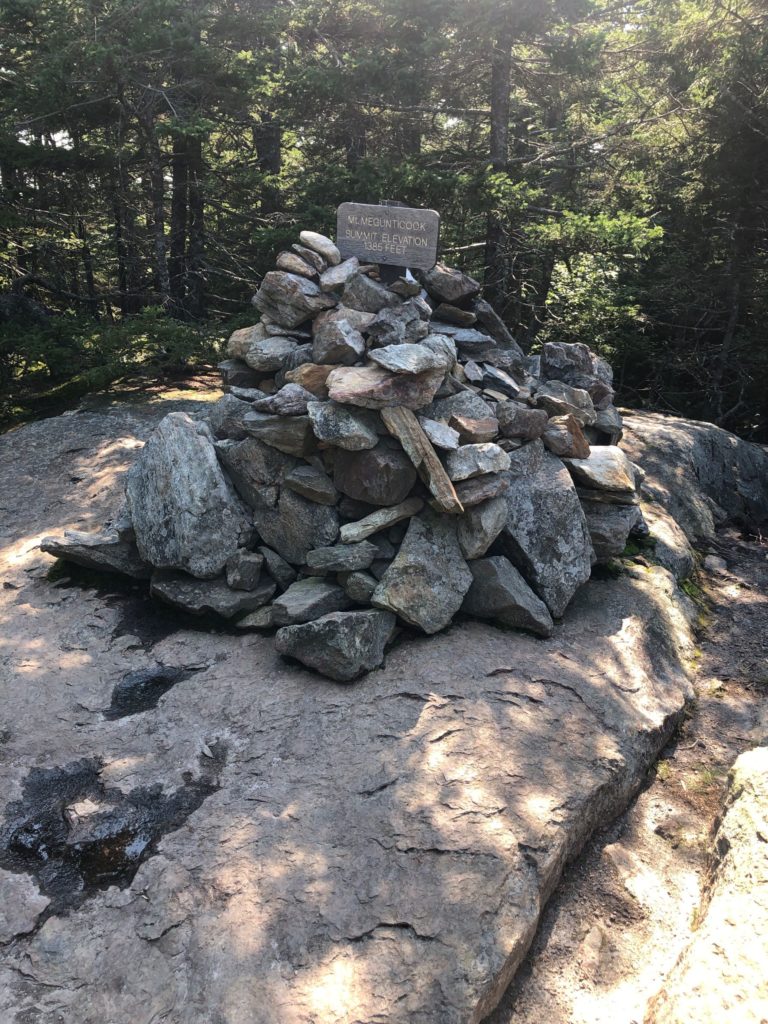
We set out to complete our journey to Maine the next day. After following the interstate up to Bath, we took the scenic route, the old Route 1, more or less as we normally might for our usual destination, but continuing past that through a string of coastal towns. We stopped for a recommended hike along the way, at Mount Magunticook.
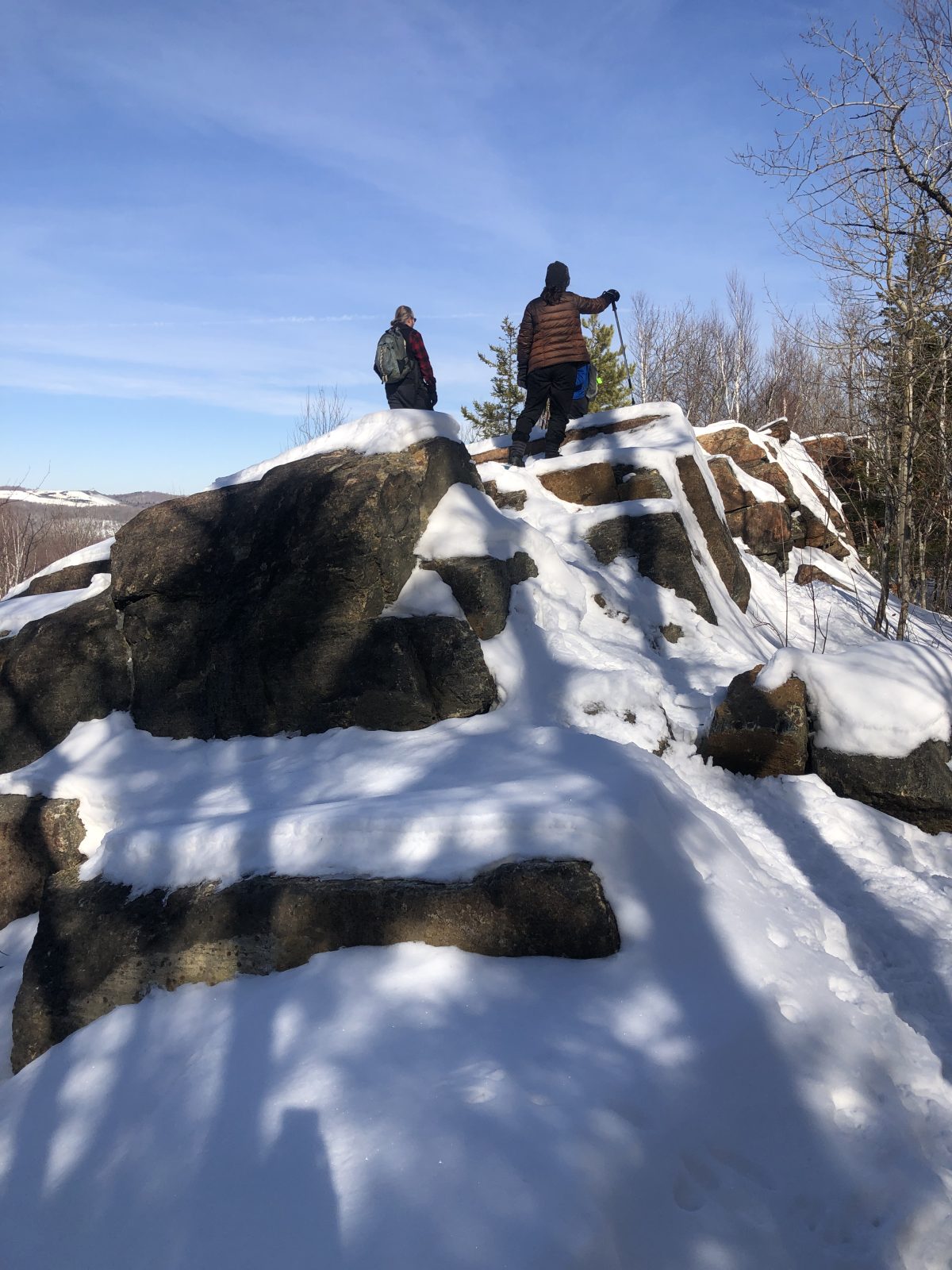
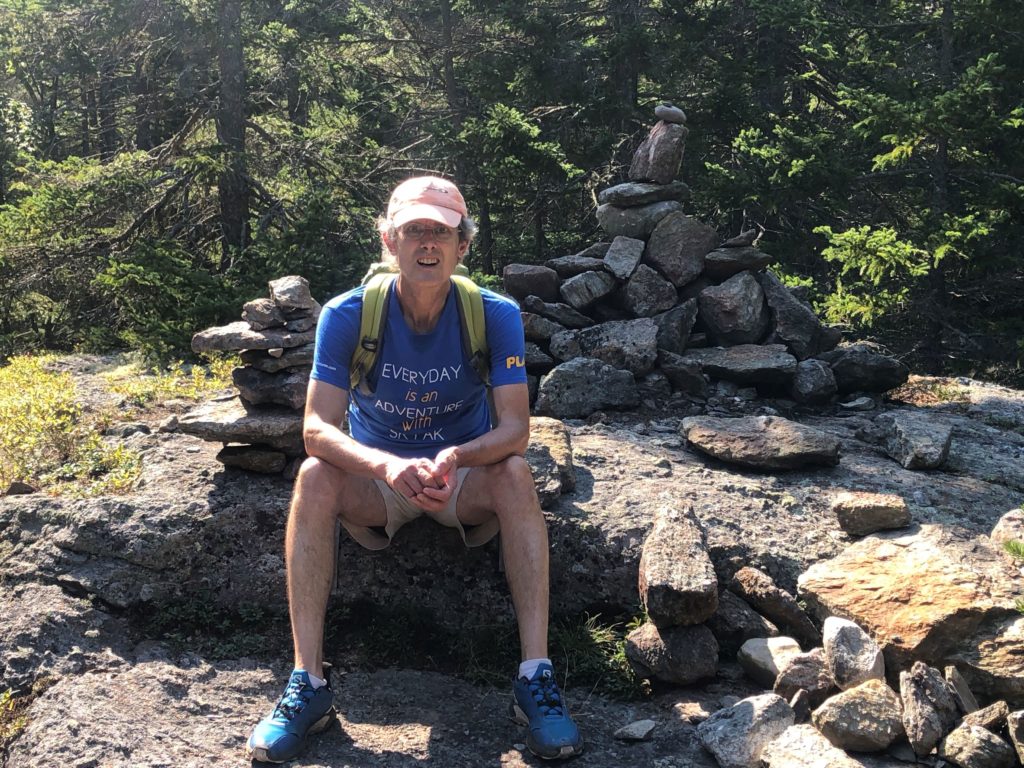
Peeping.Hedgehog.View of the Valley.View of the Sea.The Summit.David at the Summit.The Summit of Magunticook.
It was a very pleasant hike. After that, we drove on in to Ellesworth, checking into our hotel with no direct interaction with a human being: the guest policy and lock code for our room was texted to us, we parked and unloaded, and then had dinner. The room would be our home for the next few days.
We were on our way back from holiday in Maine; David and I had two sea kayaks strapped to the roof of the Prius, and we’d left Ellesworth with four fresh lobsters sealed in a box, a semi-surprise dinner for relatives we’d see near Boston. We knew the weather forecast, prominently featuring rain, and our goal was to leave Boston early in the evening and “beat the rain” on the way home.
As things turned out, we didn’t leave the Boston area until eight that night. Even in the best conditions, we’d be rolling into home by midnight, and these were far from the best conditions.
For the most part, we were just driving through a lot of rain. It was a lot of rain. I can’t emphasize this enough. The rain was constant, and high in volume, relentless. That said, we’ve driven through heavy rain before, so this was in a sense simply a long-term application of existing skills.
Our first real choice was whether to take I-95 or the Merritt Parkway. The Merritt has no trucks, but more ups and downs, and thus potentially low areas of flooding. We were perplexed because most of the time we checked for routes using Google Maps, I-95 was not offered at all, not even as an alternate or slower route; when it was, it was ten minutes longer. We decided to take our chances on the Merritt.
Most of the way, it was not terrible. We drove under the speed limit, and watched other cars pass us; we also passed cars that had given up earlier. The following was about two hours after leaving Boston, not long after we were on the Merritt, a bit north of Bridgeport, CT.
As we continued, signs of trouble increased. I looked at a weather radar map and saw we had driven squarely into the darkest swatch of the rain. We were getting hammered, and we slowed down, watching diligently for pooling water and vehicles in distress.
We started seeing problems regularly near New Canaan.
As we proceeded, we emerged from the heavy rain, but began seeing more signs of wind damage. These were all from a bit past Greenwich, CT.
By this point, our goal was to get on I-287, which would take us over the Tappan Zee Bridge. However, we weren’t sure what the best exit would be, and it was apparent that the situation would be constantly changing. We’d come across a scene like the following, and watch workers clear drainage. What was once a flooded road would quickly drain.
Alternately, we would come across a scene like the following, where official-looking vehicles were kinda blocking a road, but no one was present. To be fair, I expect the authorities had a lot to respond to that night, and at this point it was approaching midnight.
We did eventually get on the highway after cutting around the Westchester airport. The following is pretty long, the entire crossing of the bridge. The lighting and the architecture made me feel like we were in some surreal tunnel through time and space.
Once over the Hudson River, we turned to get onto 9W, and were immediately confronted with this challenge, whereupon David put the Prius into a sort of Jeep move.
That road runs along a ridge back to our township. There were a lot of trees, including a set I got out of the car for to ensure we had clearance to pass under. A car behind us honked at our diligence, and it and one other barreled past us once we were through.
We spotted this bit of water rushing out of a driveway.
That was pretty much all there was. The roads had gotten progressively worse, but the rain better, and in short order we were parking in the driveway and collecting the bare minimum of items from the car: perishable goods and clothes we would need.
We were very fortunate to have no flooding or problems with power. We both went to bed nearly immediately, viscerally aware of the strength of the storm and a bit, through reading, of the toll it was beginning to take.
In the days since, the full toll of Ida across the region and its long march have become clear. In particular for New York, City, several people died after finding themselves trapped in flooded basement apartments; others barely escaped with their lives. There will be plenty of furrowed-brow discussions and political blame-making, and announcements of new measures to mitigate such damage in the future, but only time will tell if anything good is to come.